Safe & Professional Wasp Control Services
Discovering a wasp nest on your property can quickly turn a peaceful summer into a stressful and dangerous situation. Stinging insects like yellow jackets and hornets are highly territorial and will aggressively defend their nests, posing a serious risk to your family, pets, and guests. Wasp nest removal is not a DIY job. At Sparrow’s Pest Control, our licensed technicians use specialized protective gear and professional-grade products to safely and completely eliminate the threat, allowing you to enjoy your outdoor spaces with confidence.
Identifying Stinging Insects in Washington
Proper identification is crucial, as different species have unique nesting habits and aggression levels. Here are the most common stinging insects we handle:
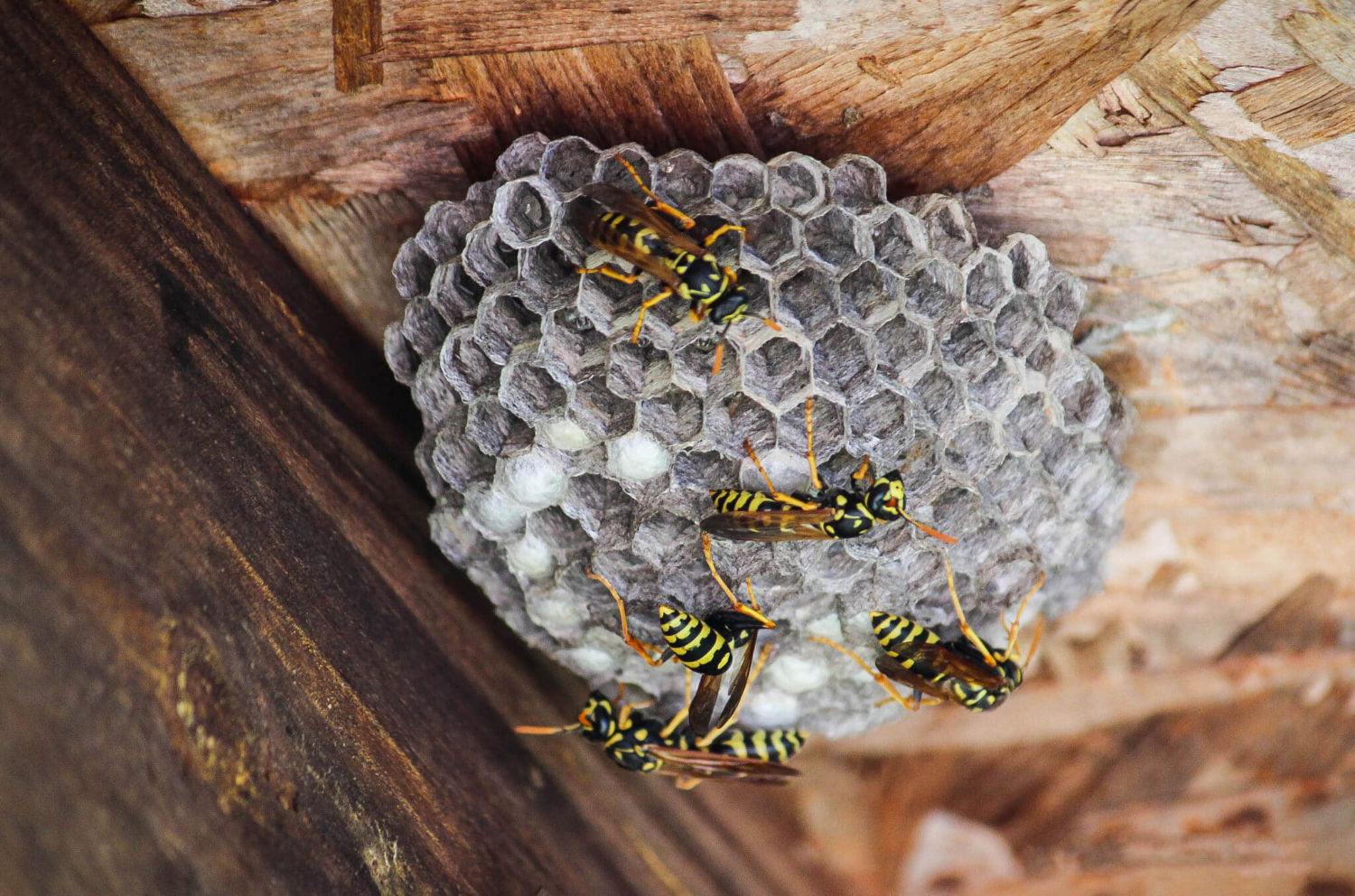
- Paper Wasps: Identified by their long legs that dangle in flight, paper wasps build distinctive open-comb, umbrella-shaped nests. These are often found in protected locations like under eaves, behind shutters, in porch ceilings, and inside barbecue grills. While less aggressive than yellow jackets, they will sting if their nest is threatened.
- Yellow Jackets: Often mistaken for honeybees due to their similar size and coloring, yellow jackets are extremely aggressive and can sting multiple times. They build large, enclosed paper nests in hidden locations, including underground burrows, wall voids, attics, and dense bushes. Disturbing a yellow jacket nest can trigger a dangerous swarm attack.
- Bald-Faced Hornets: Technically a type of large yellow jacket, these black-and-white insects are known for their formidable size and aggression. They construct the iconic, large, basketball-like paper nests that hang from tree branches, shrubs, or the sides of buildings. They are highly protective and will attack any perceived threat in large numbers.
Why Professional Wasp Removal is Non-Negotiable
Attempting to spray a wasp nest with a store-bought can is one of the most dangerous things a homeowner can do.
- Extreme Danger of Swarming: When a nest is threatened, wasps release alarm pheromones that signal the entire colony to attack the threat. A single person can be stung dozens or even hundreds of times, which can be life-threatening.
- Risk of Allergic Reactions: For individuals with an allergy to wasp stings, a single sting can trigger anaphylactic shock, a severe and potentially fatal allergic reaction that requires immediate emergency medical attention.
- Ineffective DIY Products: Consumer-grade sprays often lack the pressure and potency to penetrate a large nest, killing only the wasps at the entrance while enraging the thousands inside.
- Expertise and Equipment: Professionals have the proper protective suits and specialized equipment (like extension poles for high nests) to do the job safely and effectively the first time.
Don’t Risk It. Get Professional Help Today.
A wasp nest is a serious safety hazard. Contact the trained and equipped professionals at Sparrow’s Pest Control for immediate assistance and a free estimate on safe nest removal.
Call Us Today!
(360) 517-7378
Frequently Asked Questions
Honeybees are typically fuzzy with flatter, broader bodies and are focused on pollinating flowers. They are not aggressive and can only sting once, which is fatal to them. Yellow jackets are smooth-bodied with a distinct thin “waist,” are aggressive scavengers attracted to meats and sugars, and can sting repeatedly. As a rule, we do not treat honeybee infestations and will refer you to a local beekeeper for safe removal.
Most likely, the spray did not reach the queen and the core of the colony inside the nest’s paper envelope or wall void. You may have killed the outer guards, but the enraged colony remains active. It is very dangerous to approach the nest again.
Wasps do not re-inhabit old nests. However, if a location is particularly ideal (e.g., a protected corner under an eave), a new queen in the following year might choose to build a new nest in the same general area. Our technicians can provide tips on how to make these areas less attractive.
Wasp colonies are most docile and have the highest number of foragers inside the nest during the very early morning or late evening after dusk. Our technicians will schedule your service during these optimal times whenever possible to ensure the most effective and safest treatment.