
When dealing with pests at home, it’s crucial to prioritize your pet’s safety. Many common pest control products, like rodent baits, organophosphates, and pyrethroids, can harm pets through ingestion, inhalation, or skin contact. Instead, opt for safer alternatives such as food-grade diatomaceous earth, vet-approved essential oils, or vinegar-based sprays. Focus on prevention by sealing entry points, decluttering, and maintaining cleanliness. If DIY methods fail, professional services like Sparrow’s Pest Control offer EPA-approved, pet-safe solutions.
Key Takeaways:
- Safe Methods: Use natural options like diatomaceous earth, essential oils (with caution), or vinegar sprays.
- Avoid: Chemical pesticides, rodenticides, and certain essential oils harmful to pets.
- Prevention: Seal cracks, store food securely, and reduce moisture.
- Professional Help: Services like Sparrow’s Pest Control use pet-friendly techniques starting at $39/month.
Protect your pets by making informed choices and prioritizing non-toxic solutions for pest control.
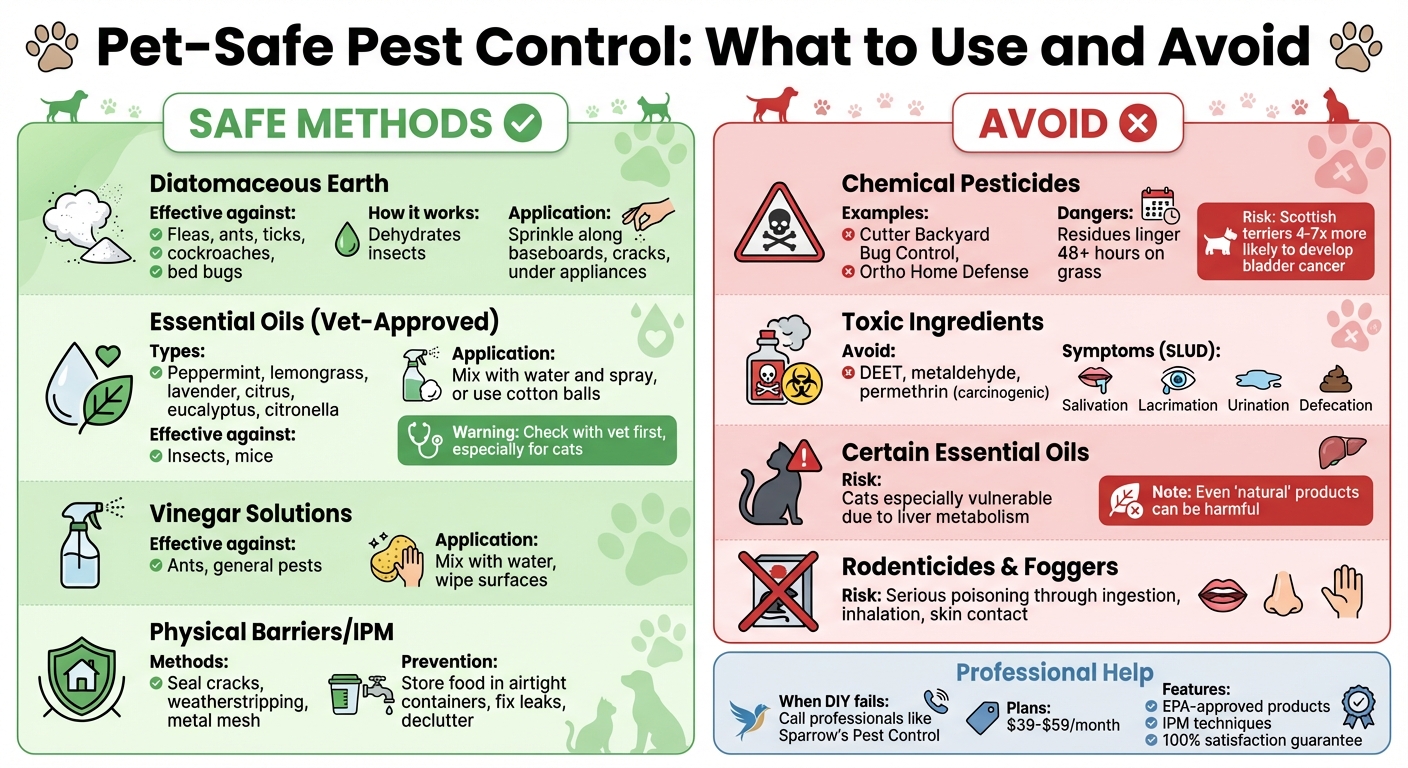
Pet-Safe vs Toxic Pest Control Methods Comparison Chart
Pet Safe Pest Control: What You Need To Know
Safe Pest Control Methods and Products
Dealing with pests doesn’t have to mean putting your pets in harm’s way. Here are effective, pet-friendly strategies to manage common household pests. These methods focus on using natural ingredients and physical barriers instead of harsh chemicals.
Diatomaceous Earth: A Natural Solution
Food-grade diatomaceous earth is a fine powder derived from fossilized algae. It’s a powerful tool against pests like fleas, ants, ticks, cockroaches, and bed bugs. The powder works by dehydrating insects with exoskeletons, damaging their protective coating and ultimately killing them. To use it, sprinkle the powder along baseboards, in cracks, under appliances, or anywhere you’ve spotted pests. You can also lightly dust your pet’s fur or add it to kitty litter to help combat fleas – just be careful to avoid creating dust clouds. This natural remedy pairs well with other pet-safe pest control options.
Essential Oils: A Natural Deterrent
Essential oils can also help keep pests at bay while being safe for pets when used correctly. Oils like peppermint, lemongrass, lavender, citrus, eucalyptus, and citronella naturally repel insects and even mice due to their strong scents. To use, mix a few drops of essential oil with water and spray the solution near entry points or place oil-soaked cotton balls in areas prone to pests. You can also use dried lavender sachets in closets to ward off moths, flies, and mosquitoes, or place citrus peels near windows and doors to deter spiders and flies. However, always check with your veterinarian before using essential oils, as some can be harmful to certain animals, especially cats.
DIY Vinegar Solutions
A simple vinegar and water mixture is another pet-safe option for repelling pests. The strong smell effectively deters ants and other pests while doubling as a cleaning agent. Use the solution to wipe down counters, areas around pet bowls, and other places where pests might gather. It’s an inexpensive and easy way to keep ants away from food sources.
Integrated Pest Management and Sealing Entry Points
For a more permanent solution, focus on prevention through physical barriers and maintenance. Integrated Pest Management (IPM) emphasizes preventing infestations by modifying habitats, using natural controls, and applying physical barriers. Chemical treatments are considered only as a last resort. As Miriam Rotkin-Ellman, Senior Scientist in NRDC‘s Health program, explains:
"People have a knee-jerk reaction and think, ‘I need poison now!’"
Instead, IPM offers a smarter, more sustainable way to address pests.
Start by inspecting your home for cracks or gaps and sealing them with caulk, weatherstripping, or metal mesh. For larger openings (over ¼ inch), use materials like steel wool, cement, or metal that pests cannot chew through.
Keep your home clean by promptly wiping up spills and storing both human and pet food in airtight containers. Declutter spaces like basements and attics to remove potential hiding spots for pests.
Control moisture by fixing leaks, using dehumidifiers in damp areas, ensuring proper ventilation in kitchens and bathrooms, and cleaning gutters to prevent water buildup near your home’s foundation.
In your yard, maintain a pest-resistant landscape by keeping plants and mulch at least 18 inches away from your home, trimming branches so they don’t touch the house, and removing standing water. You can also plant pest-repelling varieties like lavender, marigolds, and rosemary to add an extra layer of protection.
When it comes to trapping pests, choose humane methods such as snap traps, jar traps, pheromone traps, or ultrasonic devices. Avoid glue traps, as they can be inhumane and pose risks to pets. These physical methods can effectively manage pests without exposing your furry friends to harmful substances.
Pest Control Products and Methods to Avoid
While natural solutions can be a safer choice for pest control, many conventional pesticides come with toxic ingredients that can harm your pets. Unlike the pet-friendly methods mentioned earlier, these hazardous products require extra caution. Pets can accidentally ingest, inhale, or absorb these chemicals, leading to serious health risks. Here’s what to watch out for.
Conventional Chemical Pesticides
Some common household pesticides are dangerous for pets. Products like Cutter Backyard Bug Control and Ortho Home Defense contain ingredients that are harmful to animals. For instance, a 2004 study by Purdue University revealed that Scottish terriers exposed to herbicides were four to seven times more likely to develop bladder cancer than those not exposed. Furthermore, pesticides can linger on grass for over 48 hours, with residues found in dogs’ urine and on grass particles even after playtime in treated areas.
Amy Shojai, a Certified Animal Behavior Consultant and award-winning pet book author, highlights the risks:
"Toxic reactions can kill pets. You’ll see signs of poisoning – remember the acronym SLUD, which stands for salivation, lacrimation, urination, and defecation – symptoms often associated with insecticide poisoning. Birds, fish, and cats are especially sensitive, but dogs can also suffer from toxicity."
It’s wise to avoid products containing DEET and metaldehyde. Additionally, permethrin – an ingredient found even in some so-called "organic" products – is classified by the EPA as likely carcinogenic when ingested. Always store such products in their original, sealed containers and keep them out of reach of pets.
Toxic Essential Oils for Cats and Dogs
Even some natural products, like specific essential oils, can be harmful to pets. Cats are especially vulnerable to essential oils and pyrethroids due to their unique liver metabolism. Oils that may be safe for dogs could still pose significant risks for cats.
Dr. Erica Irish, a Veterinary Advisor, offers this important reminder:
"Exposure to ANY of these products can be harmful in some cases. Keep all of these products out of reach of pets and children, even if it says ‘pet safe.’ Any trouble breathing or seizure activity warrants a trip to the ER."
When using essential oils for pest control, always check the ingredient list carefully. If you do choose to use pesticides or essential oils, ensure your pets stay away from treated areas for at least 24–48 hours until everything has dried completely. Watch for warning signs like excessive drooling, vomiting, diarrhea, lethargy, seizures, trouble breathing, or muscle tremors. If any of these occur, contact your veterinarian or the Pet Poison Helpline immediately.
sbb-itb-be66415
Professional Pet-Safe Pest Control Services
When DIY methods fall short or pest problems spiral out of control, turning to professional pest control services can be a safer and more effective option – especially when pets are part of your household. These services align with the pet-friendly practices mentioned earlier, offering peace of mind along with pest elimination.
Why Choose Sparrow’s Pest Control
Sparrow’s Pest Control, serving Bellingham, WA, and nearby areas, specializes in pet-safe and family-friendly pest control solutions. Their process begins with a detailed inspection to pinpoint the pest issue and identify how pests are entering your home. Instead of blanketing your space with chemicals, they craft tailored treatment plans designed to address the specific problem.
Their licensed experts rely on EPA-approved products and Integrated Pest Management (IPM) techniques, which focus on prevention and targeted treatments. This includes sealing entry points, removing food or water sources that attract pests, and applying treatments only where absolutely necessary. They stand by their work with a 100% satisfaction guarantee, offering free re-treatments if pests return between scheduled visits.
Service Plans and Pricing
Sparrow’s Pest Control offers three monthly service plans for homes up to 2,500 square feet. Here’s a breakdown:
- Basic Plan: Starting at $39/month, this plan includes quarterly exterior perimeter sprays, interior treatments as needed, and routine inspections.
- Essential Plan: At $45/month, this plan adds rodent bait stations, de-webbing services, and wasp prevention sprays – great for pet owners whose furry friends might accidentally disturb nests.
- Premium Plan: For $59/month, this plan includes all the features of the Essential Plan plus wasp nest removal, flea and tick treatments, and rodent exclusion services.
All plans include free inspections and follow-ups, ensuring your home stays pest-free over the long term. The company uses products that are safe for pets when applied as directed and provides guidance on any precautions you should take during treatments. Their IPM approach minimizes pesticide use, prioritizing prevention and safety while keeping pests at bay.
Conclusion
Keeping your pets safe while tackling pest problems boils down to smart prevention and informed decisions. Start with the basics: seal up entry points, store food in airtight containers, and keep your home clean. If pests persist, opt for pet-friendly solutions like food-grade diatomaceous earth, vet-approved essential oils, or vinegar-based treatments.
Steer clear of chemical pesticides, rodenticides, and foggers – they pose serious poisoning risks. Even some "natural" products aren’t safe; for instance, permethrin is highly toxic to cats. Always read product labels carefully and follow the instructions to the letter. These steps lay the groundwork for more targeted measures if needed.
"Pet owners can minimize the chance of their pet having a problem by following label directions, selecting lower toxicity pesticides, and minimizing the amount of exposure their pet has to the pesticide during and after the application." – NPIC
When DIY solutions fall short, it’s time to call in the pros. Companies like Sparrow’s Pest Control use EPA-approved products and Integrated Pest Management techniques, with plans starting at $39/month.
With the right precautions and a thoughtful approach, you can keep your home pest-free without compromising your pet’s safety.
FAQs
What are the best natural pest control options that are safe for pets?
When you’re looking to keep pests away without putting your pets at risk, natural solutions can be a fantastic alternative. For example, diatomaceous earth is a safe, non-toxic powder that works by dehydrating insects, effectively eliminating them. Another simple option is a soap and water spray, which can help ward off pests like aphids and mites.
You might also consider natural repellents made with basil, mint, lavender, or lemongrass essential oils – just make sure to dilute them properly before use. Additionally, planting pet-friendly herbs such as rosemary, lemon balm, catnip, and peppermint in your garden can serve as a natural pest barrier while being completely safe for your pets. As always, double-check that any plant or method you choose is safe for the specific animals in your household.
What are safe and effective ways to keep pests away without using harmful chemicals?
Keeping pests out of your home doesn’t have to involve harsh chemicals. The key lies in natural and preventative strategies. Start by keeping your home clean – regular vacuuming, wiping down surfaces, and storing pet food in sealed containers can eliminate food sources that attract pests. To stop pests from sneaking in, seal up any gaps around windows, doors, and your home’s foundation using caulk or weatherstripping.
Natural repellents can also work wonders. Try using a vinegar solution, citrus sprays, or essential oils like peppermint or lemon – these are safe for pets and can deter many pests. Outside, eliminate standing water, trim back overgrown plants, and clear away clutter in your yard to reduce places where pests might hide. For added protection, you can use pet-safe options like diatomaceous earth or even introduce beneficial insects to help manage pest populations naturally.
If you need extra help, Sparrow’s Pest Control offers pet- and family-safe pest management services in Bellingham, WA, and surrounding areas. They provide eco-friendly, tailored solutions to keep your home pest-free without compromising your pets’ safety.
What should I do if I think my pet has been exposed to pesticides?
If you think your pet has come into contact with pesticides, time is of the essence. Reach out to your veterinarian right away or call an emergency animal clinic for advice. While waiting for professional help, focus on keeping your pet calm and immediately remove them from the contaminated area. If the pesticide has gotten on their fur or skin, carefully rinse the area with lukewarm water, but avoid scrubbing, as it could irritate their skin further. In cases where your pet has ingested the pesticide, do not try to make them vomit unless a vet explicitly tells you to. Acting quickly can play a crucial role in protecting your pet’s health.