

Pest problems in the Pacific Northwest are intensifying due to warmer winters and longer active periods. Here’s what you need to know:
- Milder winters mean pests like ants, ticks, and spiders survive in greater numbers, leading to larger infestations.
- Earlier springs are triggering pests to breed sooner, extending their activity into fall.
- Forest damage is escalating as bark beetles thrive, killing trees and increasing wildfire risks.
- Farmers face challenges with pests like aphids and moths emerging earlier, disrupting planting cycles.
To protect your home:
- Seal entry points and eliminate moisture sources.
- Monitor pest activity as temperatures rise.
- Consider comparing pest control methods to find tailored solutions for your home.
The takeaway: Climate change is reshaping pest behavior, requiring year-round vigilance to manage growing infestations effectively.
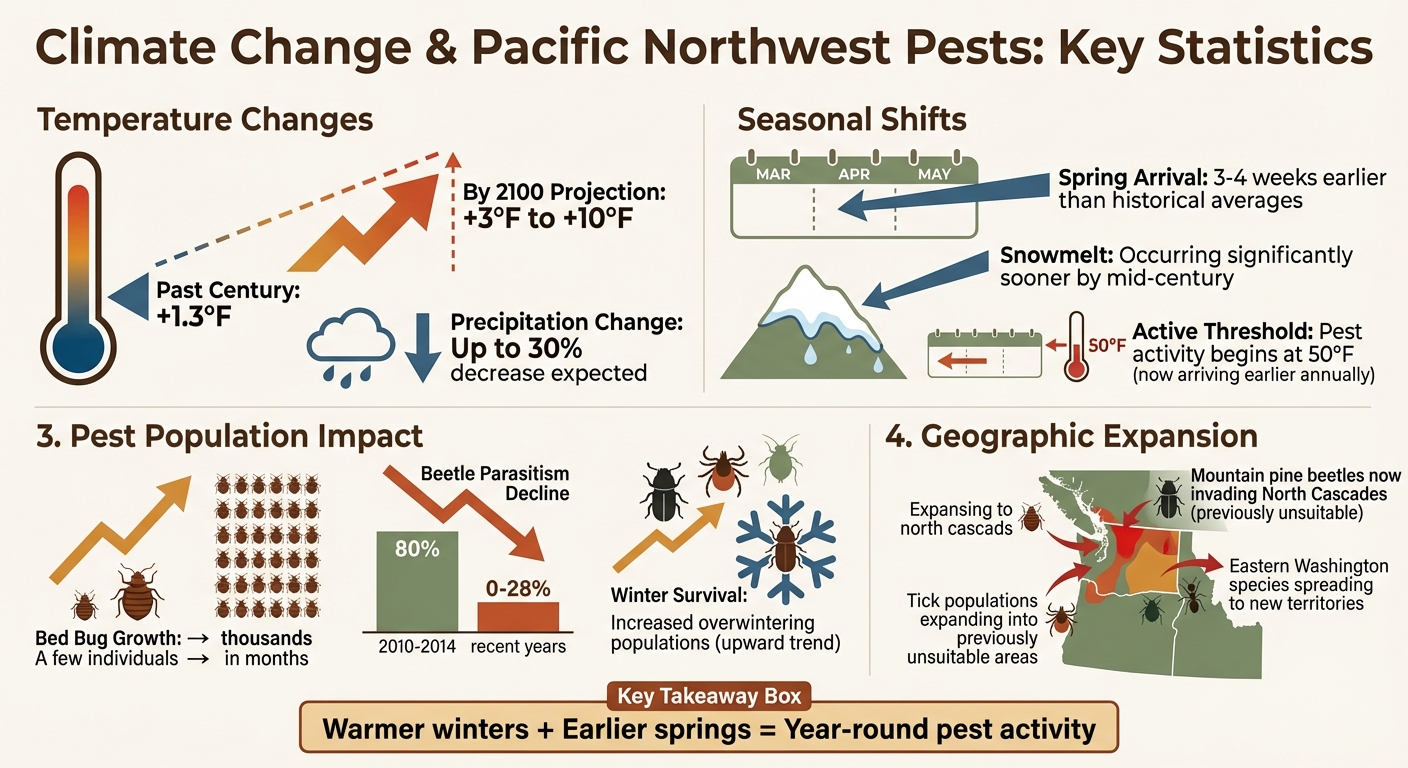
Climate Change Impact on Pacific Northwest Pests: Key Statistics and Temperature Projections
Climate Change Effects on Forest Insects & Diseases
sbb-itb-be66415
How Warmer Temperatures Change Pest Behavior
Over the past century, the Pacific Northwest has experienced a temperature increase of 1.3°F, with projections suggesting a rise of 3°F to 10°F by 2100. These warming trends are reshaping pest behavior and their geographical spread. Since the early pest invasions recorded in 2026, climate change has continued to alter pest life cycles, creating noticeable shifts in seasonal pest dynamics.
Higher temperatures accelerate pest reproduction. Warmer spring temperatures, for instance, trigger earlier breeding among pests like ants, spiders, cockroaches, stinging insects, and house crickets. A striking example is the rapid growth of bed bug populations, which can expand from just a few individuals to thousands in a matter of months. This heightened reproduction rate makes controlling infestations increasingly difficult.
Climate change is also pushing pests into new territories. Species that were once confined to Eastern Washington‘s warm, dry climate are now appearing in previously unsuitable areas, such as the North Cascades. The mountain pine beetle, for example, has started to invade regions where it could not survive before. As summers become hotter and drier, with precipitation expected to drop by up to 30%, trees become stressed, making them more susceptible to insect outbreaks.
Milder Winters Mean More Pests
Warmer winters are disrupting the natural population control that harsh cold once provided. Pests like mice, spiders, and earwigs, which previously struggled to survive freezing temperatures, are now thriving indoors, where warmth and moisture offer refuge. Without the usual winter die-off, pest populations emerge in greater numbers each spring, leading to larger colonies and setting the stage for population booms.
Pests Are Active Earlier and Longer
The effects of milder winters extend into the spring, where earlier warming now lengthens the active period for pests. Spring arrives three to four weeks earlier than in the past, with snowmelt occurring significantly sooner by mid-century. This earlier warmth activates pests earlier than usual, giving them a head start on breeding and population growth.
The prolonged warm season means pests remain active for much longer. They emerge earlier in the spring, stay highly active through extended summers, and linger into late fall. As temperatures finally drop, many pests move indoors seeking warmth, leading to increased infestations during the colder months. This extended activity window amplifies the challenges of managing pest populations year-round.
Major Pest Problems in the Pacific Northwest
The Pacific Northwest is facing growing challenges as changing environmental conditions reshape pest behavior. These shifts are not just ecological concerns – they’re impacting residents, industries, and the natural environment. Identifying which pests are expanding their reach is crucial to mitigating these threats.
Bark Beetles Damaging Local Forests
Bark beetles, particularly the mountain pine beetle, are wreaking havoc on local forests. Rising temperatures and altered snowpacks are stressing trees, making them more vulnerable to infestations. Subalpine, maritime, and dry coniferous forests have been hit especially hard by these beetles. The consequences extend beyond dying trees. Infested forests become tinderboxes, fueling larger and more frequent wildfires that endanger nearby communities. Economically, the damage is staggering, with losses in timber revenue and disruptions to bioenergy markets.
More Ticks and Disease Risks
Tick populations are on the rise across the region, and with them comes an increased risk of diseases. Milder winters are allowing ticks to survive in greater numbers and spread into areas that were once unsuitable for them. This expansion raises concerns about Lyme disease and other tick-borne illnesses that can affect both humans and pets. The agricultural sector isn’t spared either, as crop pests are also taking advantage of these changing conditions, adding to the challenges farmers face.
Crop Pests Affecting Farms
Farmers are grappling with pests that are emerging earlier and reproducing more quickly. Pests like the codling moth, peach twig borer, and oriental fruit moth are becoming more common as warmer temperatures disrupt their natural life cycles. These changes mean shorter generation times, and in some cases, additional half-generations, which lead to increased crop damage and higher production costs. Farmers are also dealing with early appearances of pests like aphids, weevils, and ants, which throw off traditional planting and pest management schedules.
How to Manage Climate-Driven Pest Problems
Dealing with pests has become more challenging as climate change extends their active seasons. With warmer temperatures keeping bugs and rodents active during months that were once pest-free, waiting until you spot them is no longer a reliable strategy. Instead, proactive measures are essential to stay ahead.
Using Integrated Pest Management (IPM)
Integrated Pest Management (IPM) focuses on regular monitoring, habitat adjustments, and targeted treatments, reducing the need for chemical solutions. This method is crucial as climate change disrupts the balance between pests and their natural predators. For example, a 2023 study by Oregon State University revealed a dramatic decline in parasitism rates of cereal leaf beetles by natural wasps – from 80% between 2010 and 2014 to as low as 0% to 28% in recent years.
"Warmer spring conditions had caused the pest and its natural enemy to emerge at different times, breaking the biological control that farmers had relied on for years".
To combat this, start monitoring pest activity as soon as spring temperatures consistently exceed 50°F – a threshold now arriving earlier each year. Seal gaps around your home to block entry points (remember, mice can squeeze through spaces smaller than a dime). Address leaks quickly and store pet food in sealed containers to eliminate indoor attractants. For outdoor spaces, try planting trap crops – like oats sown two weeks after your main crop – to divert pests away from your primary harvest. Before resorting to insecticides, ensure that fewer than 75% of pest larvae are parasitized by beneficial insects; otherwise, chemical treatments may disrupt natural controls.
Professional pest control services can enhance these strategies with localized expertise.
Working with Professional Pest Control
Local pest control services offer tailored solutions for adapting to shifting pest behaviors. As Luke Knoll, Marketing Manager at Interstate Pest Management, notes:
"Pest problems in our region aren’t the same as anywhere else in the country… Our goal has always been to provide practical, local solutions – because we understand the ecology and the environment right here in our backyard".
For example, Sparrow’s Pest Control in Bellingham, WA, provides services specifically designed for Pacific Northwest conditions. Their offerings include detailed property inspections, sealing entry points, and prevention strategies using family- and pet-safe products. With temperatures projected to rise by 3°F to 10°F by the century’s end, professional monitoring becomes vital for detecting early warning signs – like rodents seeking warmth during milder winters – before infestations spiral into costly problems. Their IPM approach aligns with sustainable, long-term methods to address the challenges brought by climate-driven pest activity.
Preparing for Climate Changes
As warmer winters and longer active periods amplify pest pressures, regular property maintenance and inspections are more critical than ever. Pay attention to temperature trends to predict pest activity. Keep outdoor plants trimmed back from your home, and ensure mulch or compost doesn’t touch your siding. Schedule inspections of crawl spaces and attics, which are prime nesting spots during the Pacific Northwest’s unpredictable weather. For ant infestations, opt for pesticide baits rather than repellent sprays, which can scatter colonies and worsen the problem inside walls.
The reality is that winter no longer guarantees a break from pests – milder, wetter conditions now encourage indoor activity from rodents, ants, and spiders. Staying vigilant year-round is key to managing these evolving challenges effectively.
Conclusion
Warmer winters are reshaping pest behavior. Pests that used to go dormant now remain active throughout the year, and overwintering populations are no longer being naturally reduced. Jim Fredericks, Senior Vice President of Public Affairs at the National Pest Management Association, highlights this shift:
"We’re already having reports of ant activity throughout the winter… What that means for us, as the weather continues to warm up, is that we should expect a lot of ant pressure this spring."
These changes call for immediate action. Protecting your home starts with simple measures: seal cracks and entry points, eliminate moisture sources, and adjust landscaping to limit pest access. Taking these steps early can stop infestations before they start.
The impact goes beyond homes. For farmers, understanding how climate affects pest life cycles is critical. A small water source, like a bottle cap, can become a breeding ground for mosquitoes, underscoring the importance of vigilance.
The reality is clear: winter no longer offers a natural pause in pest activity. With rising temperatures, year-round pest management is now a necessity. Whether through DIY methods or professional assistance, staying ahead of these challenges is key to protecting your home and community.
For expert advice tailored to your area, consider reaching out to professionals like Sparrow’s Pest Control (https://www.sparrowspestcontrol.com). Taking proactive steps today ensures your home and environment are prepared for the growing pressures of climate-driven pest activity.
FAQs
Which pests are increasing most in the Pacific Northwest?
Ants and termites are becoming increasingly problematic in the Pacific Northwest. Ant populations, in particular, are on the rise, driven by warmer winter conditions. These shifts in pest activity underscore the need for proactive pest control strategies in the area.
When should I start monitoring for pests each year now?
Begin keeping an eye out for pests as early as March or April. As the weather warms up, pests tend to become more active. Catching them early can make a big difference in preventing larger infestations. Regular inspections during this period are essential for staying on top of pest activity.
How do I know when to call Sparrow’s Pest Control?
If you spot signs of pests like ants or other unwelcome critters in your home or yard, reach out to Sparrow’s Pest Control. With pest populations increasing in the Pacific Northwest due to climate change, taking quick action is more important than ever. Their team of experts is ready to provide safe and effective solutions to tackle the problem.