

Finding unwelcome furry guests in your home isn’t just annoying—it can affect your health and damage your property. Mice and rats are common household pests, but the good news is that spotting them early makes solving the problem much easier. This guide will help you figure out if you have rodents, how to keep them out, and what to do if they’ve already moved in.
Spotting Signs of Rodents
Rodents are sneaky, but they always leave clues. Here’s what to look for if you suspect mice or rats have taken up residence in your home:
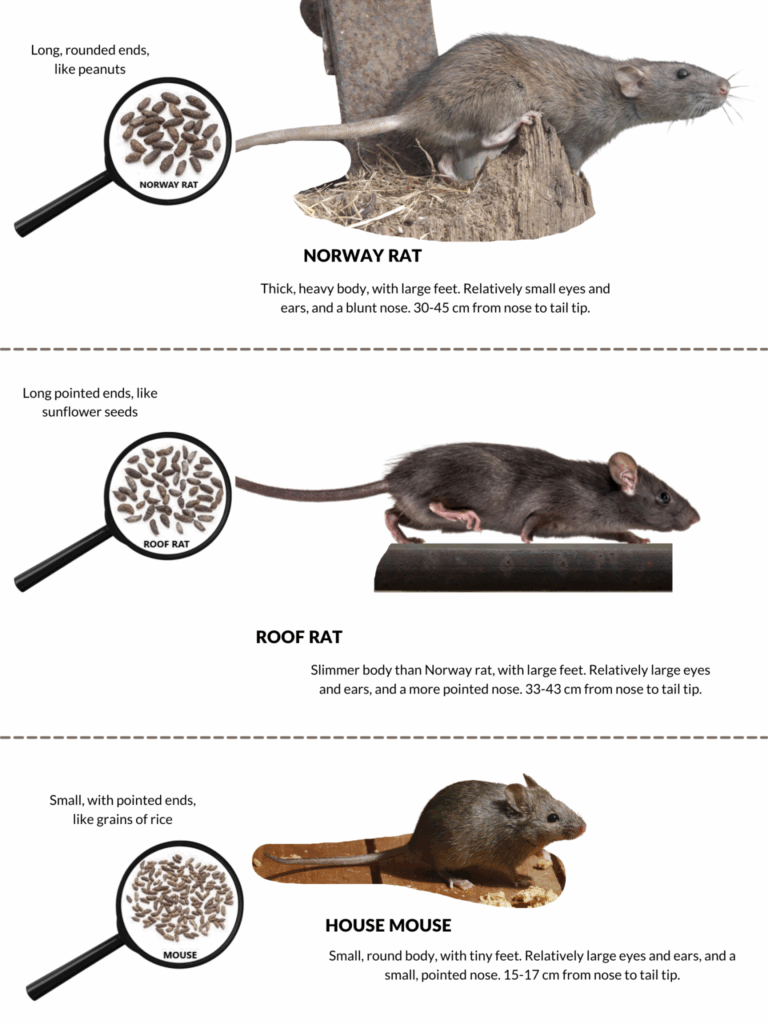
Droppings: This is usually the first sign people notice. Rodent droppings look like small, dark pellets—mouse droppings are about the size of rice grains, while rat droppings are larger, around the size of a raisin. You’ll typically find them along walls, in drawers, inside cabinets, or near food sources. Fresh droppings are dark and shiny, while older ones turn gray and crumbly.
Gnaw marks: Since rodents’ teeth never stop growing, they’re constantly chewing on things. Check food packages, wooden furniture, baseboards, and even electrical wires for small teeth marks. These marks are a clear sign that rodents have been exploring your space.
Unusual pet behavior: Your pets often detect rodents before you do. If your dog suddenly starts barking at walls or your cat shows intense interest in certain areas, they might be sensing rodents you can’t see. Their keen hearing and smell can pick up on hidden visitors.
Nighttime noises: Hear scratching, scurrying, or squeaking sounds in your walls, ceiling, or under the floor? Since rodents are most active after dark, these sounds are often most noticeable when the house is quiet at night.
Distinctive odor: A strong, musky smell often indicates rodent urine. This becomes more noticeable as the number of rodents increases or when they’ve established nests in your home. If an area of your house has a persistent strange smell, it might be worth investigating further.
You might also spot nesting materials (shredded paper, fabric, or insulation) in quiet corners, or even see actual rodents, especially at dawn or dusk when they’re most active.
Keeping Rodents Out
The best way to deal with rodents is to prevent them from getting in your home in the first place. Here’s how:
Seal up entry points: Inspect your home’s exterior for gaps and cracks. Remember that mice can squeeze through openings as small as a dime! Use steel wool, caulk, or metal flashing to seal these potential entrances. Pay special attention to areas where pipes or wires enter your home.
Store food properly: Keep food (including pet food) in containers with tight-fitting lids made of glass or heavy-duty plastic that rodents can’t chew through. Don’t leave food out overnight, and clean up crumbs and spills right away.
Keep things clean: Regular cleaning makes a big difference. Take out trash frequently, wipe down counters, and don’t let dirty dishes pile up in the sink. A clean kitchen is much less attractive to hungry rodents.
Fix leaks and manage moisture: Repair any leaky pipes or faucets since rodents, like all creatures, need water to survive.
Maintain your yard: Trim bushes and tree branches so they’re at least 3 feet from your house. Keep grass short, clean up fallen fruits or nuts, and store firewood away from your home and raised off the ground.
Taking these steps creates an environment that’s far less welcoming to rodents and makes it harder for them to establish themselves in your home.
Getting Rid of Existing Rodents
If you’ve confirmed that rodents have already moved in, you have several options:
Trapping: Traditional snap traps are quick and effective when placed properly along walls where rodents travel. Bait them with peanut butter, chocolate, or bacon for best results. Live traps are a humane alternative if you prefer to release the rodents elsewhere (at least a mile from your home). Just remember to check traps regularly—no one wants a forgotten trap with a dead mouse.
Bait stations: These contain rodenticides (poison) that attract and eliminate rodents. While effective, they must be used carefully, especially in homes with children or pets. Always follow the instructions exactly and place them where only rodents can access them.
Professional pest control: If the problem seems extensive or your efforts aren’t working, calling in the experts might be your best bet. Professionals have the training and tools to address significant infestations and can offer tailored solutions for your specific situation.
Whichever method you choose, be patient—it might take a week or two to completely solve the problem, especially if you have multiple rodents.

Health Risks & Why Quick Action Matters
Rodents aren’t just gross—they can make you sick. They carry various diseases that can spread to humans through their droppings, urine, saliva, or even the dust from their nesting areas. Some common health concerns include:
- Food contamination leading to salmonella
- Allergies and asthma triggers from their presence
- Diseases like hantavirus from inhaling dust containing rodent waste
- Potential fire hazards from chewed electrical wires
The longer an infestation continues, the greater these risks become. Taking action at the first signs of rodent activity protects both your health and your property. It’s also much easier to deal with two mice than twenty!
Staying Rodent-Free Long-Term
Maintaining a rodent-free home requires ongoing vigilance:
Regular inspections: Check potential entry points and common areas where rodents might return, especially before winter when they’re looking for warm places to nest.
Maintain cleanliness: Continue good cleaning practices, especially in food storage and preparation areas.
Work with neighbors: Rodent problems often affect multiple homes in an area. Talking with neighbors and coordinating prevention efforts creates a more effective barrier against these pests.
Remember that rodent control isn’t a one-time solution but an ongoing process. Staying consistent with preventive measures is the key to keeping your home rodent-free and your mind at ease.
By understanding the signs of rodent activity and knowing how to respond, you can protect your home from these persistent pests and enjoy a healthier living environment.