In the Pacific Northwest, certain non-native pests are causing serious damage to homes, agriculture, and ecosystems. Early identification is key to managing these threats effectively. Here’s what you need to know:
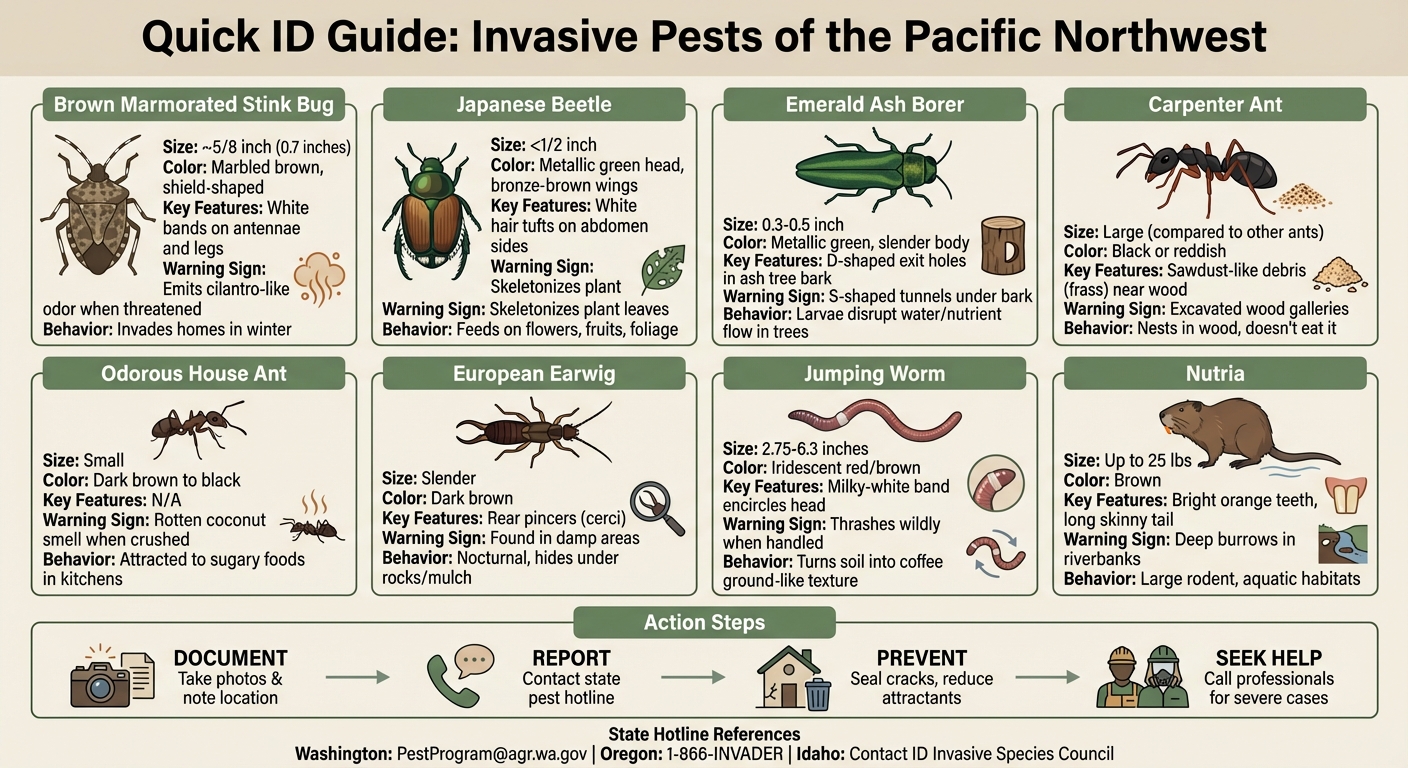
- Brown Marmorated Stink Bug: Marbled brown body, emits a cilantro-like odor, invades homes in colder months.
- European Earwig: Slender with rear pincers, hides in damp areas, feeds on plants and insects at night.
- Odorous House Ant: Small, dark brown to black, smells like rotten coconut when crushed, attracted to sugary foods.
- Carpenter Ant: Large, black or reddish, excavates wood for nests, leaves sawdust-like debris.
- Japanese Beetle: Metallic green head, bronze wings, skeletonizes plant leaves, damages crops and gardens.
- Emerald Ash Borer: Metallic green, leaves D-shaped exit holes in ash trees, disrupts water/nutrient flow.
- Jumping Worms: Iridescent red/brown, thrash wildly, degrade soil quality.
- Nutria: Large rodent with orange teeth, digs damaging burrows in riverbanks.
Steps to Take:
- Document: Take photos and note the location of the pest.
- Report: Contact your state’s pest hotline or agency (e.g., Washington Invasive Species Council, Oregon Invasive Species Hotline).
- Prevent: Seal cracks, minimize outdoor lighting, and follow guidelines like "Clean, Drain, Dry" for aquatic pests.
- Seek Help: For severe infestations or structural damage, consult a licensed pest control professional.
Taking swift action can help protect your property and the region’s natural resources. Stay vigilant and report any unusual pests.
Pacific Northwest Invasive Pest Identification Guide
Rise in stink bugs in the PNW
sbb-itb-be66415
Common Non-Native Pests in the Pacific Northwest
The Pacific Northwest faces challenges from several invasive pests that can disrupt homes and ecosystems. Recognizing their traits early can help prevent infestations.
Brown Marmorated Stink Bug
The Brown Marmorated Stink Bug (BMSB) has a marbled brown, shield-shaped body, measuring about 0.7 inches long. It’s easy to spot thanks to the white bands on its dark antennae and legs, as well as the smooth edge on its thorax. When threatened or crushed, it emits a smell similar to cilantro. They often invade homes during colder months in search of warmth.
European Earwig
European Earwigs are slender insects with noticeable pincers at the rear. They thrive in damp areas like under rocks, mulch, or garden debris. During the day, they hide in dark, moist spots, emerging at night to feed on plants and insects.
Odorous House Ant
Odorous House Ants are small, ranging in color from dark brown to black. When crushed, they release a smell resembling rotten coconut. Drawn to sugary foods, they frequently invade kitchens and pantries. Early detection is crucial to stop their colonies from expanding quickly.
Carpenter Ant
Carpenter Ants are larger than most ants and are typically black or reddish in color. Unlike termites, they don’t eat wood but excavate it to create nests. This activity leaves behind sawdust-like debris (frass) near baseboards, window frames, or wooden structures. Their nesting habits can weaken structural integrity over time.
Japanese Beetle
Japanese Beetles are distinctive with their metallic green heads and thoraxes, paired with bronze-brown wing covers. They’re often seen on plants, feeding on flowers, fruits, and foliage. Their feeding style, which skeletonizes leaves by eating the tissue between veins, poses a serious threat to agriculture and ornamental plants in the region.
Below is a summary of their key traits for quick reference:
| Pest | Key Features | Common Behavior |
|---|---|---|
| Brown Marmorated Stink Bug | Marbled brown body, white-banded antennae | Emits cilantro-like odor when threatened |
| European Earwig | Slender body, rear pincers | Active at night, hides in damp environments |
| Odorous House Ant | Small, dark brown to black | Smells like rotten coconut when crushed |
| Carpenter Ant | Large, black or reddish | Excavates wood, leaves sawdust-like debris |
| Japanese Beetle | Metallic green head, bronze-brown wings | Feeds on plants, skeletonizes leaves |
Quick Reference Table for Pest Identification
Physical and Behavioral Traits
Quickly identifying pests is crucial for managing invasive species in your area. Below is a handy table outlining key physical and behavioral traits to help you recognize some common culprits.
In addition to the pests already discussed, others such as the Emerald Ash Borer, Jumping Worms, and Nutria pose serious risks. The Emerald Ash Borer is known for its metallic green body and D-shaped exit holes in ash tree bark. Jumping Worms are notorious for their vigorous thrashing and the way they transform soil into clumpy, coffee ground-like granules. Meanwhile, Nutria stand out with their bright orange teeth and long, skinny tails, which differentiate them from beavers.
Here’s a quick reference table to help you identify these and other invasive pests:
| Pest | Size | Color | Key Identifying Features | Behavior/Habits |
|---|---|---|---|---|
| Brown Marmorated Stink Bug | ~5/8 inch | Marbled brown | White bands on antennae and legs; shield-shaped | Emits cilantro-like odor; swarms homes in winter |
| Japanese Beetle | < 1/2 inch | Metallic green & bronze | White hair tufts on sides of abdomen | Skeletonizes leaves; grubs damage turf |
| Emerald Ash Borer | 0.3–0.5 inch | Metallic green | Slender body; D-shaped exit holes in bark | Larvae create S-shaped tunnels under bark |
| Jumping Worm | 2.75–6.3 inches | Iridescent red/brown | Milky-white band encircles the head | Thrashes wildly; turns soil into "coffee grounds" |
| Nutria | Up to 25 lbs | Brown | Orange teeth; long skinny tail | Digs deep burrows in riverbanks |
| Zebra Mussel | 1.5–2 inches | Dark/Light stripes | Triangular shell with zigzag patterns | Clogs water pipes; clings to boat hulls |
This table is designed to make pest identification simple and effective. Spot something unusual in your yard, garden, or home? Use these traits to pinpoint the pest and figure out your next steps.
What to Do After Identifying a Non-Native Pest
Reporting Non-Native Pests
Start by documenting your findings thoroughly. Take clear, detailed photos from multiple angles and note the exact location. These details help experts determine whether you’ve spotted a native species or a genuine invasive pest.
Each state in the Pacific Northwest has specific reporting methods. If you’re in Washington, you can report sightings through the Washington Invasive Species Council’s website or app. Alternatively, email your photos directly to the Washington State Department of Agriculture at PestProgram@agr.wa.gov. Oregon residents should call the Oregon Invasive Species Hotline at 1-866-INVADER (1-866-468-2337) or submit an online report at oregoninvasiveshotline.org. For Idaho, contact the Idaho Invasive Species Council or the Idaho State Department of Agriculture.
"The more eyes searching for invasive species, the more likely we are to detect an invasive species before it becomes established in Washington or contain the spread of the pest." – Washington State Department of Agriculture
After submitting your report, expect a response within two weeks as experts review your findings and coordinate with the appropriate agencies. Your report could initiate an Early Detection and Rapid Response (EDRR) effort. For example, citizen reports have previously helped prevent feral swine from establishing populations in Washington through swift inter-agency action. Once you’ve reported the pest, take steps to secure your home and prevent further entries.
Preventing Infestations
Once you’ve identified and reported an invasive pest, shift your focus to protecting your property. Seal up potential entry points like cracks around windows, doors, siding, and foundations. Pests such as brown marmorated stink bugs often use these gaps to enter homes during colder months. Use weatherstripping, caulk, and door sweeps to block these access points.
When dealing with firewood, follow the "Buy it where you burn it" guideline to stop the spread of wood-boring pests like the Emerald Ash Borer. After outdoor activities, check your gear and clothing for any hitchhiking pests.
You can also reduce attractants around your property. Keep outdoor lighting to a minimum during pest-heavy seasons, store trash in tightly sealed containers, and eliminate standing water where pests might breed. For aquatic pests like zebra and quagga mussels, follow the "Clean, Drain, Dry" method for boats and fishing equipment. And if you have exotic pets like red-eared sliders or bullfrogs, never release them into the wild. Instead, contact local animal rescues or use "Don’t Let it Loose" resources.
When to Contact a Pest Control Professional
If prevention and DIY solutions aren’t enough, it might be time to call in the experts. Professional help is crucial when dealing with structural damage, widespread infestations, or high-risk species. For instance, signs of wood-boring insects like exit holes in trees or Japanese beetles damaging your plants require immediate attention. High-priority pests such as the Northern Giant Hornet, which pose risks to both humans and honeybee populations, also demand expert handling.
Start by reporting the issue to your state agency to see if an eradication program is already in place. If the pest is widespread and resources are limited, management may fall to you as the property owner. In such cases, hiring a professional pest control service is often the best course of action.
For residents in the Pacific Northwest, Sparrow’s Pest Control in Bellingham, WA, offers comprehensive inspections and tailored extermination plans. Their licensed exterminators use EPA-approved products that are safe for families and pets, and they back their services with a 100% satisfaction guarantee. Whether you’re dealing with a severe infestation or an unfamiliar pest causing damage, a professional assessment ensures accurate identification and effective treatment.
Conclusion
Identifying pests early helps protect homes, businesses, and natural habitats. Quick detection allows state agencies to step in, containing or eliminating pests before they become permanent problems. Invasive wood-boring pests, in particular, can cause major economic damage to the region.
By staying alert and reporting unfamiliar pests, you’re not just safeguarding your home – you’re also playing a key role in regional pest management. Every year, the Washington State Department of Agriculture keeps watch for over 130 pests and diseases. Your participation strengthens these efforts and ensures faster, more effective responses.
Taking action early is the most affordable and effective way to prevent pest infestations. Simple habits like sealing cracks, checking outdoor gear for pests after visiting infested areas, and keeping your property clean can make a big difference. These small steps don’t just protect your home – they also shield the Pacific Northwest’s agricultural markets and natural environments.
When prevention isn’t enough or structural damage occurs, professional help becomes necessary. In Bellingham and nearby areas, Sparrow’s Pest Control offers thorough inspections and tailored treatment plans using EPA-approved products safe for families. Their licensed exterminators can identify unusual pests and provide effective solutions, with a 100% satisfaction guarantee to back their services.
Protecting the Pacific Northwest requires swift action. Whether it’s documenting a strange insect, reporting it to the state hotline, or calling in experts, every effort contributes to preserving the region’s unique environment and economy for future generations.
FAQs
How can I tell a carpenter ant from a termite?
Carpenter ants are easy to spot with their elbowed antennae and black or red-and-black coloring. They chew through wood to create nests, leaving behind telltale piles of sawdust. Termites, by contrast, have straight antennae and actually eat the wood, producing tiny pellets, known as frass, instead of sawdust. Paying attention to these distinctions in antenna shape and wood debris can help you figure out which pest is causing the problem.
What photos should I take to report an invasive pest?
To report an invasive pest, it’s important to take clear, detailed photos that highlight its key identifying features. Make sure to capture images from different angles, like a top view and a side profile, to showcase details such as color, markings, and body shape. For instance, if you’re photographing a southern green stink bug, include shots of its top view and underbelly. Similarly, for an elm seed bug, provide both dorsal and side views. These details are essential for ensuring accurate identification.
When should I call Sparrow’s Pest Control for an infestation?
Reach out to Sparrow’s Pest Control at the first sign of a pest problem in your home or on your property. Look out for warning signs like unfamiliar insects, unexplained property damage, or strange activity that could point to pests. Acting quickly can help stop the issue from escalating. Sparrow’s team offers thorough inspections and tailored treatment plans that are safe for both your family and pets, ensuring the problem is handled effectively.