
Pest droppings are more than just unpleasant – they reveal the type of pest and the severity of an infestation. In the Pacific Northwest, common pests like rodents, cockroaches, termites, and carpenter ants leave behind distinct droppings that signal health risks and potential property damage. Here’s what you need to know:
- Rodents (Mice & Rats): Droppings vary by size and shape. Mice leave small, pointed pellets (1/8–1/4 inch), while rats leave larger, blunt ones (1/2–3/4 inch). Both can spread diseases like hantavirus and salmonella.
- Cockroaches: Droppings resemble pepper specks or small pellets, depending on the species. They can trigger asthma and allergies.
- Termites & Carpenter Ants: Frass (wood-colored pellets or sawdust-like shavings) indicates structural damage.
- Health Risks: Rodent droppings can contaminate food, and bat guano may lead to respiratory infections like histoplasmosis.
Identifying droppings early helps prevent infestations from worsening. Always clean with caution – use gloves, masks, and disinfectants to avoid spreading harmful particles. For severe infestations, professional pest control services in Bellingham can ensure safety and thorough cleanup.
Mouse and Rat Droppings
Mouse Droppings
Mouse droppings are small, about the size of a grain of rice (1/8 to 1/4 inch long), with pointed ends. You’ll often spot them scattered along baseboards, inside kitchen cabinets, under sinks, or behind appliances. Unlike rats, mice don’t stick to one spot – they defecate as they move, leaving trails along their routes.
A single mouse can produce 50–80 pellets a day, adding up to roughly 27,000 droppings annually. Fresh droppings are dark, shiny, and soft, but within 2–3 days, they turn dull gray and crumble easily. Finding both fresh and older droppings together is a strong indicator that you have a rodent problem. These signs can guide you to potential nesting areas and entry points.
Rat Droppings
Rat droppings differ in size and placement compared to mouse droppings. They are larger, typically 1/2 to 3/4 inch long, and are usually concentrated in specific latrine areas. To put it in perspective, they’re about the size of an olive pit or a Tic Tac. The type of rat can also influence the appearance of the droppings:
- Norway rats leave droppings about 3/4 inch long with blunt, rectangular ends. These are often found in basements, crawlspaces, or ground-level areas.
- Roof rats produce slimmer droppings, around 1/2 inch long, with pointed or pinched ends and a slight curve. You’re more likely to find these in attics, rafters, or other elevated spaces.
Rats produce fewer droppings than mice – about 20–60 pellets daily – but they tend to cluster them in specific spots near their nests or feeding areas. Over the course of a year, a rat can leave behind up to 25,000 droppings. They also contaminate up to 10 times the amount of food they consume. These patterns make it easier to identify active nesting zones during inspections.
When cleaning rat droppings, avoid sweeping or vacuuming, as this can release harmful particles into the air. Instead, spray the area with disinfectant or a 1:10 bleach-to-water solution. Let it sit for 5 minutes, then wipe it up with paper towels while wearing rubber gloves and an N95 mask.
sbb-itb-be66415
Droppings from Insect Pests
Cockroach Droppings
Cockroach droppings vary depending on the species. For smaller types like German cockroaches, their waste looks like tiny black specks, often compared to ground coffee or pepper, and can create dark, inky smears in tight spaces. These droppings are usually just 1–2 mm in size. Larger species, such as American or Oriental cockroaches, leave behind solid, cylindrical pellets measuring about 2–3 mm. These pellets have blunt ends and distinct ridges running lengthwise, resembling small fennel seeds.
"Big roaches leave firm, rice-sized pellets; small roaches scatter pepper-like specks and inky coffee stains." – Dr. Michael Turner, Entomologist and Pest Control Specialist
The appearance of cockroach droppings changes over time. Fresh droppings are dark brown or black and moist, while older ones become dry, lighter in color, and brittle. You’ll often find them in warm, humid spots like kitchen cabinets, behind refrigerators, under sinks, or near plumbing. A musty, oily, or acrid smell is typically associated with these droppings, and the odor becomes stronger as the infestation worsens. These droppings also contain pheromones that signal to other cockroaches that the area is safe, potentially worsening the infestation if not cleaned up promptly.
When cleaning cockroach droppings, avoid dry sweeping or vacuuming to prevent allergens from spreading. Instead, wear disposable gloves and an N95 mask, lightly mist the droppings with disinfectant or a diluted bleach solution (1:10 ratio), and then wipe them up using damp paper towels.
Termite and Carpenter Ant Frass
Wood-damaging pests like termites and carpenter ants leave droppings that can indicate structural issues. Termite frass consists of tiny 1-mm pellets with six concave sides and rounded ends. These pellets often form small, uniform piles that look like salt, pepper, or sawdust. Their color varies from light beige to black, depending on the wood being consumed. Drywood termites typically leave these pellets near "kick-out holes" in wood, while subterranean termites rarely leave visible frass since they use it to build their mud tubes.
Carpenter ant frass, on the other hand, is a mix of coarse wood shavings and insect parts, giving it a sawdust-like appearance. In regions like the Pacific Northwest, carpenter ants are a major concern due to their preference for moist conditions, which contribute to higher population densities. Fresh frass is moist and found in concentrated piles, signaling an active infestation. In contrast, older frass appears dry and compacted, suggesting the colony might be abandoned or inactive. These droppings are typically found near windowsills, baseboards, crawl spaces, or areas where utility pipes enter the home.
If you come across a pile of frass, resist the urge to clean it up immediately. Leaving it intact can help pest control professionals identify the species and locate entry points.
How Can You Identify Common Household Pest Droppings? – Insects and Invaders
Comparison Table of Common Pest Droppings
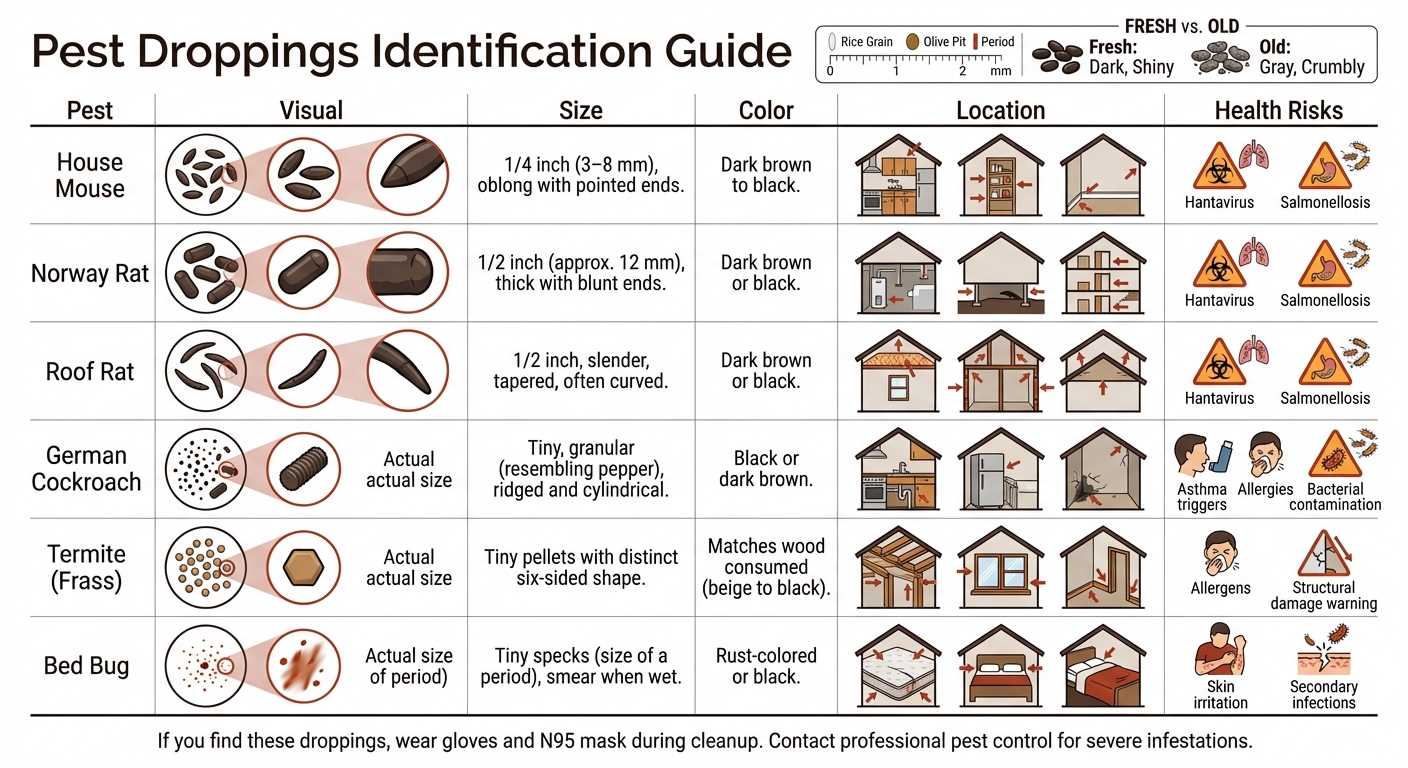
Visual Guide to Common Pest Droppings: Identification Chart by Size, Color, and Location
Table: Pest Type, Size, Color, Location, and Health Risks
Identifying pest droppings can be tricky, but having a handy reference can make the process easier. Below is a table that outlines the key features of droppings from common pests found in Pacific Northwest homes. Use this guide to figure out what pest might be present and the potential health concerns they bring.
| Pest Type | Size and Shape | Color | Common Locations | Health Risks |
|---|---|---|---|---|
| House Mouse | About 1/4 inch (3–8 mm); oblong with pointed ends | Dark brown to black | Kitchen cabinets, pantries, along baseboards | Hantavirus, Salmonellosis |
| Norway Rat | Around 1/2 inch (approx. 12 mm); thick with blunt ends | Dark brown or black | Basements, crawlspaces, lower levels | Hantavirus, Salmonellosis |
| Roof Rat | About 1/2 inch; slender, tapered, often curved | Dark brown or black | Attics, wall voids, elevated areas | Hantavirus, Salmonellosis |
| German Cockroach | Tiny, granular (resembling pepper); ridged and cylindrical | Black or dark brown | Under sinks, behind appliances, dark corners | Asthma triggers, allergies, bacterial contamination |
| Termite (Frass) | Tiny pellets with a distinct six-sided shape | Matches the wood consumed | Near wooden structures, windowsills, baseboards | Allergens; primarily structural damage |
| Bed Bug | Tiny specks (about the size of a period); smear when wet | Rust-colored or black | Mattress seams, headboards, bedding | Skin irritation, secondary infections |
Fresh droppings tend to be moist and shiny, but over time, they dry out, lose their luster, and become crumbly. The next section will provide tips for inspecting areas where these droppings are often found, helping you focus on high-risk zones.
Inspection Techniques for Pest Droppings
Using Tools and Magnification
A good flashlight is your best friend when inspecting dark, hard-to-reach spots like attics, crawl spaces, and behind heavy appliances. For even better results, try using an industrial-grade UV black light (390 nm), which can reveal hidden urine stains that pests leave behind to mark their territory and travel routes. Pairing this UV light with yellow goggles makes those stains stand out even more.
To get a closer look, grab a magnifying glass. This is especially useful for spotting details like the ridges on cockroach droppings or the six-sided shape of termite frass. Always prioritize safety – wear gloves and an N95 mask to protect yourself while inspecting. You can also sprinkle non-toxic tracking powders, like baby powder or flour, in suspicious areas. These powders help reveal pest footprints, giving you a clearer idea of their movements.
These tools not only make inspections more thorough but also help you zero in on problem areas, which we’ll explore further below.
Identifying High-Risk Locations
Once you’ve got the right tools, focus your efforts on areas where pests are most likely to gather. Common hotspots include kitchen cabinets, pantries, and spaces under sinks. Don’t forget to check behind and beneath large appliances like refrigerators, stoves, and washing machines, as these areas often attract pests. Rodents, in particular, tend to leave a trail of droppings near food sources.
Pests also rely on their sense of touch to navigate, sticking to walls and baseboards as they move between nests and food. Look for linear trails of droppings along these pathways, as well as greasy smudges or marks on rafters, pipes, and baseboards caused by the oily fur of rodents. Other high-risk areas include attics, basements, and crawl spaces, which are prime nesting spots for pests like rats, bats, and squirrels. Garages and utility sheds can also attract rodents, especially if garbage is stored improperly nearby.
Conclusion and Next Steps
Key Takeaways
Spotting pest droppings early – whether active (dark, moist, and shiny) or inactive (gray and dusty) – can help you avoid serious health risks and property damage. Rodents are known carriers of diseases like hantavirus, Salmonella, and leptospirosis, while cockroach droppings can aggravate asthma. To identify the culprits, note that mouse droppings are typically 1/8–1/4 inch long, while rat droppings range from 1/2–3/4 inch.
Cleaning up droppings requires caution. Avoid vacuuming or dry-sweeping, which can spread harmful particles. Instead, spray the area with a 10% bleach solution, let it sit for 5–10 minutes, and then carefully wipe it up while wearing gloves and an N95 mask. Keep in mind: for every rodent you see, there could be up to 25 more hiding nearby.
If the problem seems too big to handle, it’s time to call in the professionals.
Professional Help from Sparrow’s Pest Control
When pests leave traces in tricky spots like attic insulation, air ducts, or behind walls, professional help becomes essential. Sparrow’s Pest Control in Bellingham, WA, offers thorough inspections and cleanup services using family- and pet-safe chemicals. They also specialize in sealing entry points as small as 1/4 inch to prevent pests from returning. Their skilled team uses proper protective gear to sanitize contaminated areas, reducing the risk of disease exposure for your household.
Beyond cleanup, Sparrow’s Pest Control creates tailored extermination plans and prevention strategies, all backed by a 100% satisfaction guarantee. Whether you’re dealing with rodents, cockroaches, termites, or other pests common to the Pacific Northwest, their expertise ensures your home stays secure. Learn more or schedule a free inspection at sparrowspestcontrol.com or by calling their team today.
Identifying droppings early gives you the chance to act quickly and protect your home and family from harm.
FAQs
How can I tell if droppings are fresh or old?
Fresh droppings are soft, shiny, and dark, which means they were likely left within the last 72 hours. On the other hand, older droppings appear dry, gray, and crumble easily, pointing to activity from a much earlier time.
What’s the safest way to clean up pest droppings?
To clean up pest droppings safely, start by putting on protective gear like gloves, a mask, and long sleeves to shield yourself from harmful particles. Make sure the area is well-ventilated, then spray the droppings with a disinfectant or a mix of water and bleach. This helps prevent particles from becoming airborne. Using disposable gloves, carefully pick up the droppings, seal them in a plastic bag, and dispose of them in an outdoor trash bin. Finish by disinfecting all surfaces that came into contact with the droppings to minimize health risks.
When should I call Sparrow’s Pest Control?
If you spot pest droppings, nests, or other signs of an infestation, reach out to Sparrow’s Pest Control right away. Quick action not only ensures professional removal but also helps stop the problem from getting worse. Their team offers safe, effective solutions designed specifically for your situation.