
Mole Control in Bellingham & Whatcom County
You mowed the lawn on Saturday and by Wednesday there were four fresh mounds of soil sitting in it. The ground gives a little when you step near them. You flattened them once already and they came back. Moles are relentless, and the products sold to stop them almost never do. Sparrow’s Pest Control works moles on the ground across Bellingham, Lynden, Birch Bay, Ferndale, Blaine and the rest of Whatcom County.
Moles, Voles or Gophers? Check the Mounds First
Getting this wrong wastes a season, because the control method is completely different for each one.
- Moles push up roughly circular mounds of loose soil, 6 to 24 inches across and 2 to 8 inches high, with the burrow opening plugged near the center of the mound. You will also see raised surface ridges about 3 inches wide wandering across the lawn with no apparent pattern. These feel spongy underfoot because the turf is being held together by grass roots alone.
- Pocket gophers leave flatter, fan-shaped or crescent mounds with the plug off to one side rather than in the middle.
- Voles do not build mounds at all. They leave narrow runways clipped through the grass at the surface and chew on roots, bulbs and the bark at the base of young trees, damage moles do not cause.
If you are not sure what you are looking at, send us a photo of the mound. It takes a minute and it decides the entire approach.
The Mole in Your Whatcom County Lawn Is Almost Certainly a Townsend Mole
Washington has three mole species, and the one tearing up lawns west of the Cascades is the Townsend mole — 8 to 9 inches long, slate black, and the largest mole species in North America. It favors exactly the ground we have here: meadows, pastures, fields, lawns and golf courses.
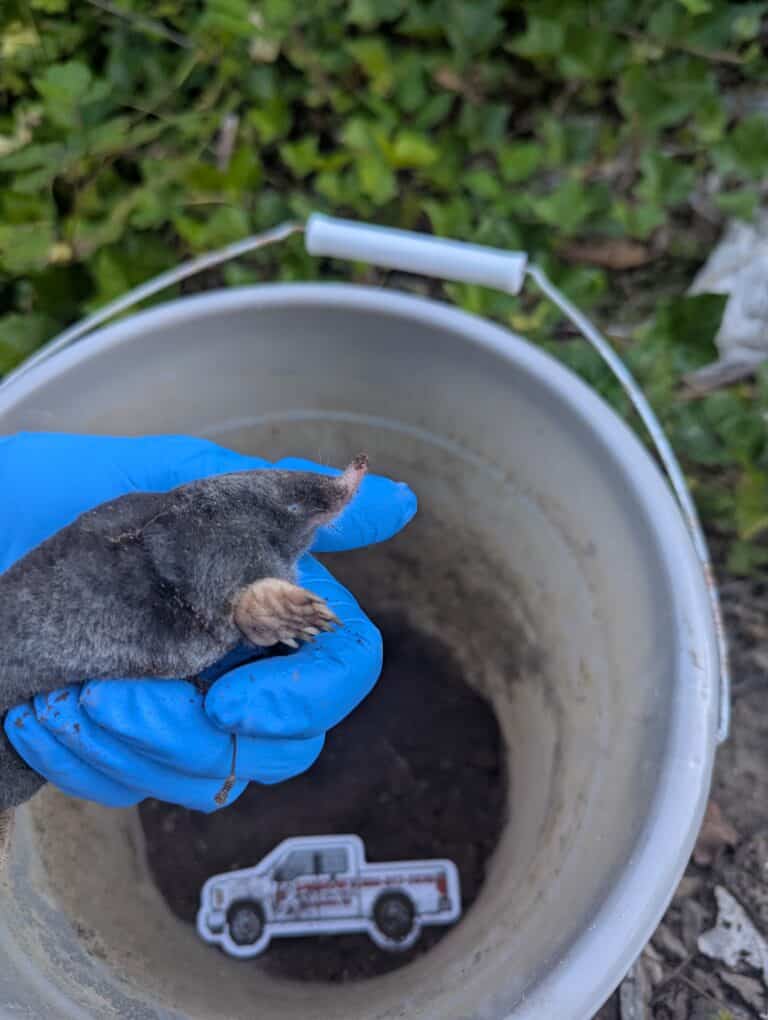
The Pacific mole, also called the coast mole, is smaller at 6 to 7 inches and prefers drier, brushier, more wooded ground. The shrew-mole is the smallest mole in North America and unique to the Pacific Northwest. It does not build mounds at all and is often active above ground, so it is rarely the animal behind lawn damage.
Two facts about Townsend moles change how you should think about your yard:
- They are eating worms, not your lawn. Stomach studies in Oregon found earthworms make up 70 to 90 percent of the Townsend mole’s diet, along with grubs, slugs, centipedes and beetles. This is why grub treatments so often fail as a mole strategy.
- There are far fewer of them than the damage suggests. Moles are solitary and territorial, and a single mole can tunnel at roughly 15 feet per hour through a system running several hundred linear feet. According to Washington Department of Fish & Wildlife, the average city lot will rarely hold more than one male or two female moles. That lawn covered in twenty mounds is usually one animal.
Digging is heaviest in fall and winter, when Whatcom County soil is wet and easy to work, which is why mounds seem to explode across a lawn right as the rain sets in.
Why Grub Treatments and Hardware Store Fixes Don’t Work
Almost every mole product on a shelf has been tested and found wanting. Washington Department of Fish & Wildlife is blunt about most of them:
- Poison baits — moles eat insects and earthworms, so grain-based poison baits have proven ineffective against them.
- Repellents — no repellent currently available will reliably protect a lawn. Mothballs, garlic, spearmint and mole plants all produce mixed results at best.
- Sonic stakes, vibrating spikes and pinwheels — moles do not frighten easily. They live alongside mowers, sprinklers and foot traffic, and frightening devices have not proven effective in Washington.
- Gas cartridges and smoke bombs — moles seal off a burrow within seconds of detecting smoke or gas, and the tunnel systems are too extensive for the gas to reach them.
- Grub control — grubs are only part of the diet, and moles will work a well-watered lawn purely for the moisture. Moles are often present even in completely grub-free yards.
There is also a trap in how these products appear to work. A mole moves to another section of its tunnel system for a few weeks, the mounds stop, the homeowner credits whatever they last tried, and when it circles back they assume a new mole arrived. Nothing was ever controlled.
Washington’s Rules on Mole Traps
Washington restricts which traps can legally be used on moles. The traditional spring-loaded killing traps still sold in garden centers fall under the state’s body-gripping trap prohibition, and the Washington Attorney General has confirmed they are not lawful for use here. Plenty of operators either do not know this or do not mention it. We work within the state’s rules, and we are happy to explain exactly what we use and why when we are on your property.
Our Mole Control Process
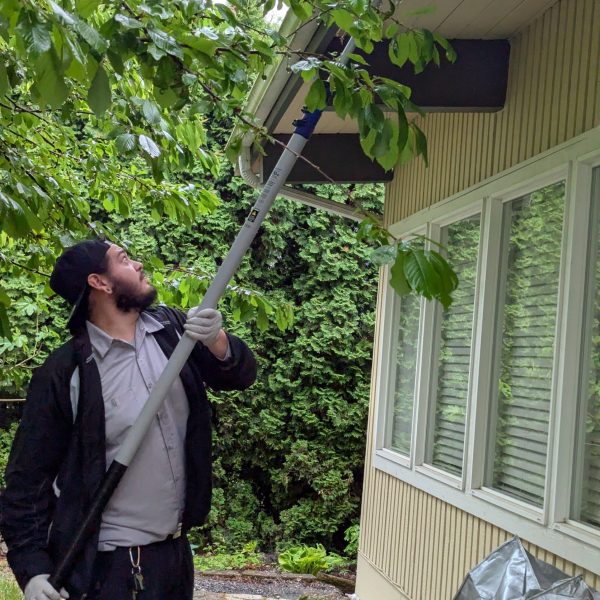
1. Property inspection. Most of what you can see is already abandoned. Surface tunnels are feeding runs a mole may use once and never return to; the deep runways 3 to 12 inches down are the ones it travels every day. We walk the property, work out which runs are live, and map the system, including where it crosses onto neighboring ground.
2. Targeted placement in active runs. Everything gets set in the main runways we have confirmed are in use. Placement is the entire job. The same equipment set in a dead feeding tunnel catches nothing, which is why so many do-it-yourself attempts fail with the right gear in the wrong place.
3. Return visits until the property is clear. Mole control is not a one-visit service, and anyone promising otherwise is guessing. We come back on a schedule, check and reposition, and keep working the property until the activity stops.
4. Level the mounds and watch. Once the resident mole is removed we flatten every existing mound. From that point any fresh mound is unambiguous new activity, so you and we can both tell at a glance whether the property is actually clear.
5. Reinvasion monitoring. Established tunnel systems do not disappear when the mole does, and new moles move in along them because they take the path of least resistance. If your property borders pasture, greenbelt or open ground, pressure is ongoing, and we will tell you that honestly rather than sell you a permanent fix that does not exist.

▶ Watch it on YouTube (1 min)
Mole Control Across Whatcom County
Bellingham. Established lawns in Edgemoor, South Hill, the Columbia neighborhood and the Lettered Streets sit on heavy, damp soil that moles work year-round. Mature turf also hides the early surface ridges well, so most Bellingham calls come in once the mounds have already started.
Lynden. Mole problems in Lynden are usually farm-edge problems. Properties backing onto pasture, berry ground and dairy land face steady pressure from the fields, which means the question is rarely whether it is gone but how you stay on top of it. We handle acreage and horse pasture as well as lawns.
Birch Bay. Lighter, sandier soils near the shoreline and a lot of seasonal and second-home properties where nobody is looking at the lawn for weeks at a time. Mole damage in Birch Bay is often well established before anyone notices it, which makes a proper inspection more important, not less.
Ferndale. Much of Ferndale’s newer housing sits on ground that was farmland until recently. The moles were there first, and subdivisions built on former pasture routinely deal with them for years.
Blaine. Properties bordering open ground, golf course edges and greenbelt see constant reinvasion. Blaine is also where our office is, so response times are quick.
Rural Whatcom County. Pasture, hobby farms, horse property and acreage from Everson and Nooksack out toward the foothills. Mounds in a hay field or a horse pasture are a different job from a quarter-acre lawn, and we price and schedule them differently.
Ready to Get the Mounds Out of Your Lawn?
Free estimate, a straight answer on what it will take, and a schedule that fits the property. Sparrow’s Pest Control serves Bellingham, Lynden, Birch Bay, Ferndale, Blaine and all of Whatcom County.
Call Us Today!
(360) 517-7378
Frequently Asked Questions
Almost always fewer than it looks. Moles are solitary and territorial, and Washington Department of Fish & Wildlife notes that the average city lot rarely holds more than one male or two female moles. A single animal tunneling at 15 feet an hour through a few hundred feet of runway can cover a lawn in mounds entirely on its own.
No, and this is the most common and most expensive mistake homeowners make. Earthworms make up 70 to 90 percent of a Townsend mole’s diet. Moles are regularly found in lawns with no grub problem at all, partly because they are drawn to well-watered ground for the moisture. Soil insecticide is an expensive approach that rarely reduces mole damage.
Washington law restricts which traps may be used, and the traditional killing traps commonly sold in stores are not lawful here despite being widely available. Property owners are permitted to control moles causing damage on their own property, but the method matters. We work within the state’s rules and are happy to explain what we use.
Moles can be controlled any time of year. Digging is heaviest in fall and winter when the soil is wet, so that is when most people notice the problem, but late winter and early spring, before moles give birth, is the most productive window to get ahead of it.
Because the tunnels did not go anywhere. An established system is easy travel for the next mole, and neighboring animals move in along it. This is normal, and it is exactly why we level mounds and monitor rather than declaring the job finished on the last catch.
Yes. We work horse pasture, hobby farms and acreage across Lynden, Everson, Nooksack and rural Whatcom County. Larger properties are inspected, priced and scheduled differently from a residential lawn.
Usually, if you send a photo of the mound. Mole mounds are round with a plug near the center, gopher mounds are fan-shaped with the plug off to one side, and voles make no mounds at all.