
After pest control treatments, lingering chemicals in the air can pose health risks, especially for children and pets. Proper ventilation is key to ensuring your home is safe to re-enter. Here’s how to do it:
- Start ventilation immediately after the recommended wait period (2–6 hours depending on the treatment).
- Open all windows and doors to create airflow and release fumes.
- Use fans to push air outside and circulate fresh air inside.
- Check for lingering odors – if you still smell chemicals, ventilate for another 24–48 hours.
- Clean surfaces like countertops and replace HVAC filters to remove residues.
Always follow product labels for specific instructions, and consult your pest control provider if needed. Ventilating properly protects your family and pets from harmful exposure.
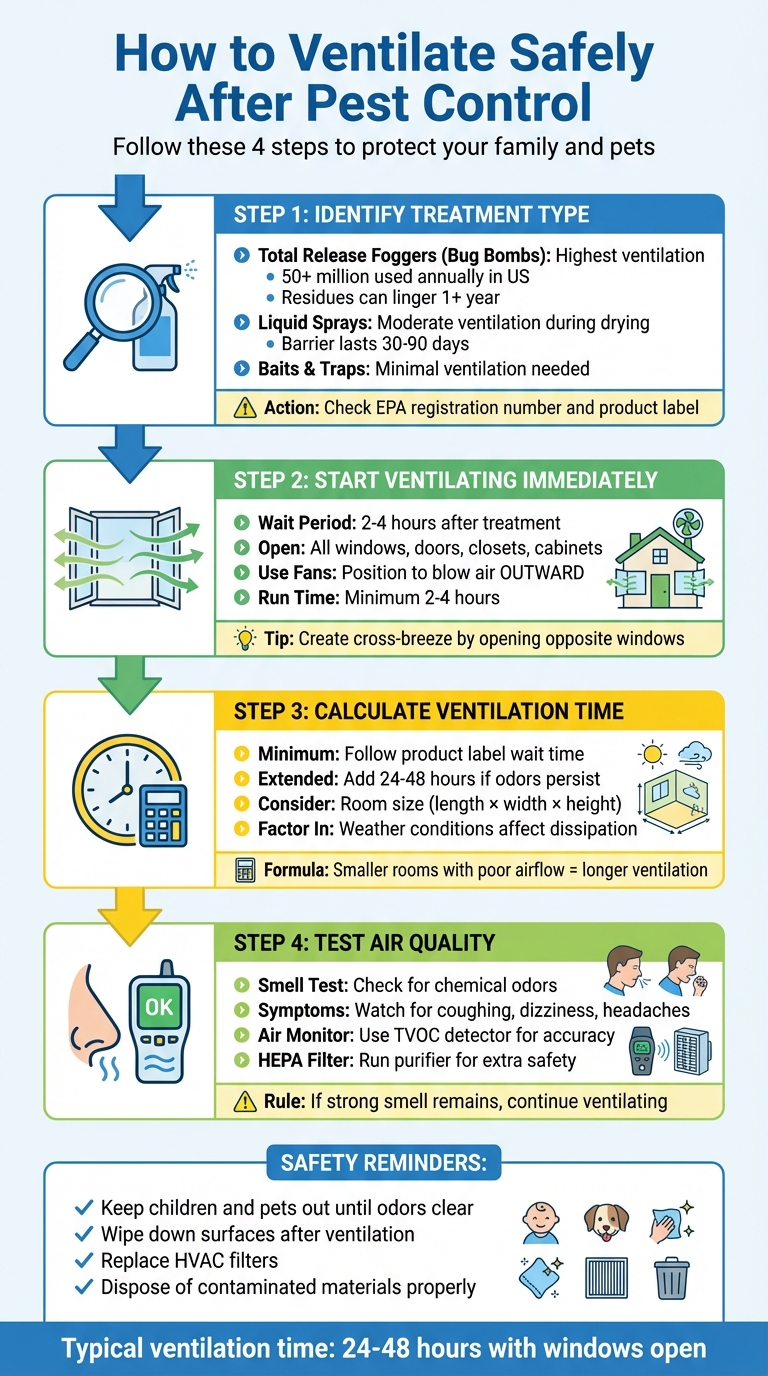
4-Step Safe Ventilation Process After Pest Control Treatment
How To Ensure Adequate Ventilation After Pest Spraying?
Step 1: Identify the Pest Control Treatment Type
Different pest control methods call for varying levels of ventilation. Total release foggers, often referred to as "bug bombs", disperse pesticide mist throughout an entire room and demand the highest level of ventilation. These products are typically designed to treat spaces between 5,000 and 7,000 cubic feet, but a standard bedroom is often under 1,000 cubic feet. This mismatch can lead to over-application. In the United States alone, over 50 million bug bombs are used annually, and their residues can linger indoors for more than a year after use.
Liquid sprays, applied directly to surfaces, create a protective barrier that lasts 30–90 days. These treatments require ventilation during the drying process to eliminate odors. Meanwhile, baits and traps contain pesticides in enclosed stations or apply them directly into hidden areas like crevices. These methods pose minimal risk of airborne exposure and typically don’t require room-wide ventilation.
Read Treatment Labels and Instructions
Once you’ve identified the type of treatment, check the product label for specific ventilation guidelines. Labels are your go-to source for accurate and safe usage instructions. According to the Washington State Department of Health:
"Always follow directions on the label. The label information tells you how to use the product safely".
Pay attention to the EPA registration number on the label. This number allows you to research additional safety details about the product. If you still have the original packaging, it may also include re-entry times and airing instructions provided by the manufacturer.
Ask Your Pest Control Provider for Advice
If the label instructions seem unclear or if a professional service handled the treatment, reach out to your pest control provider for more details about the products used. The EPA advises:
"Write down the name and EPA registration number of any chemical used by someone you hire. You will need this information if you decide to look up more information on the pesticide".
Companies like Sparrow’s Pest Control can supply Material Safety Data Sheets (MSDS) and offer personalized advice on ventilation based on the specific treatment used in your home. Be sure to request these records for detailed guidance on how to air out your space effectively.
Step 2: Start Ventilating Right Away
Once you’re allowed to re-enter your home – usually 2 to 4 hours after using foggers – it’s crucial to start ventilating immediately to clear out any lingering chemicals from the air. The sooner you get fresh air circulating, the faster pesticide particles will dissipate. Focus on maximizing natural airflow throughout your home.
Open All Windows and Doors
Begin by opening every window and door in your house. To create a cross-breeze, open windows on opposite sides of a room or the house. This setup allows fresh air to flow in from one side while pushing out the chemical-laden air from the other. Don’t forget to open closets, cabinets, and other enclosed spaces to ensure the air circulates everywhere. Pay extra attention to areas where kids and pets spend time, especially near the floor, where residues may settle. Kitchens and bathrooms should also be prioritized. If you have built-in exhaust fans in these areas, turn them on to help pull indoor air out more effectively.
Set Up Fans for Better Air Movement
Position fans near open windows or doors and aim them to blow air outward. This helps push fumes outside rather than spreading them around the house. To improve ventilation even more, use ceiling fans along with standing fans to keep air moving constantly, which will dilute and remove chemical residues faster. If your home has exhaust fans in the kitchen, bathrooms, or attic, switch them on immediately to assist with airflow. Let the fans run for at least 2 to 4 hours to significantly lower the concentration of fumes. Once the treatment has dried, you can restart your HVAC system to circulate air, but don’t forget to replace the air filters afterward to capture any remaining particles.
Step 3: Calculate Ventilation Time
The time needed for proper ventilation depends on the re-entry guidelines of the product you’re using and the size of the room. Taking the time to evaluate these factors ensures that any lingering chemicals are effectively cleared before re-entering the space.
Check Product Label Recommendations
Start by reviewing the product’s specific instructions. Look for the "Directions for Use" section to find the required wait time before re-entry. Once the minimum wait time has passed, continue ventilating the area for another 24 to 48 hours if you notice any lingering odors. If the smell persists beyond the recommended time, keep windows open and use fans to circulate fresh air until the room is odor-free.
Account for Room Size and Airflow
In addition to following the label, think about the room’s size and ventilation setup. Calculate the room’s volume by multiplying its length, width, and height. Smaller spaces treated with products designed for larger areas may need extra ventilation time.
Rooms with poor airflow will also take longer to clear out chemicals. Weather can make a difference too – calm days slow down the dissipation process, while breezy days speed it up. To ensure the air is fully refreshed, keep fans and exhaust systems running until you’re confident the space is safe to occupy.
sbb-itb-be66415
Step 4: Test Air Quality Before Re-Entry
After ventilating the space thoroughly, it’s crucial to ensure the air is genuinely safe before stepping back inside. Don’t rely on time alone to clear the air – testing is the only way to confirm that pesticide vapors have dissipated and the environment is safe for everyone, including pets.
Smell for Chemical Odors
One easy way to gauge air quality is by using your sense of smell. Step briefly into the treated area and check for any lingering chemical odors. The Washington State Department of Health offers this advice:
"If there is a strong smell, air out longer before staying inside."
Pay attention to both the odors and how you feel. If you notice strong chemical smells or experience symptoms like coughing, dizziness, headaches, or throat irritation, leave immediately. Continue ventilating until the odors are gone and symptoms subside.
Use an Air Quality Monitor
For a more accurate check, consider using an electronic air quality monitor. These devices can detect Total Volatile Organic Compounds (TVOCs), including pesticide vapors, giving you a clearer picture of the air quality. They come in a range of prices, so you can find one that fits your budget and needs.
If you don’t have access to a monitor, running a HEPA air purifier during and after ventilation can help remove any lingering pesticide particles from the air. This step is especially helpful if your household includes children, elderly family members, or individuals with respiratory issues, as they may be more sensitive to residual chemicals.
Extra Safety Steps During Ventilation
Beyond clearing the air, taking additional precautions can help minimize accidental exposure and remove lingering contaminants effectively.
Keep Children and Pets Out
Children and pets are especially sensitive to pesticide exposure. Make sure they stay out of treated areas until any residues have dried completely and all chemical odors have dissipated. After ventilation is complete and the air is confirmed safe, take the time to wipe down surfaces like countertops and tables, especially those used for food preparation or dining. It’s also a good idea to wash any exposed linens, bedding, or clothing. For added safety, consider replacing your HVAC filters to capture any remaining particles.
Proper cleanup is just as important as ventilation to ensure a safe environment.
Throw Away Contaminated Materials Safely
Disposing of contaminated materials correctly prevents chemicals from spreading further in your home. Use disposable paper towels while wearing gloves and place all waste in a securely covered trash container.
For items that are heavily contaminated, such as dead pests or nesting materials, double-bag them. Seal the item in one plastic bag, then place it inside another for added protection. Always refer to the "Disposal" section on the pesticide label for specific instructions on handling containers and leftover products. For empty containers or unused pesticides, reach out to your local waste disposal authority to find household hazardous waste collection sites. Never reuse pesticide containers for any purpose – even after washing, harmful residues may remain.
Conclusion
Good ventilation is essential to clear out chemical residues and protect your home after pest control treatments. To safeguard your family and pets, it’s important to follow a few key steps: identify the type of treatment used, open windows and doors immediately after the service, and monitor the air quality before re-entering the space. In most cases, keeping windows open for 24 to 48 hours helps ensure all odors and airborne chemicals are fully removed.
For the best results, consider working with professionals. Certified pest control applicators can provide customized re-entry timelines and safety protocols based on the treatment used. They focus on two critical risk factors – toxicity and exposure – and create strategies to minimize both.
"Unless you have had special training and are certified, never use a pesticide that is restricted to use by state-certified pest control operators. Such pesticides are simply too dangerous for application by a non-certified person." – US EPA
Partnering with experts ensures all safety measures are properly followed. For instance, Sparrow’s Pest Control in Bellingham, WA, specializes in family- and pet-safe extermination methods. They use EPA-approved products and Integrated Pest Management techniques, and their licensed technicians offer clear guidance on post-treatment ventilation and safety. With their help, you can confidently return to a pest-free home without compromising your family’s health. Plus, they back their services with a 100% satisfaction guarantee.
Proper ventilation is not just a precaution – it’s a critical step for maintaining safe indoor air after pest control treatments.
FAQs
How long should I ventilate my home after using a bug bomb?
After setting off a bug bomb, it’s crucial to air out your home thoroughly before going back inside. Make sure to open all windows and doors for at least 2 to 4 hours to let fresh air flow through the space. To be extra cautious, you can keep the windows open and run fans for another 30 minutes to help eliminate any remaining fumes. Always check and follow the directions on the product label to ensure proper use and safety.
What should I do if I can still smell chemicals after ventilating my home?
If you still detect chemical odors even after airing out your space, keep your windows and doors open to allow continuous airflow. You can also use fans or a HEPA air purifier to circulate and clean the air more effectively. Leaving the area ventilated for a longer period often helps remove stubborn smells. If the odor doesn’t go away, it’s a good idea to contact your pest control technician for guidance to ensure your home stays safe for both your family and pets.
How can I make sure my home is safe for kids and pets after pest control?
To keep your home safe for children and pets after pest control, follow these easy steps:
- Stick to the recommended waiting time: Most pest treatments require you to stay out of the treated areas for 2–4 hours or until the product has fully dried. Always follow the instructions provided by your pest control technician.
- Air out the space: Open windows and doors on opposite sides of the house to create a cross-breeze. Use fans or your HVAC system to help circulate fresh air for at least 30 minutes to a few hours, depending on your home’s size.
- Check for any lingering smells: Before letting kids or pets back into the treated areas, make sure there are no strong chemical odors. If you notice any, continue ventilating until the air feels fresh.
For future pest control services, you might want to explore options that focus on family- and pet-friendly treatments. Companies like Sparrow’s Pest Control provide tailored plans that prioritize your loved ones’ safety while effectively addressing pest problems.