
Pests can enter your home or business through tiny gaps – mice need just 1/4 inch, ants as little as 1/25 inch. These small openings can lead to big problems, from property damage to health risks. Regular inspections and sealing entry points can save you from costly infestations and repairs. Here’s what you need to know:
- Common Entry Points: Foundation cracks, gaps around utility lines, doors, windows, and vents.
- Warning Signs: Droppings, chew marks, greasy rub marks, scratching noises, or musty odors.
- Inspection Tools: Flashlights, moisture meters, magnifying glasses, and black lights.
- Sealing Materials: Silicone caulk, expanding foam, steel wool, and hardware cloth.
- Prevention Tips: Keep landscaping away from your home, repair leaks, clean gutters, and store food in airtight containers.
For persistent issues, professional pest control services like Sparrow’s Pest Control can provide expert inspections and treatments. Combining DIY efforts with professional help ensures your property stays pest-free.
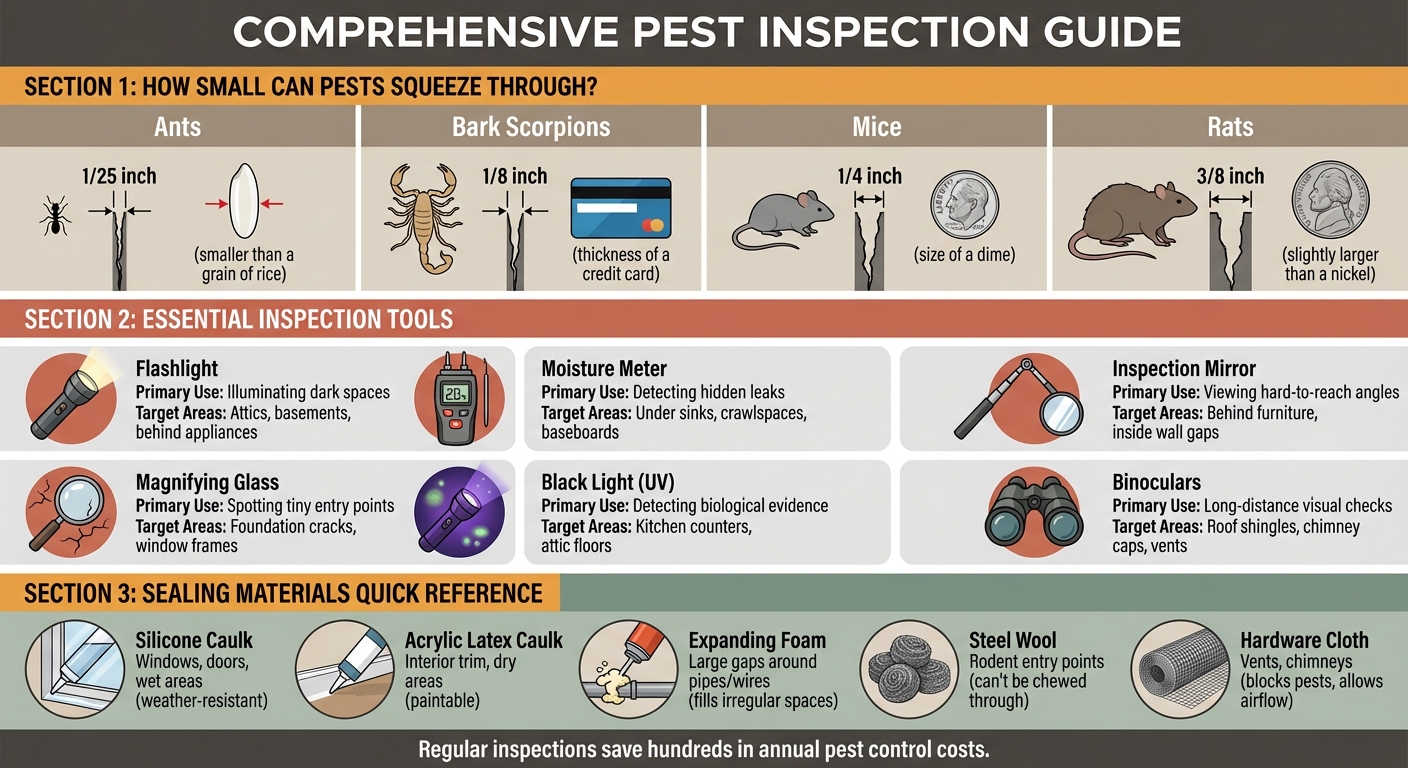
Pest Entry Point Sizes and Essential Inspection Tools Guide
How To Find Rodent Entry Points Fast & Seal Them For Good
Where to Look for Pest Entry Points
Understanding where pests typically sneak in can help you focus your inspection efforts effectively. The most vulnerable spots are usually at ground level – where your home connects to the earth and where utility lines enter the building. Over time, these areas can develop gaps due to wear, settling, or incomplete sealing during construction. Pinpointing these weak points is key to creating a strong pest prevention plan.
Foundation Cracks and Gaps
Foundation cracks are a common entry point for pests like ants, spiders, termites, and cockroaches. These cracks can form due to soil movement, water damage, or general settling. Even tiny fractures matter – bark scorpions, for instance, can squeeze through gaps as small as 1/8 inch, which is about the thickness of a credit card.
"Bark scorpions, for instance, can squeeze between a gap of 1/8", about the width of a credit card." – KYKO Pest
Pay close attention to where siding meets the foundation and inspect vent covers. Damaged or missing mesh on vents can allow termites or rodents to enter. Crawl spaces are another weak spot. Their dark, damp environment is often poorly sealed, making them an easy target for pests. Don’t forget to check the threshold under your garage door – wear and tear over time can create an inviting pathway for scorpions, roaches, and rodents.
Gaps Around Utility Lines
Utility lines like pipes, wires, and cables often leave behind gaps that pests can exploit. Openings for plumbing, electrical conduits, HVAC systems, gas lines, and cable connections act as convenient entryways. These gaps are often created during construction when holes are drilled and not sealed properly afterward. To put it into perspective, mice can squeeze through openings as small as 1/4 inch, and rats only need 3/8 inch.
Check under sinks and around utility penetrations in basements or crawl spaces where pipes pass through walls or cabinetry. If you can see light coming through or notice a clear gap, pests can use it too. Termites are especially skilled at exploiting these openings, particularly in moisture-prone areas like under sinks or behind toilets. Beyond these utility areas, it’s important to inspect all external entry points, including doors and windows.
Doors, Windows, and Screens
Once you’ve checked for structural gaps, turn your attention to doors, windows, and other household openings. Worn seals or gaps around these areas are like open invitations for pests. Garage doors are particularly vulnerable, as their seals tend to degrade with time.
"Pests can get into a home in so many different ways." – Dillon Beardall, Manager, Lawn Buddies
A simple way to test for weak seals is to check from inside during the day – if you can see light along the edges, pests can get in. Window screens are another critical area to inspect. Small tears or a loose fit can allow insects to enter. Don’t overlook windowsills either; they’re often hotspots where pest activity first becomes noticeable.
Tools and Methods for Pest Inspections
Having the right tools can make all the difference when it comes to identifying pest entry points. For instance, a moisture meter is great for detecting damp areas around sinks and baseboards – prime spots for termites and cockroaches. To check the condition of wood, a probe can help you locate soft or moisture-damaged areas where pests might burrow.
A magnifying glass is perfect for spotting tiny foundation cracks that might otherwise escape notice. Want to inspect rooflines or chimney vents without climbing? A pair of binoculars allows you to do this safely from the ground. If rodents are on your radar, a black light (UV light) can reveal urine trails and greasy rub marks, giving you clear evidence of their presence.
"A good inspection is more than just looking around – it’s about finding clues, asking questions, and putting the puzzle together." – Kurt Anderson, Pest Pro University
Tools You Need for Inspections
| Tool | Primary Use | Target Areas |
|---|---|---|
| Flashlight | Illuminating dark spaces | Attics, basements, behind appliances |
| Moisture Meter | Detecting hidden leaks and dampness | Under sinks, crawlspaces, baseboards |
| Inspection Mirror | Viewing hard-to-reach angles | Behind furniture, inside wall gaps |
| Magnifying Glass | Spotting tiny entry points | Foundation cracks, window frames |
| Black Light | Detecting biological evidence | Kitchen counters, attic floors |
| Binoculars | Long-distance visual checks | Roof shingles, chimney caps, high vents |
Once you’ve gathered your tools, make sure to include proper protective gear. Gloves, knee pads, and even a dust mask can keep you safe while exploring crawlspaces or other tricky areas. You’ll also need a caulking gun and putty knife to seal up gaps as you find them. A de-webber or broom is handy for clearing away cobwebs, which might signal active spider activity near an entry point. With your tool kit ready, you’re set to start your inspection.
How to Conduct a Proper Inspection
With your tools in hand, the inspection process becomes much more effective. Start with a walk around the perimeter of your property, focusing on areas where utility lines enter the building. These gaps are often overlooked during construction and can serve as easy access points for pests. Work systematically from top to bottom – inspect the rooflines, gutters, and vents before checking foundation cracks and floor-to-wall joints.
Inside, pay close attention to high-risk areas like kitchens and bathrooms. Moisture-prone spots under sinks, behind refrigerators, and around leaky pipes are common pest hotspots. Use a flashlight and inspection mirror to examine dark, tight spaces in basements, crawlspaces, and garages. Take photos of what you find – this creates a record of sealed entry points and helps you monitor for new issues over time. Regular seasonal inspections can help you catch small vulnerabilities before they lead to bigger problems.
sbb-itb-be66415
How to Seal and Prevent Pest Entry Points
Materials for Sealing Entry Points
Choosing the right materials for sealing is key to blocking pest entry points effectively. For small cracks around windows and doors, silicone caulk is a great option, especially in wet areas where moisture resistance is crucial. In dry indoor spaces like baseboards, acrylic latex caulk is easier to use and can be painted to blend with your interior. For larger gaps around pipes or utility lines, expanding foam works well, as it fills irregular spaces and hardens into a solid barrier. Keep in mind, mice can squeeze through openings as small as a dime.
When dealing with rodents, materials like steel wool or copper mesh are indispensable since rodents cannot gnaw through metal fibers. These should be stuffed into holes before sealing with foam or caulk for a long-lasting solution. For areas requiring ventilation, such as attic vents or chimneys, use hardware cloth with mesh spacing smaller than 1/4 inch. Additionally, seal gaps at the bottom of exterior doors with door sweeps or weatherstripping – if you can see light under a closed door, pests can find their way in.
| Material | Best Use Case | Key Advantage |
|---|---|---|
| Silicone Caulk | Windows, doors, wet areas | Flexible and resistant to weather |
| Acrylic Latex Caulk | Interior trim, dry areas | Easy to apply and paintable |
| Expanding Foam | Large gaps around pipes/wires | Fills irregular spaces; hardens solid |
| Steel Wool | Rodent entry points | Rodents can’t chew through metal |
| Hardware Cloth | Vents, chimneys, crawl spaces | Blocks pests while allowing airflow |
Sealing these gaps is a strong first step, but keeping pests out requires ongoing attention.
Preventing Future Pest Problems
Once you’ve sealed entry points, regular upkeep is essential to maintain your pest defenses. Check seals every season and after severe weather to spot any new vulnerabilities. Maintain a clear buffer zone – 12 to 18 inches – between your home’s foundation and any landscaping, mulch, or vegetation. Trim back tree branches and shrubs so they don’t touch your roof or siding, as these can act as pathways for pests.
Gutters should be cleaned twice a year to avoid stagnant water and debris, which attract mosquitoes and wood-destroying insects. Store all food, including pet food and birdseed, in airtight containers made of glass, metal, or heavy-duty plastic to eliminate tempting food sources. Repair any leaking pipes or clogged drains promptly, as damp conditions can attract pests like silverfish, cockroaches, and termites. Finally, keep firewood elevated and stored away from your home to reduce the risk of termites and wood-boring beetles.
Professional Pest Inspection Services
Why Choose Sparrow’s Pest Control

DIY pest inspections can help you spot obvious issues, but professional services bring the kind of expertise that can save you time, money, and headaches down the road. Sparrow’s Pest Control, serving Whatcom and Skagit counties, goes beyond the surface to tackle problems that typical DIY efforts might miss. Their technicians are trained to identify even the tiniest entry points – some as small as 1/25 of an inch, about the size of an ant.
What makes professional services like Sparrow’s stand out is their use of Integrated Pest Management (IPM). This method focuses on addressing the root causes of infestations rather than just treating the symptoms. Their team carefully examines areas like foundation cracks, gaps around utility lines, and other less obvious entry points that might escape your notice. They also look for conditions that attract pests, such as moisture buildup, landscaping that touches your home’s siding, or accumulated debris.
Recognizing that every property is unique, Sparrow’s Pest Control develops customized treatment plans tailored to your specific needs. These plans consider factors like the type of pest, your property’s structure, and the severity of the infestation. For added protection, they apply perimeter barriers that extend 3 feet up and 6 feet out from your foundation, leaving a protective residue effective for up to three months. Importantly, all treatments are designed with your family’s safety in mind and come with a 100% satisfaction guarantee. This personalized approach highlights why professional help is essential when pests invade your space.
When to Call a Professional
While Sparrow’s thorough methods are a game-changer, knowing when to call in the pros is just as important. If you notice recurring pest sightings, structural damage, or strange odors – especially in vulnerable areas like rooflines, crawlspaces, or behind heavy appliances – it’s time to act. A national survey found that 84% of Americans had dealt with pest problems, and by 2019, over 14 million U.S. households reported seeing cockroaches or rodents in or near their homes. These statistics underscore the importance of Sparrow’s expert evaluations.
Certain pests, like termites and bed bugs, demand specialized treatment. If you’re buying a new home, it’s also wise to schedule an inspection at least a week before moving in, even if the seller has provided a pest report.
Professional inspectors have tools and techniques that most homeowners simply don’t. For example, they use moisture meters to detect damp areas, black lights to trace rodent activity, and special probes to inspect wall voids and hidden spaces. They can identify subtle signs like pheromone trails, grease marks, or early termite mud tubes – clues that are often missed by untrained eyes.
Conclusion: Keeping Your Property Pest-Free
Keeping pests out of your home isn’t a one-time task – it’s an ongoing effort. Regular inspections, such as quarterly checkups, can save you hundreds of dollars each year by identifying minor issues before they escalate into costly infestations. Considering that rodents alone cause billions of dollars in structural damage annually and contaminate 20% of the global food supply, staying ahead of the problem becomes a necessity.
The key is to combine two strategies: physical exclusion and consistent monitoring. Start by sealing entry points. Use caulk or concrete filler for foundation cracks, apply weatherstripping to doors and windows, and fill gaps around utility lines with steel wool and foam sealant. Homes naturally settle over time, which can create new vulnerabilities, so it’s wise to do seasonal walk-throughs to inspect for new gaps, damaged screens, or worn-out sealants.
Beyond blocking entry points, focus on removing what attracts pests in the first place. Keep basement humidity at around 40%, maintain a 12- to 18-inch gap between landscaping and your home, store food in airtight containers, and clean gutters twice a year to eliminate potential nesting areas.
These steps highlight the importance of staying vigilant:
"Doing your best to prevent them doesn’t always mean you won’t get them, but it sure helps your chances." – Dillon Beardall, Manager, Lawn Buddies
Even the tiniest openings – like a gap as small as 1/25 of an inch – can let ants and other pests into your home. For persistent issues or areas that are hard to inspect, professional help can make all the difference. Companies like Sparrow’s Pest Control offer quarterly treatments that create perimeter barriers effective for up to three months. Their technicians use advanced tools like moisture meters and black lights to uncover hidden problems, ensuring your home stays protected throughout the year. Pairing professional services with proactive maintenance is a reliable way to keep pests out for good.
FAQs
How can I find and seal common pest entry points in my home?
To track down pest entry points, start by giving your home’s exterior and interior a thorough once-over. Pay special attention to doors and windows – look for cracks, gaps, or worn-out weather-stripping. Check the foundation, especially where it meets the ground, for any small cracks. Also, inspect areas around utility lines, like pipes and wires, for any openings. Don’t overlook roof vents, chimneys, attic fans, and crawl-space vents – they should all be covered with secure mesh screens. Inside, be sure to check siding, soffits, and even electrical outlets for any tiny spaces pests might squeeze through.
After spotting these entry points, it’s time to seal them up. For doors, add weather-stripping or door sweeps. Window frames can be re-caulked using silicone-based sealant, while foundation cracks can be filled with caulk or expanding foam. Around utility openings, pack in steel wool or copper mesh before sealing with foam or caulk. Make sure vents and chimneys are protected with sturdy mesh screens, and repair any torn window screens. If you encounter larger gaps or structural concerns, Sparrow’s Pest Control can provide a professional inspection and customized solutions to help keep pests out for good.
What tools and materials do I need for a proper pest inspection?
For a thorough pest inspection, start by equipping yourself with proper protective gear. This includes long-sleeved clothing, closed-toe shoes, chemical-resistant gloves, goggles, and, if you’re working in tight or poorly ventilated areas, a mask or respirator. Safety first!
Next, gather some essential tools to make your inspection effective. A flashlight is a must for spotting pests in dark corners, while a handheld mirror or probe will help you peek into hard-to-reach spaces. A moisture meter comes in handy for detecting hidden leaks, which can attract pests. Don’t forget a notepad or your smartphone to document your findings as you go.
When it comes to sealing entry points, having the right materials is crucial. Keep a caulk gun with silicone or acrylic caulk on hand for sealing cracks, and use expanding foam for larger gaps. For rodent holes, steel wool or copper mesh works wonders. Weather-stripping is excellent for sealing gaps around doors and windows, and mesh screens can protect vents and chimneys. With these tools and materials, you’ll be well-prepared to identify and seal potential entry points, keeping pests at bay for the long haul.
When should I hire a professional pest control service?
If you notice telltale signs of a pest problem – like droppings, gnaw marks, dead insects, strange odors, or clusters of eggs – it’s time to think about bringing in a professional pest control service. These warning signs suggest pests have already settled in, and without expert help, the problem could quickly get worse. Also, if a DIY inspection uncovers multiple entry points or gaps that are difficult to seal, professionals can save you time and ensure the job is done thoroughly.
Moving into a new home? If the seller hasn’t provided a trustworthy pest inspection or the report seems incomplete, scheduling a professional inspection before you move in is a smart move. Experts use advanced tools and integrated pest management (IPM) techniques to detect and seal even the smallest cracks that DIY efforts often overlook. For more serious infestations – like termites, rodents, or wasps – trained technicians can apply precise treatments that are safe for both your family and pets.
Sparrow’s Pest Control specializes in expert inspections, tailored extermination plans, and prevention strategies to keep your home in Bellingham, WA, pest-free. With a 100% satisfaction guarantee, their services prioritize your family’s safety and peace of mind.