
Dealing with pests in the Pacific Northwest? The region’s damp climate makes it a haven for ants, spiders, and rodents. Using EPA-approved products ensures safety and effectiveness while complying with strict federal standards. Here’s what you need to know:
- Ant Control: Non-repellent sprays (e.g., Termidor SC) and baits (e.g., Sumari Ant Gel) target colonies effectively. Botanical options like Nature-Cide are safer for sensitive areas.
- Spider Control: EPA-approved sprays and dusts provide lasting protection. Physical removal of webs enhances results.
- Rodent Control: Options include anticoagulants (e.g., warfarin, brodifacoum) and non-anticoagulants (e.g., bromethalin). Tamper-resistant bait stations reduce risks to pets and children.
DIY solutions can work for minor problems, but professional services, like Sparrow’s Pest Control, offer tailored treatments and access to specialized products for severe infestations. Always follow product labels to maximize safety and effectiveness.
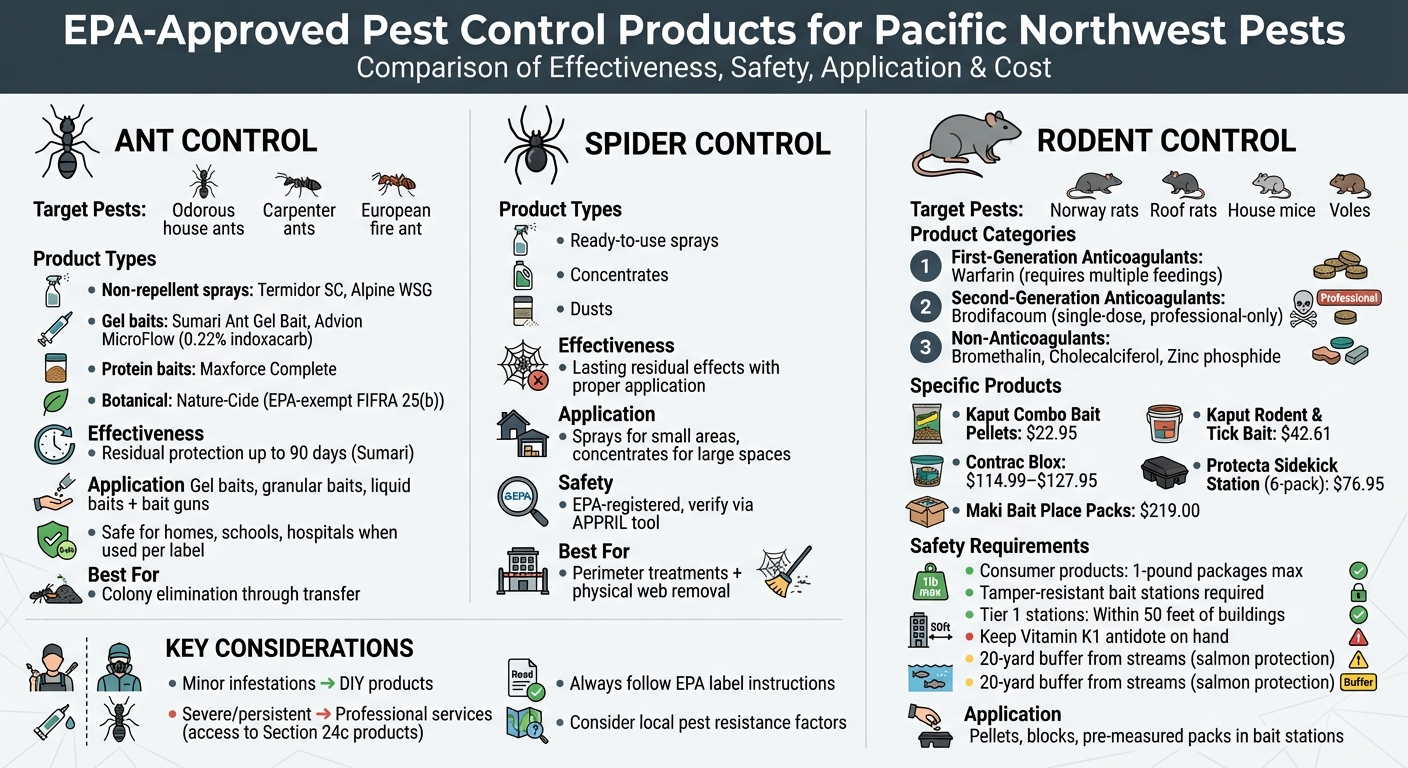
EPA-Approved Pest Control Products Comparison for Pacific Northwest
1. EPA-Approved Ant Control Products
The Pacific Northwest has its share of ant troubles, including odorous house ants, carpenter ants, and the increasingly troublesome European fire ant (Myrmica rubra). Tackling these pests effectively requires using EPA-approved products tailored to specific ant species, treatment sites, and individual needs. Here’s a breakdown of the key factors that define these products: effectiveness, safety, ease of application, and cost.
Effectiveness
Non-repellent sprays, like Termidor SC and Alpine WSG, are particularly effective because ants don’t detect them. These sprays allow active ingredients to spread throughout the colony, making them ideal for perimeter treatments. Baiting systems are another reliable option, especially for long-term control, as worker ants carry the toxin back to the queen. For example:
- Sumari Ant Gel Bait is great for sugar-loving odorous house ants.
- Maxforce Complete targets protein-seeking ants.
Matt Remmen, Technical Market Development Manager at Envu, highlights why protein-based baits work well during certain seasons:
"During the spring and early summer months, ant populations are searching for protein because their queens need the nutrition from proteins to create eggs".
For nests hidden in hard-to-reach areas, products like Advion MicroFlow are designed to penetrate deep cracks and crevices. Its formulation includes 0.22% indoxacarb, with 95% of its particles measuring under 3 millimeters in diameter, ensuring thorough coverage. Additionally, Sumari Insecticide provides residual outdoor protection for up to 90 days.
Safety for Families and Pets
EPA-approved ant control products are rigorously tested to ensure they are safe for use in homes, schools, and hospitals, provided they’re applied according to label instructions. For sensitive spaces like kitchens or food-handling areas, botanical-based options such as Nature-Cide offer a low-risk alternative. Nature-Cide, which is EPA-exempt under FIFRA 25(b), is both effective and safer for these environments.
Ease of Application
The ease of using ant control products depends largely on the type:
- Gel baits: Apply directly near visible ant trails for maximum effectiveness.
- Granular baits: Broadcast over lawns or place along building perimeters.
- Liquid baits: Ideal for bait stations, suitable for both indoor and outdoor use.
For precision and reduced waste, specialized bait guns are a helpful tool. Combining liquid baits with non-repellent sprays can enhance colony elimination by attracting more ants to the bait.
Cost
EPA regulations allow applicators to use pesticides at lower rates or diluted concentrations than those listed on the label. This flexibility can reduce costs without compromising effectiveness. While diluted applications may save money upfront, some alternatives, like diatomaceous earth, might require frequent reapplication, especially after rain. Professional-grade products such as Advion are more cost-effective for large-scale infestations, while DIY solutions can handle smaller, localized problems. Before buying, always check that the product is registered for your specific pest and site using EPA search tools.
2. EPA-Approved Spider Control Products
When choosing an EPA-approved spider control product for the Pacific Northwest, it’s important to weigh factors like effectiveness, safety, ease of use, and cost. Finding the right balance ensures you get a solution that fits your needs.
Effectiveness
Just like with ant control, EPA-approved spider control products are designed to deliver targeted results. These products help reduce and deter spider populations when applied as instructed on the label. They also provide lasting residual effects, ensuring continued protection.
Safety for Families and Pets
To ensure the product is safe for residential use, especially around children and pets, check its EPA registration using tools like APPRIL. This level of scrutiny mirrors the safety standards applied to ant control solutions, making it a critical step in your selection process.
Ease of Application
Spider control products come in various forms, including ready-to-use sprays, concentrates, and dusts. Each type is designed to meet different treatment needs. Choose a formulation that works best for your specific area, and make sure it’s registered for that particular application.
Cost
The price of spider control products can vary depending on the type and coverage. Ready-to-use sprays are ideal for treating smaller areas, while concentrates often provide better value for larger spaces. For the best results, confirm the product’s intended use through the EPA database before making a purchase.
3. EPA-Approved Rodent Control Products
Rodent issues are a common concern in the Pacific Northwest, with Norway rats, roof rats, house mice, and voles being the primary culprits. To tackle these pests, the Environmental Protection Agency (EPA) has approved rodenticides that fall into three categories: first-generation anticoagulants (like warfarin), second-generation anticoagulants (such as brodifacoum), and non-anticoagulants (including bromethalin, cholecalciferol, and zinc phosphide). These products are developed to meet strict EPA standards, ensuring they are precise, effective, and pose minimal risk in this region. This framework allows for evaluating their performance, safety, and ease of use.
Effectiveness
EPA-approved rodenticides work in distinct ways depending on their category. First-generation anticoagulants like warfarin require multiple feedings to be effective, while second-generation anticoagulants are much stronger and can eliminate rodents with a single dose. On the other hand, non-anticoagulants such as bromethalin target the nervous system, and cholecalciferol (Vitamin D3) becomes toxic to rodents when consumed in high quantities.
For voles, which are a particular challenge in the Pacific Northwest, bait should be placed directly in burrows or runways and covered to protect non-target animals. Some products, such as Kaput Combo Bait Pellets, combine warfarin with imidacloprid, effectively targeting both rodents and the fleas they carry.
Safety for Families and Pets
To reduce risks, consumer-grade rodenticides are sold in one-pound packages and must include protective bait stations. Due to their high toxicity and persistence in animal tissues, second-generation anticoagulants are not available for general consumer sale but can still be used by professionals.
Bait stations come in different safety tiers. Tier 1 stations offer the highest level of protection, being resistant to tampering by children and pets and designed to withstand outdoor conditions. These are recommended for use within 50 feet of buildings or in areas where weather or pets are factors. For indoor spaces that are completely inaccessible to children and pets, Tier 3 or 4 stations may suffice.
If using first-generation anticoagulants, it’s wise to keep Vitamin K1 on hand as an antidote. Additionally, rodent carcasses should be promptly removed and disposed of to prevent harm to wildlife or pets that might scavenge them.
Ease of Application
Rodent control products are available in various forms, including pellets, blocks, and pre-measured packs, each suited to specific situations. For instance, Contrac Blox, Maki Bait Place Packs, and the Protecta Sidekick Rodent Station are popular choices. Blocks are ideal for continuous use in bait stations, while pellets are better suited for direct application in outdoor vole burrows.
Cost
The cost of rodent control products varies depending on their formulation and the size of the area being treated. For smaller infestations, Kaput Combo Bait Pellets are an affordable option at $22.95. On the higher end, products like Contrac Blox ($114.99–$127.95) and Maki Bait Place Packs ($219.00) are designed for larger-scale problems. Dual-action solutions, such as Kaput Rodent and Tick Bait ($42.61), can address both rodents and the ticks they carry, potentially saving money on additional insecticide treatments. For bait placement, the Protecta Sidekick Rodent Station (Case of 6: $76.95) offers a convenient and ready-to-use solution.
sbb-itb-be66415
Pros and Cons
Choosing the right pest control method in the Pacific Northwest means understanding the trade-offs of each option. Here’s a closer look at the advantages and challenges of different product categories.
Ant control products are user-friendly, especially when applied with tools like bait guns or granule spreaders. However, their success can depend on local pesticide resistance. Gel baits are a safer choice for indoor use, but outdoor sprays with chemicals such as Carbaryl or Malathion require caution. To protect endangered salmon and steelhead, a 20-yard buffer zone near streams is mandatory when using these sprays.
Spider control products often demand more effort than just applying chemicals. For the best results, you’ll need to physically remove webs alongside chemical treatments. Using precise sprayers and wearing proper safety gear – like gloves, goggles, and respirators – is essential.
Rodent control products are effective but come with higher risks. According to the EPA, second-generation anticoagulants (SGARs) are "especially hazardous… they are more likely to be toxic in a single feeding than earlier products". These products are restricted to professional pest control operators. For consumers, rodenticides are limited to one-pound packages and must be used with tamper-resistant bait stations for outdoor applications. Additionally, proper disposal of carcasses is critical to prevent secondary poisoning. Compared to ant and spider control, rodent management involves stricter regulations and added complexities, making DIY solutions more challenging than hiring pest control in Bellingham.
Professional Pest Control: Sparrow’s Pest Control
When tackling pests becomes too tricky or risky for DIY methods, professional services step in as a safer, more effective option. For homeowners in Bellingham, WA, and the surrounding areas of the Pacific Northwest, Sparrow’s Pest Control brings a local touch to addressing the unique pest challenges of the region. Their team is well-versed in how the area’s damp climate encourages pests like carpenter and sugar ants.
If do-it-yourself solutions fall short, Sparrow’s Pest Control steps up with professional-grade strategies that incorporate EPA-approved products. These products meet the same high standards for safety and effectiveness mentioned earlier. Their approach revolves around Integrated Pest Management (IPM), a method that focuses on using the least-invasive, least-toxic solutions first. This means starting with practical measures like physical barriers, habitat adjustments, and targeted treatments before resorting to broader chemical applications.
Every service begins with a detailed inspection of key areas where pests are most active, such as attics and crawl spaces. Based on their findings, Sparrow’s develops a custom treatment plan tailored to the specific pests, their biology, and behavior. This ensures treatments are not only effective but also limit unnecessary chemical use. Their plans are budget-friendly, ranging from $39 to $59 per month for homes under 2,500 square feet, covering everything from basic perimeter sprays to more comprehensive rodent control measures.
Sparrow’s also backs its services with a 100% satisfaction guarantee, which includes free re-treatments for recurring infestations. Beyond just eliminating pests, they emphasize prevention, addressing the root causes of infestations to reduce the likelihood of future problems. For Pacific Northwest homeowners facing challenges with ants, spiders, or rodents, Sparrow’s Pest Control combines local expertise, IPM techniques, and EPA-approved products to provide a safer, more efficient alternative to handling pest issues on your own.
Conclusion
Using EPA-approved products ensures compliance with federal safety standards and provides targeted solutions for dealing with ants, spiders, and rodents in the Pacific Northwest. However, it’s important to remember that while these products meet regulatory guidelines, they may not always deliver consistent results. Factors like local pest resistance can impact their effectiveness.
For minor pest issues, comparing pest control methods can help you decide if DIY products are a practical option – provided they’re applied correctly. You’re allowed to use these products at lower rates or less frequently than the label specifies, but under no circumstances should you exceed the recommended concentration or application frequency.
That said, when infestations persist or become more severe, it’s often best to call in the professionals. Pest control experts have access to specialized products, including Section 24c registrations specifically designed for the Pacific Northwest. These products are not available in retail stores. Moreover, professionals are skilled at selecting the right chemical classes to effectively manage pests, particularly those that have developed resistance to standard treatments.
Whether you decide to tackle pest control on your own or enlist the help of experts like Sparrow’s Pest Control in Bellingham and nearby areas, the key to success lies in using EPA-approved products responsibly and considering local environmental factors. For long-term pest management in the Pacific Northwest, professional expertise can make all the difference.
FAQs
What are the best EPA-approved pest control options for families with pets and children?
When it comes to pest control in homes with pets and children, safety is the top priority. Look for EPA-approved products labeled as safe for pets and children. These options are considered low-risk but must always be used exactly as directed on the label.
Whenever you can, choose baits or traps instead of sprays. If sprays are unavoidable, make sure to apply them in places that children and pets can’t easily reach, like cracks and crevices. Also, ensure that everyone – both people and animals – stays out of treated areas until the product has completely dried. This extra step helps keep your household safe.
What makes EPA-approved products effective for controlling ants, spiders, and rodents?
EPA-approved products are crafted to address the unique biology and behavior of various pests. For example, when it comes to ants and spiders, these products often contain insecticides that disrupt the pests’ nervous systems, delivering reliable results when used as directed. Meanwhile, for rodent issues, EPA-approved solutions, such as baits, are designed to attract and eliminate rodents by using mechanisms that specifically target mammals.
The success of these products largely hinges on correct application, the type of pest you’re dealing with, and surrounding environmental factors. Always read and follow the label instructions carefully to ensure safe and effective use.
When should I hire a professional pest control service instead of trying DIY methods?
If ants, spiders, or rodents keep reappearing no matter how many DIY solutions you try, it might be time to bring in the professionals. Persistent infestations often mean there are hidden nests or particularly stubborn pests that need a trained eye and specialized treatment to fully address. Experts can assess the situation and develop a plan tailored to eliminate the issue and stop it from coming back.
Professional help is especially important for infestations that could threaten your health or damage your property. Rodents that carry diseases, large cockroach colonies, or pests burrowing into walls and attics often require the kind of tools, EPA-approved products, and expertise that only professionals can provide to ensure the problem is handled safely and thoroughly.
If you’re spotting signs like droppings, gnaw marks, or damage to wiring and insulation – or if you simply don’t have the time or resources to deal with the issue – calling a trusted service like Sparrow’s Pest Control can make all the difference. They’ll resolve the problem quickly and safely using solutions that are safe for both your family and pets.