
Mosquito season in the Pacific Northwest is starting earlier and lasting longer due to warming trends. Typically running from May to September, activity now begins as early as April. Floodwater mosquitoes and stagnant water breeding are key challenges, with risks like West Nile virus more prominent east of the Cascades. Here’s what you need to know:
- Early Start: Warmer springs, like in 2023 and 2025, have pushed the season earlier by weeks.
- Peak Months: July and August see the highest mosquito activity, especially in humid or irrigated areas.
- Health Risks: West Nile virus is the primary concern, with cases more common in irrigated regions.
- Prevention Tips: Remove standing water weekly, use EPA-approved repellents, and wear protective clothing.
- Professional Help: Services like perimeter sprays or misting systems can provide added protection.
Start preparing early by addressing breeding grounds, protecting yourself, and considering professional solutions to minimize risks and enjoy outdoor activities safely.
Doctors see more patients with insect bites in Oregon, warn against risk of disease from insects
sbb-itb-be66415
When Mosquitoes Are Most Active
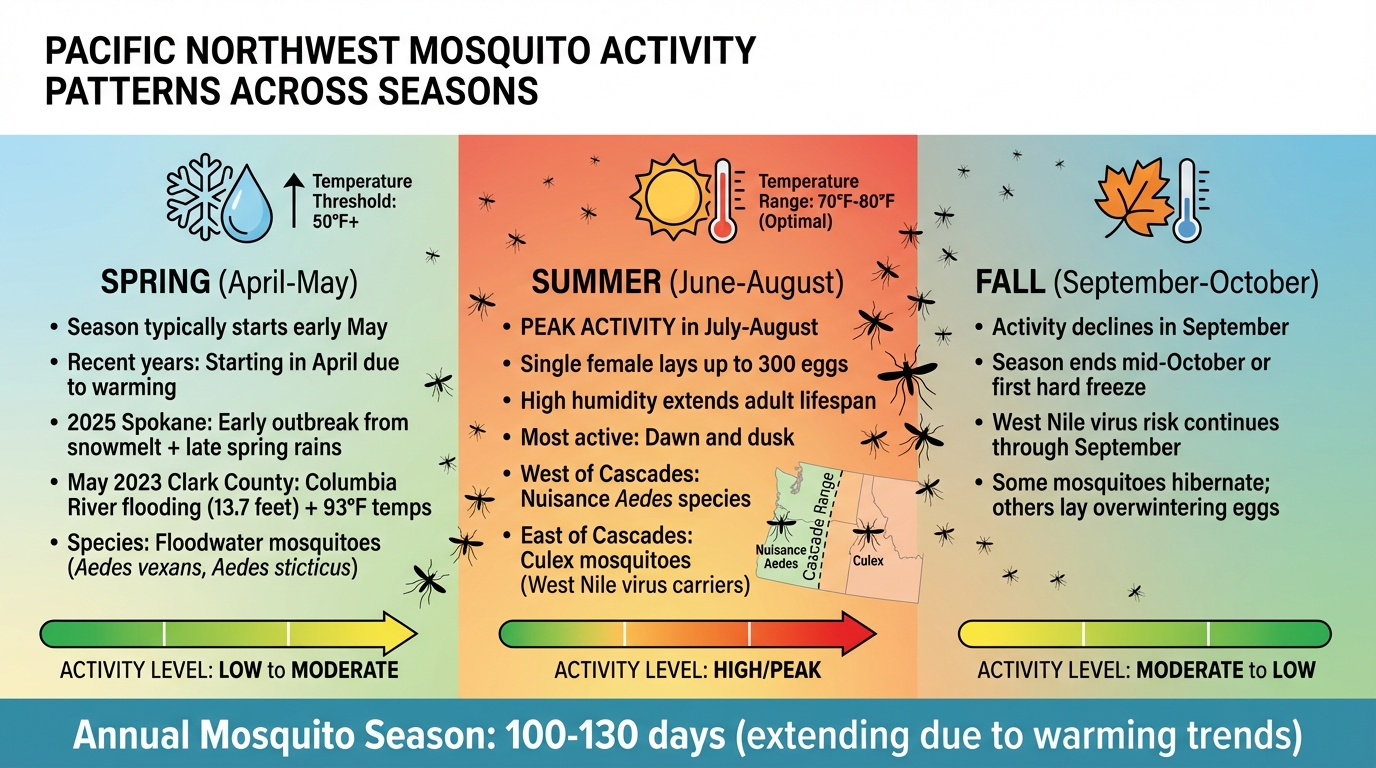
Pacific Northwest Mosquito Season Timeline: Spring Through Fall Activity Patterns
Knowing when mosquitoes are at their peak can help you plan outdoor activities and take steps to protect your property with Bellingham pest control. In the Pacific Northwest, mosquito activity follows clear seasonal patterns, influenced by temperature and water conditions.
Spring: The Start of Mosquito Season
Mosquito season typically kicks off in early May when temperatures consistently rise above 50°F. However, warmer springs in recent years have caused the season to start earlier. For example, in 2025, the Spokane area experienced an early mosquito outbreak due to a combination of early snowmelt and late spring rains, which created perfect breeding conditions. Dr. Laura Lavine from Washington State University highlights this phenomenon:
"Because we had late spring rains, that is, perfect. Breeding for standing pools of water is a perfect breeding area for mosquitoes."
Spring also brings challenges from floodwater mosquitoes. In May 2023, the Columbia River‘s flooding – reaching 13.7 feet – combined with 93°F temperatures, led to an early increase in Aedes vexans and Aedes sticticus populations in Clark County.
Summer: Peak Mosquito Activity
Summer is prime time for mosquitoes. When temperatures climb above 70°F and hover around 80°F, mosquitoes thrive. A single female can lay up to 300 eggs in stagnant water, leading to a population boom that peaks in July and August. High humidity further extends the lifespan of adult mosquitoes, with biting most noticeable at dawn and dusk.
The type of mosquito varies by region. West of the Cascades, nuisance Aedes species are more common. In contrast, east of the Cascades – especially in irrigated areas like the Yakima Valley – Culex mosquitoes dominate. These mosquitoes are a particular concern because they can spread West Nile virus. As summer wanes and temperatures begin to drop, mosquito activity starts to decline.
Fall: Activity Winds Down, but Risks Remain
By September, cooler temperatures lead to a noticeable decline in mosquito activity, with the season typically wrapping up by mid-October or after the first hard freeze. However, the risk doesn’t disappear entirely. Dr. Krisztian Magori from Eastern Washington University explains:
"In the Northwest, our season is shorter because of the area’s climate. We have some scant numbers of West Nile vectors starting in April, but we really don’t get into the season before June. Then it extends into September."
On average, the Pacific Northwest experiences about 100 to 130 days per year suitable for mosquito activity, though warming trends are gradually extending this timeframe. As the season ends, some mosquitoes hibernate in tree cavities or underground, while others die after laying eggs that will hatch the following spring.
Health Risks from Mosquito Bites
Mosquito bites are usually just irritating, but they can sometimes pose serious health risks. Knowing the potential dangers they carry and how to respond to bites is key to staying safe, especially during mosquito season. Here’s what you need to know about the diseases mosquitoes can spread in the Pacific Northwest and how to handle bites effectively.
Diseases Mosquitoes Can Spread
In the Pacific Northwest, West Nile virus is the most common mosquito-borne illness. While nearly 80% of infected people show no symptoms, about 1 in 5 experience mild issues like fever, headaches, body aches, or rashes. However, for roughly 1 in 150 people, the disease can lead to severe neurological problems, such as tremors, neck stiffness, paralysis, or even coma. Dr. Krisztian Magori from Eastern Washington University explains:
"Only 1 percent get neurological disease. But I envision it like an accident, a car wreck. You’re in the wrong place at the wrong time."
Those over 60 and individuals with chronic conditions – like cancer, diabetes, or hypertension – are at a higher risk of developing serious complications. The virus is most prevalent in irrigated regions east of the Cascades, where Culex mosquitoes thrive.
Other mosquito-borne illnesses, such as Western Equine Encephalitis and St. Louis Encephalitis, occasionally occur in Washington. In a rare case, the Tacoma-Pierce County Health Department investigated what might have been the state’s first locally transmitted malaria case in August 2025. An east Pierce County resident, who had not traveled to malaria-endemic areas, was diagnosed on August 2, 2025. While Washington typically reports 20 to 70 malaria cases annually, nearly all are linked to travel. Fortunately, Zika virus isn’t a concern locally, as the mosquitoes that carry it aren’t found in the state.
Understanding these risks highlights the need for vigilance and proper care following any mosquito bite.
How to Treat Allergic Reactions to Bites
For most people, mosquito bites result in itchy, red bumps that resolve within a few days. Redness usually fades after three days, though swelling can last up to a week. To ease discomfort:
- Apply a cold compress or use over-the-counter hydrocortisone cream to reduce itching and swelling.
- Take oral antihistamines for additional relief.
- Avoid scratching the bite, as this can lead to infections that are more troublesome than the bite itself.
In rare cases, mosquito bites can trigger severe allergic reactions. Symptoms like rapid swelling of the lips, tongue, or throat, difficulty breathing, widespread hives, or loss of consciousness require immediate medical attention. If you have an anaphylaxis kit, use it while waiting for emergency services.
For those with known severe allergies, it’s a good idea to carry an anaphylaxis kit at all times and wear a medical ID bracelet. If symptoms persist for more than a week or seem unusually severe, consult a doctor.
How to Prevent and Control Mosquitoes
Keeping mosquitoes at bay involves tackling breeding grounds, protecting yourself, and, when needed, calling in the pros. By combining these strategies, you can significantly reduce mosquito populations and the risks they bring.
Eliminating Mosquito Breeding Sites
Mosquitoes rely on stagnant water to breed – even something as small as a bottle cap filled with water can become a nursery. In warm conditions, they can mature from egg to adult in just seven days. Taking proactive steps to remove standing water is crucial.
Make it a habit to do a weekly "tip and toss" sweep around your property. Dump water from containers like old tires, buckets, flowerpot saucers, toys, and plastic covers. Birdbaths, pet dishes, and animal troughs should have their water replaced at least twice a week.
Don’t overlook your gutters – clean them regularly to prevent water buildup. Fix leaking faucets or sprinklers, and address low areas in your yard where rainwater collects. Keeping grass and shrubs trimmed can also help by allowing sunlight and airflow to dry out damp spots.
For pools and ponds, ensure they’re well-maintained with proper chlorination and filtration. You can also use mosquito dunks (biological larvicides) or introduce mosquito-eating fish like minnows to ornamental ponds. Secure trash can lids tightly, and if you use recycling bins, drill small holes in the bottom to let water drain out.
Once your property is under control, it’s time to focus on personal protection.
Protecting Yourself and Your Family
Personal protection is essential, and it starts with using the right tools. Apply EPA-approved repellents with active ingredients like DEET, Picaridin, IR3535, or Oil of Lemon Eucalyptus (OLE) to exposed skin. For children, stick to repellents with no more than 30% DEET. Permethrin, a contact insecticide, can be applied to clothing for long-lasting protection – but never directly on skin.
When heading outdoors, dress smart. Wear loose-fitting, long-sleeved shirts and long pants, especially during dawn and dusk when mosquitoes are most active. Light-colored clothing is a better choice since mosquitoes are drawn to dark colors.
To keep mosquitoes out of your home, make sure window and door screens are in good condition and repair any cracks in your home’s foundation. On patios or decks, oscillating fans can help, as mosquitoes struggle to fly in moving air.
Professional Mosquito Control Services
Sometimes, personal and property efforts aren’t enough, and that’s where professional services come in. Experts suggest starting treatments in late spring or early summer (May or June) to get ahead of peak mosquito activity. Professionals can inspect your property for hidden breeding sites and apply treatments that go beyond what store-bought solutions can offer.
For example, Sparrow’s Pest Control provides tailored mosquito management plans. Their Essential plan costs $45/month for homes up to 2,500 sq ft and includes perimeter sprays and seasonal treatments. Their Premium plan, priced at $59/month, adds flea and tick control. Both plans use methods that are safe for families and pets, with a 100% satisfaction guarantee.
For larger properties, automated misting systems can be installed to release repellents at set times, offering continuous protection. Professional-grade treatments also create lasting barriers that keep mosquitoes from invading your yard and home, offering a more effective solution than short-term fixes.
Conclusion: Preparing for Mosquito Season
Getting ahead of mosquito season is all about timing. In the Pacific Northwest, you don’t have to let mosquitoes ruin your summer or keep you cooped up inside. The trick? Start early – before temperatures consistently hit 70°F, when mosquito breeding really takes off. By April or May, focus on eliminating standing water, trimming overgrown landscaping, and clearing out clogged gutters. These simple actions can stop the first wave of mosquitoes from developing, which helps keep their numbers down when the season peaks in July and August. Pair these efforts with the right repellents, and you’ll have a solid defense in place.
To strengthen your protection, rely on EPA-approved repellents, wear protective clothing, and make sure your window screens are in good condition. While mosquito populations in the Pacific Northwest might not be as overwhelming as in other areas, the risk of West Nile Virus is still present. Dr. Krisztian Magori emphasizes the importance of staying vigilant, as fewer mosquitoes don’t mean zero risk of disease. For ongoing problems, consider reaching out to professionals. Companies like Sparrow’s Pest Control (https://www.sparrowspestcontrol.com) offer treatments designed to target breeding sites and create barriers, ensuring your yard stays comfortable and safe. Starting these treatments in late spring can set you up for a worry-free outdoor season.
FAQs
Why is mosquito season starting earlier in the Pacific Northwest?
Warmer and drier spring weather in the Pacific Northwest is causing mosquito season to kick off earlier than usual. These conditions speed up mosquito breeding cycles, giving them a head start. On top of that, early water releases from dams are creating perfect breeding grounds for mosquitoes. Climate change is also playing a role, stretching mosquito seasons by several weeks in cities like Seattle, Portland, and Eugene. As a result, residents are now dealing with mosquitoes earlier and for longer periods than before.
What are the best ways to stop mosquitoes from breeding on my property?
To keep mosquitoes from breeding, it’s crucial to get rid of standing water and take care of areas where they might lay eggs. Here’s what you can do:
- Empty birdbaths, plant saucers, and pet bowls on a regular basis.
- Clear out gutters and downspouts to prevent water buildup.
- Drain any low-lying spots where water tends to collect.
- Maintain swimming pools or cover them when not in use.
- Adjust your landscaping to minimize areas of stagnant water.
These simple steps can go a long way in cutting down mosquito activity around your home.
When should I start professional mosquito treatments for the best results?
For the best outcomes, begin professional mosquito treatments in late spring or early summer, ideally in May or June. Starting early tackles mosquitoes before their activity reaches its peak in July and August.