

The Pacific Northwest is home to a variety of insects and spiders, many of which can bite or sting. Identifying the source of a bite is essential for proper treatment. This guide covers the 10 most common bites and stings in the region, their symptoms, and how to manage them.
Quick Overview:
- Mosquitoes: Small, itchy bumps; peak activity from mid-April to October.
- Fleas: Red, itchy clusters on legs; common in spring and fall.
- Bed Bugs: Red welts in lines or clusters; active at night.
- Bees: Painful sting, swelling; stinger often left behind.
- Yellow Jackets: Multiple stings, aggressive in late summer.
- Bald-Faced Hornets: Painful welts; highly defensive near nests.
- Wasps: Red, swollen stings; can sting multiple times.
- Black Widow Spiders: Two red puncture marks; may cause muscle pain and cramping.
- Yellow Sac Spiders: Red, swollen bites; occasional blisters.
- Carpenter Ants: Sharp pinch with mild burning from formic acid.
Key Tips:
- Treatment: Clean the bite, apply a cold compress, and avoid scratching.
- Prevention: Follow these strategies for preventing bug bites, such as using repellents, wearing protective clothing, and reducing standing water.
- When to Seek Help: Difficulty breathing, severe swelling, or signs of infection.
Understanding these bites can help you stay safe and decide when to seek medical attention.
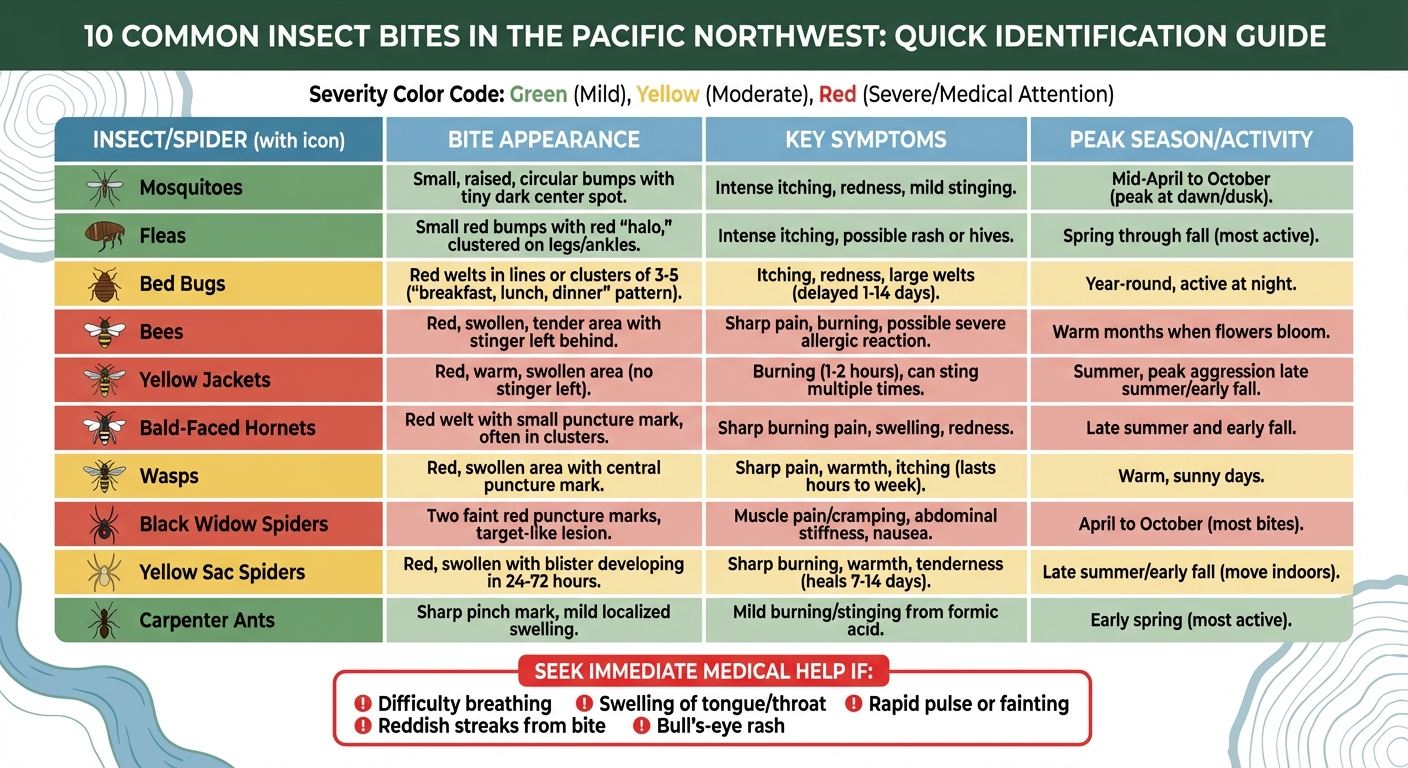
Visual Guide to 10 Common Insect Bites in the Pacific Northwest
1. Mosquito Bites
Appearance of Bite or Sting
Mosquito bites typically appear as small, raised, circular bumps on the skin. At the center of the bump, you might notice a tiny dark spot, marking the spot where the mosquito’s proboscis pierced the skin. Over time, the bump may change color, transitioning from red to pink or even pale as it heals. The size of the bite varies significantly depending on how your body reacts. For some, it’s barely noticeable, while others may develop larger, more irritated welts. As Dr. Christopher Sanford, Associate Professor of Family Medicine and Global Health at the UW School of Medicine, notes:
"People are all over the map in their response to mosquito bites. There’s a wide range among people in their sensitivity and their susceptibility to the itchy effects of bug bites".
Symptoms and Reactions
The itching from a mosquito bite often starts almost immediately. This happens because female mosquitoes inject their saliva into the skin, triggering a histamine response. Along with itching, bites usually cause redness, a mild stinging sensation, and sometimes pain. Most bites clear up within a day or two, but it’s important to watch for signs of infection, such as pus, swollen glands, or worsening redness. In rare cases, some individuals experience more intense reactions, including significant swelling and warmth at the bite site.
Seasonal or Behavioral Patterns
In the Pacific Northwest, mosquito activity is highest from mid-April to early October, with peak activity occurring at dawn and dusk. Mosquitoes often practice "sip feeding", meaning they take small bites from multiple people. This explains why you might find yourself with several bites after just one outing. Washington state is home to over 40 mosquito species, and these insects rely on carbon dioxide detection to locate their targets. People with higher metabolic rates may find themselves bitten more frequently.
Common Habitats or Locations
Mosquitoes thrive wherever there’s standing water. In the Pacific Northwest, you’ll find them in wetlands, wooded areas, and residential yards with water sources. If you’re dealing with an infestation, professional Bellingham pest control can help eliminate breeding grounds. Common breeding spots include clogged rain gutters, old tires, birdbaths, fountains, wading pools, and even forgotten buckets. To reduce mosquito populations around your home, make it a habit to empty or refresh water in birdbaths and animal troughs at least twice a week. For more on managing bites, check out the Treatment and Prevention Tips section below.
sbb-itb-be66415
2. Flea Bites
Appearance of Bite or Sting
Flea bites usually show up as small, red, itchy bumps, often grouped together on the legs and ankles. A telltale red "halo" often surrounds each bite, making them easier to identify and distinguish from other insect bites.
Symptoms and Reactions
Flea bites can cause intense itching and irritation. In some cases, they may lead to allergic reactions like rashes or hives. Scratching the bites excessively can result in secondary skin infections. Beyond skin issues, fleas are known to transmit diseases like plague (from wild rodents) and internal parasites, such as tapeworms, to both humans and pets.
Seasonal or Behavioral Patterns
Fleas are most active from spring through fall in the Pacific Northwest, although they can survive throughout the year. The most common species are the Cat flea (Ctenocephalides felis) and Dog flea (C. canis). These wingless insects are about 1/8 inch long and dark brown in color. Interestingly, adult fleas can survive for long periods without feeding on blood.
Common Habitats or Locations
Fleas live on their hosts and in surrounding environments. Indoors, they’re often found in carpets, rugs, upholstered furniture (especially in cracks and under cushions), and pet bedding. Outdoors, they thrive in damp areas near trees, bushes, and tall grass. Female fleas lay hundreds of eggs that fall off their host into these spaces. The larvae then feed on organic debris and "flea dirt" (dried blood excreted by adult fleas) as they develop.
To tackle flea infestations, vacuum daily for 10–14 days and dispose of the vacuum bag outside immediately. Wash pet bedding weekly in hot water, and use a fine-toothed flea comb on pets, paying close attention to the belly and behind the ears, to spot adult fleas or dark blood flecks. If the problem persists, Sparrow’s Pest Control provides a Premium plan that includes comprehensive flea control and tick treatments along with other pest management services.
3. Bed Bug Bites
Appearance of Bite or Sting
Bed bug bites usually show up as small, red, raised bumps – similar to mosquito bites – but with a darker center. These may sometimes swell slightly or even develop small blisters. One telltale sign is the "breakfast, lunch, and dinner" pattern, where bites appear in a straight line or clusters of three to five marks. These bites often occur on areas of skin exposed during sleep, like the face, neck, shoulders, arms, back, and legs. Unlike flea bites, which tend to focus on the ankles, bed bug bites can show up anywhere skin is uncovered.
Symptoms and Reactions
Reactions to bed bug bites can vary a lot from person to person. Some people might not notice any symptoms, while others could experience intense itching, redness, or even large welts. The bumps don’t always show up immediately – they can take anywhere from a day to two weeks to appear, depending on how sensitive someone is. Scratching the bites can sometimes lead to infections, and long-term infestations might even cause problems like anemia or trouble sleeping.
Seasonal or Behavioral Patterns
Bed bugs are most active at night, feeding while you’re asleep and then retreating to their hiding spots during the day. They don’t fly or jump but are quick movers and excellent at hitching rides on luggage, clothes, or furniture. Adult bed bugs are about the size of an apple seed – roughly 1/4 inch long – with flat, oval, reddish-brown bodies. Remarkably, they can survive up to a year without feeding. According to the National Pest Management Association, a bed bug exterminator reports treating infestations in 89% of single-family homes, 88% of apartments, and 67% of hotels or motels. These habits make it crucial to stay alert, especially in travel or shared living spaces.
Common Habitats or Locations
In regions like the Pacific Northwest, bed bugs are often found in homes, hotels, apartments, cruise ships, and secondhand furniture stores. They tend to hide in mattress seams, box springs, bed frames, headboards, behind mirrors or pictures, and in cracks or crevices in walls or furniture. Look for signs like blood stains, dark droppings, shed skins, or a musty smell. When traveling, inspect mattress edges and headboards before unpacking, and keep luggage off the floor by using elevated racks. Avoid bringing discarded mattresses or upholstered furniture into your home unless they’ve been thoroughly inspected.
4. Bee Stings
Appearance of Bite or Sting
A bee sting causes an immediate reaction on the skin, characterized by pain more than itchiness – unlike mosquito or flea bites. The affected area typically becomes red, swollen, and tender. One telltale sign is the stinger left behind in the skin. Honey bees, in particular, have barbed stingers that embed into the skin, continuing to release venom for up to a minute if not removed promptly.
Symptoms and Reactions
Bee stings bring sharp, instant pain followed by a burning sensation and, in some cases, numbness. For some, the reaction can escalate into a large localized swelling that spreads well beyond the sting site – sometimes covering areas as large as from an elbow to a shoulder. Though rare, severe allergic reactions (anaphylaxis) can occur, marked by symptoms like hives, nausea, chest tightness, and difficulty swallowing. It’s worth noting that venomous insect and spider bites cause more fatalities than snake bites in the U.S.. Only a small percentage – 1 to 2 out of every 1,000 people – are highly allergic to bee stings. If symptoms such as difficulty breathing, facial swelling, or throat tightness arise, seek emergency medical help immediately by calling 911.
Seasonal or Behavioral Patterns
Bees are most active during warm months when flowers are in bloom, as they forage for nectar and pollen. During foraging, they are generally non-aggressive and sting only if provoked – like being stepped on, swatted, or handled. They may also react defensively to sudden movements near their hives. If stung, removing the stinger within 15 seconds can significantly lessen the severity of the reaction.
Common Habitats or Locations
In the Pacific Northwest, bees are frequently found in wooded areas, fields, and places with blooming vegetation, especially where clover and ground covers are present. Outdoor dining spots can also attract bees due to sweet drinks or food remnants in garbage cans. To reduce the risk of stings, avoid wearing floral-patterned clothing, dark colors, or perfumes when in such areas, and always wear shoes in grassy locations. If a bee lands on you, stay calm and gently brush it away rather than swatting, which could provoke a sting. Up next, we’ll look at stings from other wasp-like insects and how to handle them effectively.
5. Yellow Jacket Stings
Appearance of Bite or Sting
Yellow jacket stings result in an immediate reaction: redness, warmth, swelling, and intense itching. Unlike honey bees, these insects don’t leave their stinger behind, which means they can sting multiple times in quick succession. You can identify them by their appearance – about ½ inch long with bright yellow and black (or sometimes white and black) stripes on their abdomen, a narrow waist, and very little body hair.
Symptoms and Reactions
The initial burning from a yellow jacket sting usually lasts one to two hours. Redness and swelling can stick around for several days but generally clear up within a week. For most people, the reaction is confined to the sting site. However, some individuals may experience severe allergic reactions, which could include symptoms like wheezing, throat tightness, difficulty breathing, hives, dizziness, and nausea. Yellow jacket stings are the most common insect sting in the United States. If you’ve had an anaphylactic reaction before, your chances of experiencing another are over 50%. For non-allergic individuals, it would take roughly 1,500 stings to be fatal, but even without allergies, multiple stings can lead to serious issues such as kidney failure or low blood pressure.
Seasonal or Behavioral Patterns
In the Pacific Northwest, yellow jackets are most active during the summer, with their peak aggression occurring in late summer and early fall. As their colonies start to die off, they become more territorial and defensive. These insects will aggressively attack anything they perceive as a threat to their nest. If you disturb a nest, the best course of action is to run away immediately. Use lawn flags to mark the location of any known nests to avoid future encounters. Yellow jackets are less active in the evening, making it the safest time to treat nests.
Common Habitats or Locations
The Western yellowjacket (Vespula pensylvanica) is one of the most common and dangerous species in the Pacific Northwest. They typically build nests underground, in tree stumps, hollow logs, wall voids, or even in manmade structures. According to M. R. Bush from Washington State University Extension:
"The Western yellow jacket, Vespula pensylvanica, is one of the most prevalent yellow jacket species in the PNW. This is probably one of the most dangerous species as it does like to found nests in manmade structures and will aggressively defend the nest from intruders."
For safe removal, it’s best to contact a professional wasp control service, such as Sparrow’s Pest Control (https://www.sparrowspestcontrol.com). They offer family- and pet-friendly solutions. In some cases, professionals may collect live yellow jackets for use in allergy medication production. However, once a nest has been treated with pesticides, it can no longer be used for this purpose.
6. Bald-Faced Hornet Stings
Appearance of Bite or Sting
A sting from a bald-faced hornet leaves behind a red welt with a small puncture mark in the center. Because their stingers are smooth, they can sting multiple times, often resulting in clusters of painful, swollen marks. These hornets are about ½ to ⅝ inch long and have black bodies with white or ivory markings on their face and the tip of their abdomen. Despite their name, bald-faced hornets aren’t true hornets but are actually a type of aerial-nesting yellowjacket.
Symptoms and Reactions
The sting causes sharp, burning pain right away, along with swelling, redness, and itching that can persist for several days. For those with sensitivities, reactions can become severe, including hives, difficulty breathing, and throat swelling. If symptoms like dizziness, tongue swelling, or wheezing occur, it’s crucial to seek emergency medical attention immediately.
Seasonal or Behavioral Patterns
Bald-faced hornets are most active in the late summer and early fall, especially in the Pacific Northwest, when their colonies are largest. During this time, they become highly aggressive and protective of their nests. They’re known for "dive-bombing" perceived threats and will fiercely defend their territory if you get too close – typically within just a few feet of their nest. This behavior sets them apart from other stinging insects in the area.
Common Habitats or Locations
These hornets create large, gray, papery nests shaped like footballs or teardrops. In Washington, Oregon, and Idaho, their nests are often found hanging from tree branches, dense shrubs, or the eaves of homes and outbuildings. Their tendency to nest near homes and gardens makes them a safety risk. If you spot one of these gray nests, avoid approaching it or attempting to remove it yourself. For nests in high-traffic areas, it’s best to call a professional, such as Sparrow’s Pest Control (https://www.sparrowspestcontrol.com), who use safe versus traditional pest control methods for removal. Up next, we’ll look at another common stinging insect in the region.
7. Wasp Stings
Appearance of Bite or Sting
A wasp sting usually shows up as a red, swollen area with a central puncture mark. The skin around the sting often feels warm and forms a raised welt. Unlike bees, wasps can sting multiple times because they don’t lose their stingers. The redness and swelling often spread outward from the initial sting site.
Symptoms and Reactions
Most people experience localized symptoms, including sharp pain, swelling, warmth, redness, and itching, which generally subside within a few hours. However, some may have a more intense reaction, with significant swelling that can last up to a week. Severe allergic reactions, such as hives, flushing, or swelling of the airways, can occur. The most dangerous response is anaphylaxis, which may lead to low blood pressure and breathing difficulties. Orkin highlights:
"once an individual has experienced an anaphylactic reaction, the risk of having a recurrent episode is above 50 percent".
Delayed reactions are rare, affecting fewer than 1% of cases, and can emerge days or even weeks later.
Seasonal or Behavioral Patterns
Wasps are most active during warm, sunny days and tend to be calmer in cooler weather or early mornings. Paper wasps, while less aggressive than yellow jackets or bald-faced hornets, will fiercely defend their nests if they feel threatened.
Common Habitats or Locations
Paper wasps build their umbrella-shaped nests in exposed areas like building overhangs, decks, mailboxes, gas grills, and light fixtures, particularly in Washington, Oregon, and Idaho. These nests can lead to accidental encounters. Solitary wasps, on the other hand, nest underground and are less likely to sting unless disturbed. If you find a wasp nest near busy areas around your home, it’s a good idea to call a professional. For safe nest removal, Sparrow’s Pest Control is a reliable option. Next, we’ll take a closer look at spider bites common in the Pacific Northwest.
8. Black Widow Spider Bites
Appearance of Bite or Sting
A black widow spider bite typically appears as two faint red puncture marks. The area around the bite may become slightly red and swollen, sometimes developing into a target-like lesion or blister with bluish-gray tones. Initially, the bite might feel like a minor pinprick, often going unnoticed until numbness sets in.
Symptoms and Reactions
Within an hour of the bite, the venom’s neurotoxins can cause dull muscle pain that spreads from the bite location to the abdomen, back, chest, and shoulders. Severe cramping and abdominal stiffness often follow, peaking within 6–12 hours. Other possible symptoms include nausea, vomiting, tremors, difficulty breathing, excessive saliva, sweating, headaches, fever, and elevated blood pressure. While the venom is highly toxic, fatalities are rare in healthy adults. Most people recover fully within 24 to 48 hours if they receive appropriate medical care. However, the bite poses greater risks to infants, children, older adults, and individuals with high blood pressure or weakened immune systems. Each year, about 2,600 black widow bites are reported to the National Poison Data System.
Seasonal or Behavioral Patterns
Black widows are shy spiders that rarely bite unless they feel threatened – such as being accidentally touched, stepped on, or when a female is protecting her eggs. They prefer to avoid confrontation and will retreat if given the chance. As temperatures drop in the fall, they may move indoors seeking warmth. Most bites occur between April and October, particularly in rural and suburban areas. Only female black widows bite, as males are too small to puncture human skin.
Common Habitats or Locations
In the Pacific Northwest, the western black widow (Latrodectus hesperus) is most frequently found in Eastern Washington and Southwest Oregon, with smaller populations in Western Washington, particularly on dry, south-facing slopes. These spiders prefer dark, dry, and undisturbed spaces like woodpiles, rock piles, hay bales, water meter boxes, crawl spaces, and cluttered basements or garages. Female black widows are about 1.5 inches across (including their legs) and are easily recognized by their shiny black bodies and the red or orange-red hourglass marking on their underside. If you find black widows in areas where people frequently walk or work, it’s best to seek professional help for removal. For safe and effective spider control, Sparrow’s Pest Control offers expert services to eliminate these venomous spiders.
Next, learn about yellow sac spider bites, another potential concern in the region.
9. Yellow Sac Spider Bites
Appearance of Bite or Sting
Yellow sac spider bites are known for their distinct symptoms. Initially, the bite site appears red and swollen, accompanied by a sharp, burning sensation. Within 24 to 72 hours, a small blister or raised lesion may develop. If the blister breaks, it can leave a sore that could take weeks to heal.
These spiders are small, measuring about 1/4 to 1/2 inch (5–10 mm) in length. They are pale yellow, cream, or greenish, often with a darker stripe running along the upper middle of their abdomen. Their eight eyes are arranged in two horizontal rows, and they have long fangs and dense hairs that allow them to climb walls and ceilings.
Symptoms and Reactions
Most yellow sac spider bites heal within 7 to 14 days. Common symptoms include warmth, tenderness, and inflammation at the bite site. Severe reactions, though rare, may involve significant swelling or signs of infection such as fever or pus. While these spiders are sometimes linked to necrotic wounds, actual tissue damage is extremely uncommon.
"Typical symptoms of a bite include an immediate stinging sensation followed by redness and mild swelling." – UC Davis
To treat a bite, wash the area with soap and water, then apply a cold compress for 10–15 minutes to reduce pain and swelling. Over-the-counter anti-inflammatory medications or soothing agents like aloe can also provide relief. Avoid scratching the bite to lower the risk of bacterial infection.
Seasonal or Behavioral Patterns
Yellow sac spiders are nocturnal hunters, actively searching for prey like insects and other spiders instead of relying on webs. Bites usually happen when the spider is accidentally trapped against the skin in clothing or bedding. During late summer and early fall, these spiders often move indoors to build silken sacs for overwintering. Remarkably, they can create a new hiding sac in just 10 to 15 minutes.
"Sac spiders are known occasionally to inflict bites on humans. Bites usually occur when the spider becomes trapped against a person’s skin in clothing or bedding." – UC Davis
Common Habitats or Locations
In the Pacific Northwest, two species of yellow sac spiders are commonly found: Cheiracanthium inclusum (native) and C. mildei (introduced from Europe in the 1940s). The native species tends to live outdoors in gardens, trees, and dense vegetation, while the introduced species is more frequently found indoors. Inside homes, their small white silk sacs might be spotted in wall corners, behind picture frames, or inside closets. Outdoors, they often hide under stones, in leaf litter, or along house siding.
To minimize encounters, shake out clothing, shoes, and bedding stored in dark areas before use. Wear gloves while gardening or handling yard debris, and keep vegetation trimmed at least one foot away from your home’s foundation. Regularly vacuuming corners and reducing clutter indoors can also discourage these spiders from settling in, but professional spider control services may be necessary for persistent infestations.
Next, learn how carpenter ant bites differ and how to recognize them.
10. Carpenter Ant Bites
Continuing our look at common insect encounters in the Pacific Northwest, carpenter ant bites are another issue worth understanding.
Appearance of Bite or Sting
Carpenter ants are among the larger ant species, with Western black carpenter ant workers measuring about 3/8 inch in length. They typically range in color from red to black and have a distinct narrowing at their midsection. Unlike ants with stingers, carpenter ants rely on their powerful mandibles to bite. They can also release formic acid through a small circular opening, called an acidopore, located at the tip of their abdomen. This area is often fringed with hairs. Defensive bites are most often delivered by the larger "major workers" tasked with protecting the nest.
Symptoms and Reactions
Most people feel a sharp pinch during a carpenter ant bite, followed by a mild burning or stinging sensation caused by the formic acid. This can lead to localized warmth, tenderness, and slight swelling that typically lasts a few hours to a day.
For most, these bites are little more than an annoyance. However, individuals with heightened sensitivity may experience more severe reactions. In rare cases, an allergic response can escalate to anaphylactic shock. If you notice severe swelling, difficulty breathing, or other signs of an allergic reaction, seek medical help immediately.
Seasonal or Behavioral Patterns
Carpenter ants are most active in early spring, particularly when winged reproductives emerge. During this time, workers often forage indoors before outdoor food sources become plentiful. This makes encounters with carpenter ants especially common in the Pacific Northwest during the early spring months.
Common Habitats or Locations
In the Pacific Northwest, carpenter ants are considered a major structural pest. Outdoors, they nest in standing trees, stumps, logs, and along the forest floor. Indoors, they establish satellite colonies in places like wall voids, crawl spaces, and even foam insulation. A single colony can house thousands of workers.
To minimize the risk of carpenter ant bites, take preventative measures like sealing cracks around windows, doors, pipes, and wiring chases. Trimming plants and tree branches that touch your house and keeping materials like mulch or compost away from your siding can also help. If you spot carpenter ants indoors during winter, vacuum them up and wait until spring for more effective treatment. For ongoing infestations, consider contacting Sparrow’s Pest Control (https://www.sparrowspestcontrol.com) for professional assistance. This sets the stage for discussing broader treatment and prevention strategies in the next section.
Treatment and Prevention Tips
Once you’ve identified the bite or sting, taking the right steps for treatment and prevention can help limit complications.
| Insect/Arachnid | Bite/Sting Appearance | Primary Symptoms |
|---|---|---|
| Mosquito | Puffy, hard bumps; sometimes a red dot in the center | Intense itching |
| Flea | Small red spots surrounded by reddened halos; often on legs/feet | Very itchy |
| Bed Bug | Red welts (flat or raised) often in tight lines or clusters | Initial burning sensation followed by itching |
| Bees/Wasps | Redness and swelling at the site | Sharp pain, localized stinging |
| Spider (General) | Two puncture marks close together | Minor swelling and pain |
| Black Widow | Two puncture marks | Muscle cramps, abdominal pain, tremors, sweating |
For at-home care, start by removing any stinger using tweezers, then clean the area thoroughly with soap and water. This is especially crucial in damp environments, like the Pacific Northwest, where bacteria can easily thrive. To reduce swelling, apply a cold compress, and to ease itching, try over-the-counter hydrocortisone cream or antihistamine lotions. Avoid scratching the affected area, as it can break the skin and increase the risk of infection. Dr. Christopher Bazzoli, an emergency physician, notes:
"Anytime we’ve got a bite or a break in the skin, it’s a place where bacteria can now start to get in".
When to seek emergency care: Call 911 immediately if you experience difficulty breathing, swelling of the tongue or throat, wheezing, fainting, or a rapid pulse – these are signs of anaphylaxis. Medical attention is also necessary for suspected Black Widow bites, bites showing reddish streaks spreading from the site, blisters, pus drainage, or "bull’s-eye" rashes. Severe allergic swelling that extends beyond 4 inches in diameter is another red flag.
To prevent bites and stings, use a bug spray containing at least 20% DEET when outdoors. Wear long sleeves and pants in wooded areas, avoid floral-scented products, and inspect firewood for spiders before bringing it inside. For ongoing infestations, consider professional help. Sparrow’s Pest Control (https://www.sparrowspestcontrol.com) offers family- and pet-safe solutions to manage pests effectively. These steps can help you stay safe while minimizing encounters with biting or stinging insects.
Conclusion
Understanding insect bites in the Pacific Northwest equips you to handle them calmly and effectively. Knowing the difference between a harmless Giant House Spider and a potentially dangerous Black Widow allows you to make informed choices instead of reacting out of fear.
"It’s not always possible to identify bug bites and know where they came from, but there can be some telltale signs. And knowing what you’ve been bitten by can matter in determining how to treat it and understanding whether you need medical attention".
One of the biggest risks with insect bites is secondary infection, often caused by scratching. To minimize this, it’s essential to clean bites thoroughly with soap and water. This is especially important in the Pacific Northwest, where the damp climate provides an ideal environment for bacteria.
Prevention is key. Using repellents containing at least 20% DEET and wearing protective clothing are simple yet effective ways to lower your risk. Regularly inspecting firewood and keeping your yard tidy can also help reduce encounters with pests. If fleas, bed bugs, or spiders become a recurring issue, seeking professional assistance is a smart move. Sparrow’s Pest Control (https://www.sparrowspestcontrol.com) offers family- and pet-friendly pest control plans starting at $39/month, which include quarterly treatments and free re-treats to ensure your home stays pest-free.
FAQs
How can I tell a bed bug bite from a flea bite?
Bed bug bites usually show up on exposed areas of skin such as the face, neck, arms, or shoulders. They often form in clusters or straight lines. In contrast, flea bites are smaller, more scattered, and typically found on the lower body, especially below the knees. Bed bug bites measure around 5-7 mm, whereas flea bites are smaller, ranging from 1.5 to 3.3 mm, and often appear in warm, moist spots on the body.
What bite or sting symptoms mean I should go to the ER?
If you notice difficulty breathing, severe allergic reactions like hives or swelling, muscle cramps from black widow bites, necrotic lesions from brown recluse bites, or symptoms like fever or confusion that suggest infection or systemic illness, head to the ER immediately. These could signal a serious issue that needs urgent medical care.
When should I call Sparrow’s Pest Control for bites or infestations?
If you’re battling insect bites or infestations caused by ants, spiders, rodents, wasps, fleas, or cockroaches, reach out to Sparrow’s Pest Control. Whether your prevention methods have fallen short or the problem seems to be escalating, their team of professionals is equipped to handle it. They offer safe and effective extermination services, along with prevention strategies, to help you take control of the situation.