
Cockroaches are not just annoying – they can spread diseases like salmonella and trigger allergies. Chemical pesticides can be harmful to humans and pets, but natural solutions offer safer alternatives. Here are 7 effective natural remedies to repel or eliminate cockroaches:
- Baking Soda and Sugar: Mix equal parts as bait. Sugar attracts roaches, while baking soda kills them.
- Diatomaceous Earth (DE): A fine powder that damages roaches’ exoskeletons, causing dehydration.
- Essential Oils: Clove, peppermint, and rosemary oils repel roaches by disrupting their sensory receptors.
- Bay Leaves: Their scent deters roaches, making them a good preventive option.
- Vinegar Solution: Cleans surfaces and removes food odors that attract roaches.
- Boric Acid Bait: Kills roaches when ingested during grooming. Effective for small infestations.
- Catnip Tea: Contains nepetalactone, a compound that repels roaches.
Each method has pros and cons, and combining them with regular cleaning and sealing cracks can improve results. Severe infestations may require professional pest control.
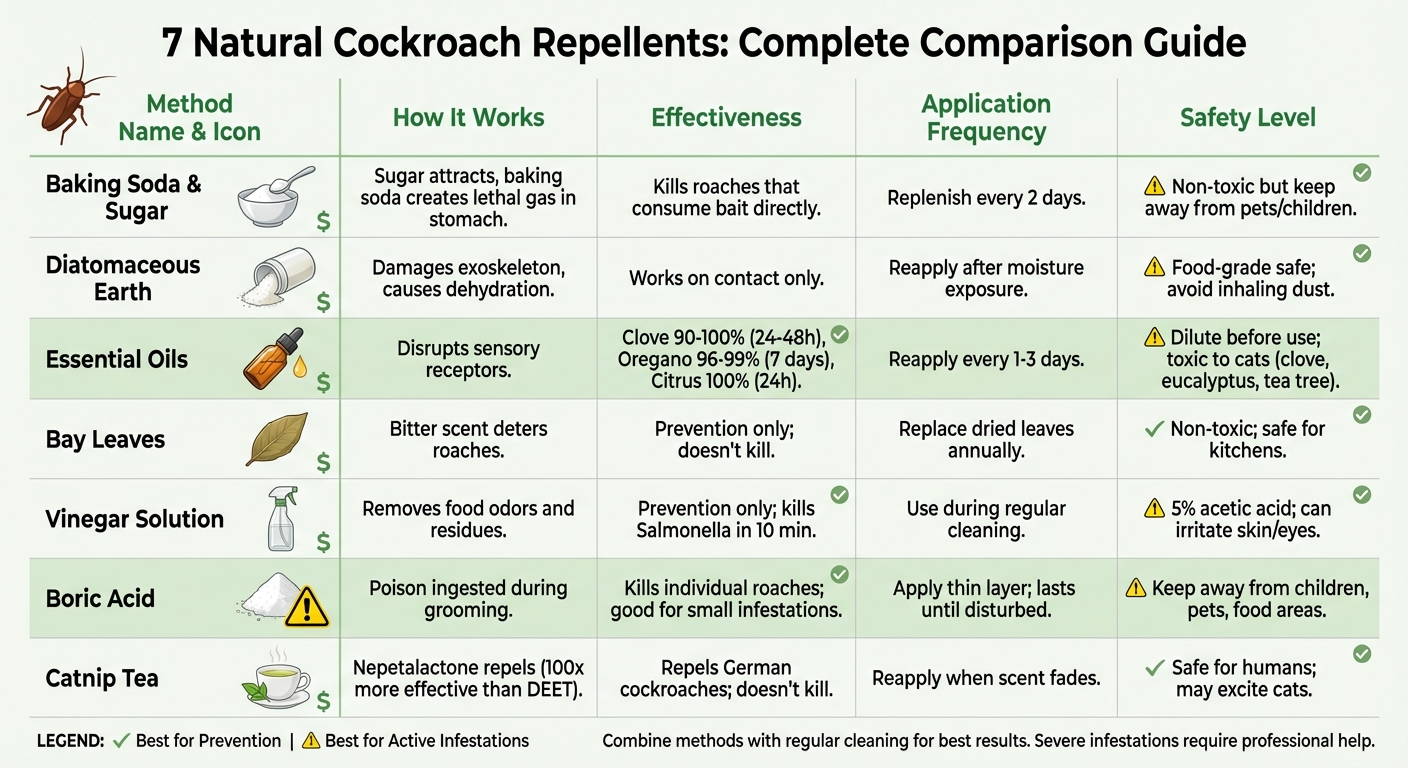
7 Natural Cockroach Repellents Comparison Chart
Natural Ways To Get Rid Of Roaches FOREVER
sbb-itb-be66415
1. Baking Soda and Sugar
This method offers a simple and environmentally conscious way to tackle cockroach infestations.
Effectiveness in Repelling or Killing Cockroaches
Sugar acts as the bait, drawing cockroaches in with its sweetness. Once they consume the mixture, the baking soda reacts with their stomach acid, creating gas that proves lethal. However, this method primarily works on cockroaches that directly eat the bait, leaving those hidden in walls or hard-to-reach areas unaffected.
As noted by the Hunker Team:
Baking soda and sugar is a tried-and-tested natural way to kill roaches. The pests are attracted to the smell of the sugar, while the baking soda ensures they won’t survive.
Ease of Use and Application
To prepare, mix equal parts baking soda and sugar. For an added boost, incorporate 10% powdered yeast or vitamin C. Place the mixture in shallow containers and position them in dark, damp spots like under sinks or behind outlets. Replenish the bait every two days for consistent results.
These straightforward steps make it an accessible and low-risk method for cockroach control.
Safety for Families, Pets, and the Environment
While baking soda and sugar are non-toxic, it’s important to consider the bacteria and dirt cockroaches carry. The Hunker Team advises:
Keep children and pets well away from your roach-killing mixture. Even non-toxic baits have still been in contact with dirty, bacteria-ridden roaches.
To ensure safety, keep bait stations out of reach of children and pets. Store any leftover mixture in a sealed, labeled container to avoid accidental ingestion. This approach eliminates the need for harsh chemical pesticides, making it a more eco-friendly choice.
Affordability and Accessibility of the Solution
Since both baking soda and sugar are common household items, this method is budget-friendly. To maximize effectiveness, combine baiting with thorough cleaning – wipe down surfaces, remove grease, and seal cracks to reduce alternative food sources for cockroaches.
2. Diatomaceous Earth
Diatomaceous earth (DE) is a natural, chemical-free powder made from fossilized diatoms. It’s a practical option for managing cockroach infestations.
How It Works Against Cockroaches
Diatomaceous earth combats cockroaches by targeting their exoskeletons. When roaches come into contact with DE, the powder’s sharp, microscopic particles cut through their protective outer layer, absorbing oils and causing dehydration. This process eventually leads to their death. As Trent Frazer, Lead Entomologist at Aptive, explains:
"Diatomaceous earth, on the other hand, physically damages the insect’s outer shell."
It’s important to note that DE only works on roaches that directly encounter it, making proper application crucial.
Application Tips
Always use food-grade DE to ensure safety, as other forms may contain harmful substances like crystalline silica. Apply a fine, even layer in areas where cockroaches are likely to travel – along baseboards, behind appliances, under sinks, and in cracks. Frazer emphasizes:
"Thick layers can actually deter pests from walking through it. Stick with a thin layer of product only."
Because DE loses its effectiveness when wet, reapply it after cleaning or any exposure to moisture. For added effectiveness, you can mix DE with cocoa powder and flour to create a bait that attracts roaches.
Safety Considerations
Food-grade DE is safe for households and an environmentally friendly alternative to chemical pesticides. However, Shannon Harlow-Ellis, Associate Certified Entomologist at Mosquito Joe, advises:
"Avoid inhaling the dust – even food-grade – as prolonged exposure can irritate the lungs."
When applying DE, use gloves and a dust mask, and keep children and pets away until the dust settles. For cleaning, use a damp cloth instead of a vacuum, as the fine particles can damage vacuum filters.
Cost and Availability
Food-grade DE is budget-friendly and easy to find at hardware stores. Store any leftover product in an airtight container to keep it dry. For the best results, combine DE with other preventive measures, such as sealing cracks and eliminating food sources. Its affordability and eco-conscious qualities make it a solid choice for cockroach control.
3. Essential Oils
Essential oils work as natural cockroach repellents by interfering with their sensory receptors. These concentrated plant extracts make it harder for cockroaches to navigate, locate food, or settle in treated spaces. Take clove oil, for instance – it’s incredibly effective, showing a 90% to 100% success rate against American cockroaches for 24 to 48 hours. The secret lies in its active compound, eugenol, which disrupts the cockroach’s nervous system, prompting them to steer clear.
Effectiveness in Repelling or Killing Cockroaches
Not all essential oils work the same way, and their effectiveness varies. Oregano oil, with its compounds carvacrol and thymol, offers strong protection, repelling 96% to 99% of cockroaches for up to 7 days when used in high concentrations. Citrus hystrix oil achieves complete repellency (100%) against both American and German cockroaches for at least 24 hours. Peppermint oil is another option, providing high avoidance for about 10 to 12 hours. Interestingly, rosemary oil stands out because it doesn’t just repel cockroaches; it can actually kill them within 24 hours in laboratory studies.
| Essential Oil | Primary Compound | Effectiveness | Duration |
|---|---|---|---|
| Clove | Eugenol | 90–100% | 24–48 hours |
| Oregano | Carvacrol | 96–99% | Up to 7 days |
| Citrus hystrix | Limonene | 100% | 24 hours |
| Peppermint | Menthol | Effective | 10–12 hours |
| Rosemary | Eucalyptol | High (can kill) | 24 hours |
These findings highlight how specific oils can be chosen depending on the level and duration of the infestation.
Ease of Use and Application
Making your own essential oil spray is simple. Combine 10 to 20 drops of your preferred oil with 1 cup of water and add 2 to 3 drops of liquid soap to help the oil mix evenly. Shake the mixture well and spray it along baseboards, cracks, and under sinks. For harder-to-reach spots, like behind appliances or inside cabinets, place 3–5 drops of oil on a cotton ball and tuck it into hidden areas. Keep in mind that essential oils evaporate quickly, so reapply every 1 to 3 days, especially in areas with good ventilation. For serious infestations, however, professional pest control might be required.
Safety for Families, Pets, and the Environment
Essential oils are highly concentrated, so always dilute them to avoid skin irritation. While they’re a safer alternative to chemical pesticides, be cautious if you have cats – oils like eucalyptus, tea tree, clove, and oregano can be toxic to felines. Lavender and rosemary are generally safer for households with pets. Before widespread use, test the spray on a small, hidden area to check for staining on fabrics or painted surfaces. Also, avoid using citrus-based oils on surfaces exposed to direct sunlight, as this can cause photosensitivity.
Affordability and Accessibility of the Solution
Essential oils are easy to find and affordable, available at grocery stores, pharmacies, and online retailers. They’re ideal for preventing or managing minor infestations but may not be sufficient for severe cockroach problems. Similar to baking soda mixtures and diatomaceous earth, essential oils provide a chemical-free option that fits well into a broader pest prevention plan.
4. Bay Leaves
Bay leaves present a natural way to keep cockroaches at bay, offering a chemical-free alternative for prevention.
The bitter scent of bay leaves is what drives cockroaches away. While they don’t eliminate these pests, they make treated areas less attractive to them. Lorna Hordos explains:
Bay leaves can help to deter or repel roaches; they don’t kill the bugs, but likely produce a scent that cockroaches find irritating or offensive.
Effectiveness in Repelling or Killing Cockroaches
Bay leaves are better suited for prevention rather than tackling an active infestation. Fresh leaves have a more intense aroma compared to dried ones, but both can be effective deterrents. Dried bay leaves can maintain their scent for up to a year, making them a practical, long-term option for mild pest issues.
Ease of Use and Application
Applying bay leaves is simple. Place whole leaves in areas where cockroaches are likely to appear, such as behind appliances, inside cupboards, or near food-prep areas. You can also use them in trash bins to help reduce food odors. It’s best to use whole leaves rather than crushed ones to avoid mess and make replacements easier. For a steady supply of fresh leaves, consider growing a bay laurel plant (Laurus nobilis) indoors. This plant thrives as a houseplant in USDA zones 8 through 11. Consistent placement and replacement of bay leaves will enhance their effectiveness.
Safety for Families, Pets, and the Environment
Bay leaves are a non-toxic option, making them safe for use in kitchens, dining spaces, and other areas frequented by children or pets. Unlike chemical solutions like bleach or foggers, bay leaves won’t irritate your skin, eyes, or lungs, and they won’t harm household surfaces. This makes them an eco-friendly and family-friendly choice.
Affordability and Accessibility of the Solution
Easily found in grocery stores and budget-friendly, bay leaves are a convenient addition to your pest prevention routine. They work best alongside regular cleaning and proper food storage. However, for significant infestations, stronger measures or professional pest control may be required. Bay leaves are ideal for keeping small problems from becoming big ones.
5. Vinegar Solution
Vinegar doesn’t directly repel or kill cockroaches, despite its popularity in home remedies. Its real value lies in its ability to clean and remove food odors and residues, which can make your home less appealing to these pests. As Ruth de Jauregui puts it:
The vinegar itself does not repel or kill roaches. Still, cleaning the kitchen thoroughly, and sanitizing the sink, food preparation and cooking areas, helps discourage roaches that come in seeking a snack.
Effectiveness in Repelling or Killing Cockroaches
Vinegar works more as a preventive measure than a solution for active infestations. Its power lies in sanitizing surfaces and eliminating bacteria like Salmonella. For instance, undiluted white vinegar at room temperature (77°F) can kill Salmonella in 10 minutes, while heating it to 130°F reduces the time to just 1 minute. By using vinegar to clean surfaces, you remove food residues and odors that attract cockroaches. However, it’s important to note that vinegar alone won’t solve an existing infestation.
Ease of Use and Application
Vinegar is simple to use. Spray undiluted white vinegar (5% acidity) directly on countertops, sinks, and food prep areas. Let it sit for at least 10 minutes to fully sanitize the surface. Pay extra attention to dark, damp areas where cockroaches might hide, and make sure to clean up crumbs or standing water. Incorporating vinegar into your regular cleaning routine can help maintain a less inviting environment for pests.
Safety for Families, Pets, and the Environment
While vinegar is a natural and environmentally friendly option compared to chemical pesticides, it still requires careful handling. With its 5% acetic acid content, vinegar can irritate the skin and eyes. Ruth de Jauregui cautions:
Vinegar, even at a 5 percent strength, is an acid and can damage your eyes and burn your skin.
Wearing gloves and safety goggles while using vinegar is a good idea to avoid accidental irritation.
Affordability and Accessibility
White vinegar is both affordable and easy to find, making it a convenient addition to your cleaning supplies. However, it should be used as part of a broader cleaning and pest control plan, rather than as a standalone solution for cockroach infestations.
6. Boric Acid Bait
Boric acid is a powerful, DIY solution for killing cockroaches. It works as a poison rather than a repellent. When cockroaches crawl through areas dusted with boric acid, the powder clings to their bodies. Later, during their grooming routine, they ingest it – resulting in their demise. This makes it particularly effective for targeting individual roaches and smaller infestations. However, its success depends on applying it correctly.
How Boric Acid Works Against Cockroaches
The effectiveness of boric acid hinges on proper application. It must be spread as a thin, barely visible layer – a heavy application will actually deter cockroaches. Focus on areas where they are most active, such as under appliances like refrigerators and ovens, along baseboards, and in cabinet corners. That said, boric acid has its limits. If the infestation is hidden deep in wall voids or cracks that the powder can’t reach, it may not completely eliminate the problem. Pairing boric acid with thorough cleaning to remove food sources can help drive roaches into treated areas.
Application Tips and Ease of Use
Boric acid is available in powder form or as pre-made bait stations, which can be found at hardware stores, pharmacies, and grocery stores. For a DIY bait, mix the powder with an attractant like powdered sugar or flour to draw cockroaches in. Apply it sparingly in dark, undisturbed areas where roaches hide and travel. A light, even dusting is key – if you see visible piles, you’ve used too much.
Safety Considerations for Families and Pets
While boric acid is less harmful than many chemical pesticides, it still needs to be handled with care. Keep treated areas out of reach of children and pets, and avoid using it where food is prepared or stored. To protect your skin, wear gloves during application and wash your hands afterward.
Cost and Availability
Boric acid is an affordable, widely available option that can be found at most major retailers. Its low cost and accessibility make it a practical first step in tackling cockroach problems.
7. Catnip Tea
Catnip tea has been shown to be an effective natural way to repel cockroaches. The key lies in its active compound, nepetalactone, which makes up nearly 80% of the plant’s flowering tops. Research from Iowa State University revealed that nepetalactone is up to 100 times more effective than DEET at driving away small, brown German cockroaches.
How It Works Against Cockroaches
Unlike pesticides that kill cockroaches, catnip tea works as a deterrent. Cockroaches rely on their sensitive antennae to detect scents, and the smell of nepetalactone is enough to send them packing. While it won’t solve an infestation, it’s a great tool for keeping these pests out of your home when paired with proper cleaning, sealing of entry points, and professional ant control if other pests are present. It’s an easy addition to a natural pest management routine.
How to Prepare and Use Catnip Tea
Making catnip tea is simple. Use 2 teaspoons of dried catnip leaves or 2 tablespoons of fresh leaves for every 8 ounces of boiling water. Let the leaves steep for five to ten minutes – the longer it steeps, the stronger the repellent. Once strained, pour the tea into a spray bottle and apply it to areas where cockroaches are likely to hide, such as baseboards, corners, and behind cabinets. Reapply as needed when the scent diminishes.
Safe for People and the Environment
Catnip tea is a safer option compared to chemical repellents, posing no harm to humans or the environment. However, if you have cats, you’ll need to be cautious. Catnip can excite them and, if eaten in large amounts, might cause digestive issues. Avoid spraying it in areas your cat frequents to prevent any accidental consumption.
Affordable and Easy to Find
Catnip is an inexpensive and accessible solution. You can find it at herb shops, pet stores, or garden centers. For an even more cost-effective option, consider growing it yourself – it’s a hardy perennial that’s easy to cultivate. This makes catnip tea a budget-friendly and eco-conscious way to keep cockroaches at bay.
When to Call a Professional
Natural repellents are great for keeping cockroaches at bay, but they might not cut it if you’re dealing with an active infestation. As TinyApartmentLife, a contributor on Thanos Home Forums, pointed out:
Natural stuff seems more like ‘maintenance’ than actual control. If you’re already seeing them regularly, you might need something stronger.
If you’re spotting cockroaches during the day or noticing nymphs, it’s a red flag that the infestation is growing beyond what natural remedies can handle. Daytime sightings are particularly alarming since cockroaches, being nocturnal, only venture out in daylight when their population has exploded. And when it comes to German cockroaches, the challenge is even greater. As Dengarden explains:
The German cockroach, in particular, is a major pest that can be devilishly difficult to eradicate.
DIY methods often fall short because they typically fail to address hidden nesting areas, like wall voids or spaces behind large appliances, where entire colonies can thrive undisturbed. For example, while treatments using baking soda or boric acid might kill some cockroaches, they rarely reach the entire colony, leaving the problem to persist. Beyond the inconvenience, infestations can also pose serious health risks.
When your efforts don’t seem to be working, it’s time to call in the experts. Professional pest control services offer comprehensive solutions that go beyond temporary fixes. For instance, Sparrow’s Pest Control in Bellingham, WA, provides tailored treatments starting at $39/month. Their services include thorough inspections and targeted treatments to eliminate hidden nests, with family- and pet-safe methods using EPA-approved products. Their Premium plan, priced at $59/month, even includes extras like rodent exclusions and flea treatments.
If natural remedies haven’t shown results after a few weeks, the infestation continues to grow, or you simply want the reassurance of a 100% satisfaction guarantee, professional help is the way to go.
Conclusion
Natural repellents can be a good starting point in keeping cockroaches at bay. However, as Cockroach Facts points out, their effectiveness has limits:
Essential oils, herbs and spices won’t kill roaches and, though they might be able to deter them from certain areas, they probably won’t convince them to move on to another habitat.
This means relying solely on repellents won’t solve the problem entirely. To tackle cockroaches more effectively, pair repellents with natural insecticides like boric acid or diatomaceous earth, which actively eliminate these pests. Regular cleaning to eliminate food and water sources is another critical step in reinforcing your defense.
For tougher infestations – especially with hard-to-eradicate species like German cockroaches – professional pest control services, such as those provided by Sparrow’s Pest Control, may be necessary. These experts can address hidden colonies in places DIY methods might miss, such as wall voids or behind kitchen appliances.
In short, natural repellents work best as part of a broader strategy. When combined with consistent cleaning and additional treatments, they can help maintain a cockroach-free home, but they aren’t a standalone solution for active infestations.
FAQs
What natural option works fastest for roaches?
The quickest natural way to tackle roaches is by using a simple mix of baking soda and sugar or honey. The sugar or honey lures the cockroaches, while the baking soda works to eliminate them – sometimes in as little as one night.
Are these remedies safe around kids and pets?
These natural remedies are typically safe for both kids and pets when used correctly. Make sure to carefully follow the usage instructions provided for each remedy. If you’re uncertain about anything, it’s a good idea to consult a professional for advice. Prioritizing safety is key when it comes to any pest control approach.
When should I call Sparrow’s Pest Control?
If your DIY efforts aren’t enough to tackle cockroaches or you’re facing a serious infestation, reach out to Sparrow’s Pest Control. Their expert team provides reliable extermination services along with strategies to help prevent future infestations, ensuring your home stays pest-free.