

Avoiding spiders in your home doesn’t require harsh chemicals. With simple ingredients like vinegar, essential oils, and dish soap, you can create natural sprays that deter spiders effectively. These solutions are safe for your family and pets (once dry) and offer a budget-friendly alternative to commercial pesticides. Here’s a quick guide to five easy recipes:
- Vinegar Peppermint Spray: Combines vinegar, water, and peppermint oil for a minty deterrent. Reapply weekly, especially in damp areas.
- Citrus Lemon Spray: Uses lemon oil, vinegar, and dish soap for a citrusy scent that spiders dislike. Apply weekly or after rain.
- Cinnamon Vinegar Spray: A warm, spicy mix of vinegar, cinnamon oil, and soap. Great for darker, enclosed spaces.
- Herbal Thyme Spray: Blends thyme oil, vinegar, and soap for an herbal barrier. Effective in storage areas and basements.
- Simple Essential Oil Spray: A basic mix of water, dish soap, and your favorite essential oil. Versatile and easy to make.
Quick Tips:
- Always use a glass spray bottle to prevent oil degradation.
- Test sprays on surfaces first to avoid damage.
- Reapply regularly, especially outdoors or in humid conditions.
- Keep pets away until treated areas are dry.
For severe infestations or venomous spiders, professional pest control may be necessary. Otherwise, these DIY sprays are a simple, natural way to keep spiders at bay in your home.
DIY Spider Repellent
How DIY Spider Sprays Work And Safe Use Tips
Vinegar works by disrupting spiders’ scent trails, which they rely on to navigate and find food. Jake Thompson, a DIY expert, explains:
"Vinegar disrupts the chemical trails spiders use for movement and communication, effectively confusing their ability to find food sources and safe nesting areas".
Essential oils, like peppermint oil, overwhelm spiders’ sensory receptors. The menthol in peppermint oil is especially intolerable to spiders. According to the Entomological Society of America, peppermint oil is an effective spider repellent.
Dish soap plays a key role as an emulsifier, helping water and oils blend evenly while improving the solution’s ability to stick to surfaces and spider bodies.
To use these sprays effectively and safely, keep a few guidelines in mind. Always use a glass spray bottle – essential oils can degrade plastic over time. Before applying, test the spray on an inconspicuous area, as vinegar’s acidity can damage surfaces like marble, granite, or certain fabrics. If you have pets, make sure treated surfaces are completely dry before allowing them near, as ingredients like peppermint, cinnamon, and garlic can be harmful to cats and dogs. Shake the spray bottle for 20–30 seconds before each use to ensure the ingredients are well-mixed.
When applying, focus on entry points and hiding spots. Spray areas like window frames, door jambs, baseboards, and corners where walls meet ceilings. In homes in the Pacific Northwest, pay extra attention to crawl spaces, basements, and damp spots under sinks, as these are common spider hangouts. Removing existing webs before spraying will help the treatment work better. For best results, reapply the spray weekly at first. Once spider activity decreases, you can scale back to applying it once or twice a month. Keep in mind that natural repellents evaporate faster than chemical ones, so consistent reapplication is key.
These principles set the stage for the DIY recipes coming up next.
1. Vinegar Peppermint Spider Spray
This homemade spider spray is made with simple ingredients: 1.5 cups of distilled water, 0.5 cup of white vinegar, and 0.5 teaspoon (around 20 drops) of peppermint essential oil. Combine these in a glass spray bottle, give it a good shake for about 30 seconds before each use, and you’re ready to go. Apply the spray to areas where spiders tend to enter your home, both inside and out.
Indoors, focus on window frames, door jambs, baseboards, and those dimly lit corners where spiders love to hide. Outdoors, it’s effective on patio furniture (don’t forget under the cushions), garage entry points, and door thresholds. The fresh minty smell is pleasant to humans but acts as a strong deterrent to spiders, which sense their surroundings through their feet.
Gene Caballero, Co-founder of GreenPal, shares this insight:
"Peppermint oil repels spiders because they ‘taste’ their environment using sensors in their feet."
For best results, reapply the spray weekly indoors and every few days outdoors, especially after rain. The cost is budget-friendly too – each batch costs about $1.40 to make, and during peak spider season, you’re looking at a monthly expense of around $4.20.
Safety tip: Keep in mind that peppermint oil is toxic to pets if they come into contact with it or ingest it. Make sure treated areas are completely dry before allowing your pets near them.
2. Citrus Lemon Vinegar Spider Spray
If you’re looking for a zesty alternative to the mint spray, this citrus-infused option might be just what you need. To make it, combine the following ingredients in a glass spray bottle: 1 cup of white vinegar, 1 cup of water, 15–20 drops of lemon essential oil, and 1 teaspoon of liquid dish soap. Since the oils can separate, give the bottle a gentle shake before each use.
Use this spray indoors on common spider hangouts like windowsills, door frames, baseboards, and ceiling corners. Don’t forget darker, hidden areas such as under sinks, inside cabinets, or behind furniture. For outdoor use, focus on door thresholds, window edges, and foundation cracks – places where spiders might sneak in.
Pam Kessler from House of Hawthornes highlights:
"Since it’s mainly the odor of the essential oils which deters spiders, the odor needs to stay strong."
To keep the scent effective, reapply the spray weekly or more often if the citrus aroma starts to fade. For outdoor applications, reapply after rain to ensure the barrier remains intact.
Safety Tip: Always test the spray on a small area first. Avoid using it on carpets, upholstery, finished wood, and anywhere near pets like cats or dogs.
3. Cinnamon Vinegar Spider Spray
Looking for a warm, spicy way to keep spiders at bay? This cinnamon-infused solution might be just what you need. Combine 2 cups of distilled white vinegar, 1/4 cup of liquid soap (castile, dish, or hand soap), and 30 drops of cinnamon essential oil in a 16-ounce glass spray bottle. This mix creates a strong, lingering scent that spiders find unpleasant.
Use it indoors on window sills, door frames, baseboards, corners, under cabinets, garages, and closets. Outdoors, spray it on patios, porch furniture, foundation cracks, and entry points. The spicy aroma can last anywhere from 15 minutes to a full day, depending on how much you spray and the ventilation in the area. For example, enclosed spaces like garages tend to hold the scent longer.
This spray has proven effective in real-life situations. In early 2025, Molly LaFontaine of Plum Branch Home tackled a garage spider infestation with this recipe. She used an entire 16-ounce bottle, applying it generously, and shared her experience:
"The powerful blend of vinegar and cinnamon essential oil worked wonders, as the soap in the mixture helped the solution adhere to the spiders’ bodies, effectively taking care of the problem."
To keep spiders away, spray every few days until they’re gone. Once the area is clear, you can cut back to applying it once or twice a month. If you’re using this outdoors, reapply after rain, as water will wash away the scent barrier.
Safety Tip: Always use a glass spray bottle – cinnamon essential oil can break down plastic over time. Shake the bottle for about 20 seconds before each use, as the ingredients tend to separate naturally. While this spray is non-toxic, cinnamon oil can irritate skin and eyes, so handle it carefully, especially around children and pets.
sbb-itb-be66415
4. Herbal Thyme Vinegar Spider Spray
Looking for a natural way to keep spiders at bay? This thyme-infused spray might just do the trick. It combines the spider-repelling power of thyme essential oil with other simple ingredients for a practical and aromatic solution. Here’s how to make it: mix 1 cup of white vinegar (5% acidity), ½ cup of water, 2 tablespoons of dish soap, and 30 drops of thyme essential oil in a glass spray bottle. The dish soap helps the mixture stick to surfaces and evenly distribute the oil.
Use this spray in areas where spiders tend to lurk. Indoors, apply it around bathroom corners, window sills, door frames, and baseboards. Outdoors, it’s effective on patio furniture, garage equipment, and near entry points. The herbal scent acts as a natural deterrent. Alexis, an investigative chemist at Chemistry Cachet, shared her experience with this recipe:
"I have tried several different essential oils for this recipe, but the thyme oil was more successful at repelling the spiders. Keep in mind this doesn’t necessarily kill spiders, but instead deters them from coming back."
For the best results, apply the spray daily during the initial phase. Once the spiders have cleared out, you can scale back to spraying once or twice a month. If you’re using it outdoors, reapply after rain since water can wash away the scent barrier.
Safety Tip: Always test the spray on a small, hidden area first, especially on delicate surfaces like marble or granite, as vinegar’s acidity can cause damage. While this spray is non-toxic, be cautious around pets and children since concentrated essential oils can sometimes irritate sensitive skin or noses.
5. Simple Essential Oil and Water Spider Spray
This recipe is as straightforward as it gets. Combine 1 tablespoon of dish soap with 5–10 drops (or 15–20 for a stronger mix) of your favorite essential oil in 2 cups of water. This easy blend is versatile and convenient, much like the other recipes we’ve covered. Remember to use a glass spray bottle for best results.
For your essential oil, consider peppermint for a minty shield, citrus for a refreshing scent, or lavender for a gentle floral barrier. As Nikura explains:
"Spiders simply cannot stand the smell of both peppermint and citrus alike, so adding this to your spray is an ideal deterrent even if the creepy crawlies have not yet arrived."
This method is another practical, budget-friendly way to keep spiders at bay using everyday items.
How to Use: Indoors, target areas like windowsills, doorframes, baseboards, corners, and under cabinets. Outdoors, spray entry points, foundations, and patio furniture. Test a small area first to ensure no staining or damage. For outdoor use, reapply weekly during high spider activity or after rain. Once spiders are less active, reduce applications to once or twice a month.
Important for Pet Owners: Keep pets away from treated areas until the surfaces are completely dry.
Comparison Table
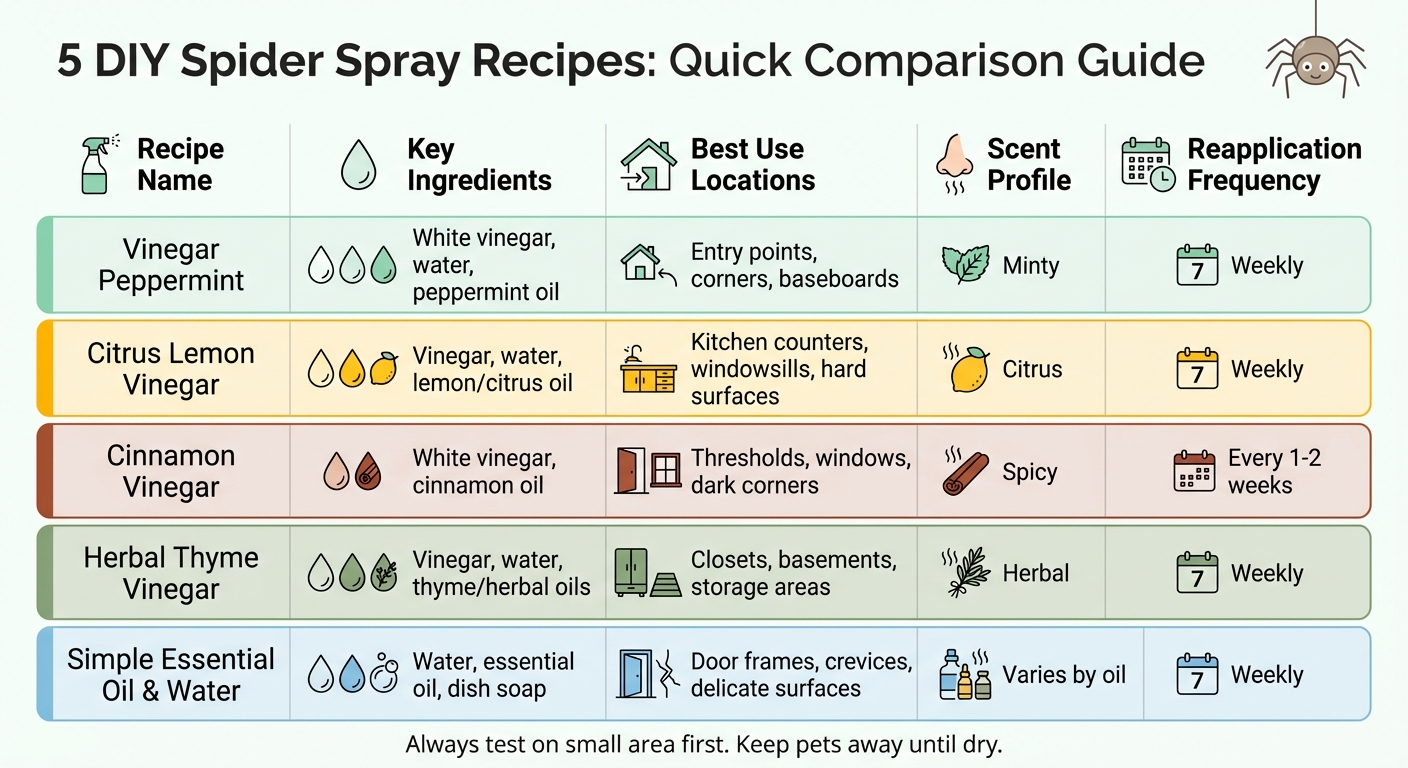
DIY Spider Spray Recipes Comparison: Ingredients, Uses, and Reapplication Schedule
Find the right spider spray based on location, scent, and how often you’ll need to reapply.
Here’s a quick breakdown of the recipes:
| Recipe Type | Key Ingredients | Best Use Locations | Scent Type | Reapplication Schedule |
|---|---|---|---|---|
| Vinegar Peppermint | White vinegar, water, peppermint oil | Entry points, corners, baseboards | Minty | Weekly |
| Citrus Lemon Vinegar | Vinegar, water, lemon/citrus oil | Kitchen counters, windowsills, hard surfaces | Citrus | Weekly |
| Cinnamon Vinegar | White vinegar, cinnamon oil | Thresholds, windows, dark corners | Spicy | Every 1–2 weeks |
| Herbal Thyme Vinegar | Vinegar, water, thyme/herbal oils | Closets, basements, storage areas | Herbal | Weekly |
| Simple EO & Water | Water, essential oil, dish soap | Door frames, crevices, delicate surfaces | Varies by oil | Weekly |
Keep in mind that the spray’s effectiveness wanes as the scent fades, so reapply as needed. High-traffic areas like door frames and windowsills might require more frequent applications. Always test a small patch first to ensure there’s no staining or damage to the surface.
For complete instructions on how to prepare and use these sprays safely, refer to the recipe details above.
Conclusion
Natural spider sprays are a safe and budget-friendly way to keep spiders out of homes in the Pacific Northwest. These sprays, made with vinegar and essential oils, are eco-friendly and leave your home smelling fresh. However, in the region’s damp climate, they need to be reapplied regularly to stay effective. They’re a great alternative to commercial pesticides, offering a natural solution for those looking to avoid chemicals.
To boost the effectiveness of these sprays, combine them with practical home maintenance. Seal cracks, install screens and door sweeps, and keep vegetation trimmed back from your home. Regular vacuuming helps by removing webs and egg sacs, while swapping to yellow light bulbs can cut down on flying insects that often attract spiders. Together, these steps create a well-rounded approach to spider control.
For more severe infestations or dangerous spider species, professional help may be necessary. As Sam Wasson puts it:
"If you have an active spider problem, don’t settle for home remedies. For serious pest issues, you should use a commercial insecticide or contact a pest control professional".
If that’s the case, Sparrow’s Pest Control provides a thorough solution. Their services include detailed inspections, customized treatments, and follow-up measures to prevent future problems – all with a 100% satisfaction guarantee. Their family- and pet-safe plans start at $39/month and are tailored to the Pacific Northwest’s unique conditions.
FAQs
Are homemade spider sprays safe to use on all surfaces in my home?
Homemade spider sprays made with simple ingredients like vinegar, water, dish soap, and essential oils are generally safe to use on hard, sealed surfaces. These include areas like countertops, tile, laminate flooring, window frames, and baseboards. Since they’re usually non-toxic, they won’t leave behind harmful residues when applied as directed.
That said, some surfaces require extra caution. Materials like carpet, upholstery, unfinished wood, painted walls, or natural stone can be more sensitive. Essential oils, in particular, might cause stains or discoloration. To avoid mishaps, always spot-test your spray on a hidden area first. If there’s no discoloration or damage after a few minutes, you’re good to go. For more delicate or porous surfaces, it’s wise to consult a professional pest control service to prevent any unintended damage.
How often should I use homemade spider sprays to keep spiders away?
For optimal results, make sure to reapply your homemade spider spray every 2–3 days or whenever it seems to lose its potency. Since natural sprays break down faster – especially in humid environments or spots that are cleaned often – consistent reapplication is essential to keep spiders away.
Are DIY spider sprays effective for dealing with major infestations?
DIY spider sprays might help cut down on the number of spiders in your home for a short time, but they aren’t a solution for serious infestations. For lasting results, it’s often best to turn to professional pest control services. Professionals can evaluate the problem, develop a customized treatment plan, and thoroughly treat your home to help keep spiders from returning.