

In the Pacific Northwest, insect bites and stings are common due to the region’s climate and ecosystems. Understanding bite symptoms can help you identify the insect, manage discomfort, and address potential health risks. Here’s a quick guide:
- Mosquito Bites: Red, swollen bumps that itch. Severe reactions may cause significant swelling or fever, especially in children.
- Flea Bites: Small, red, clustered bumps, often on ankles and lower legs. Intense itching and possible hyperpigmentation.
- Stinging Insects (Bees, Wasps, Hornets): Immediate pain, redness, and swelling. Severe allergic reactions (e.g., difficulty breathing) require emergency care.
- Tick Bites: Watch for a circular rash (possible Lyme disease) and flu-like symptoms. Early treatment with antibiotics is effective.
- Bed Bug Bites: Raised, red, itchy welts in lines or zigzags. Inspect bedding for signs of infestation.
- Spider Bites: Vary by species. Black widow bites can cause muscle cramps; yellow sac spider bites may lead to blisters or sores.
When to Seek Medical Attention: Signs of infection (pus, red streaks, worsening pain), systemic symptoms (fever, chills, muscle aches), or severe allergic reactions (anaphylaxis) should prompt immediate medical care.
For persistent pest issues, professional pest control services can help reduce risks.
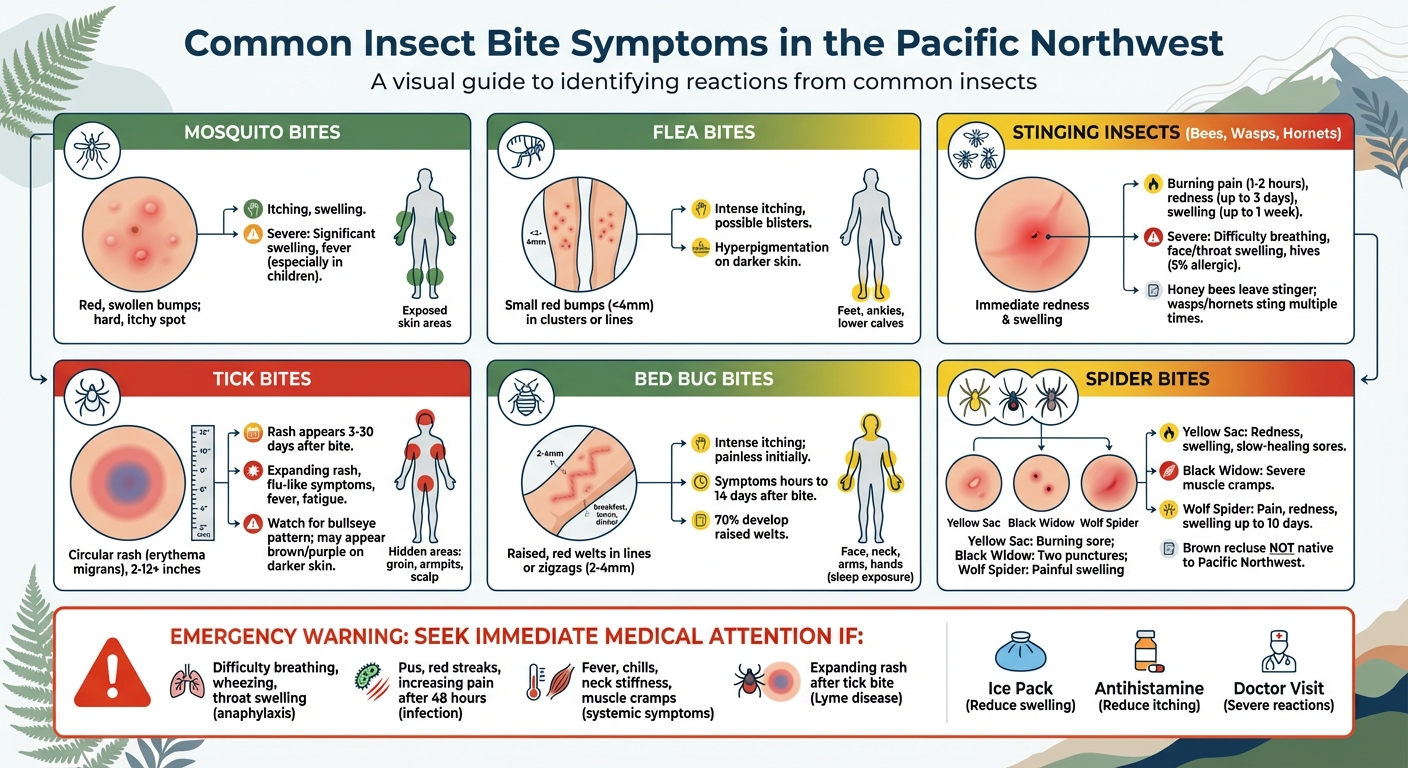
Pacific Northwest Insect Bite Identification Guide: Symptoms and Appearance
How to identify and treat insect bites
1. Redness and Swelling from Mosquito Bites
When a female mosquito bites, her saliva sets off an immune response that creates a red, swollen bump almost immediately. Within 24 hours, it can become a hard, itchy, reddish-brown spot due to histamine release .
For most people, these reactions are mild. However, some may experience more severe symptoms, like significant swelling, soreness, and intense redness – these are signs of an allergic reaction. Children, whose immune systems are less familiar with mosquito saliva, often develop larger welts and might even run a low-grade fever . On the other hand, adults in the Pacific Northwest may develop some tolerance over time. Still, a bite from an unfamiliar mosquito species can cause a stronger reaction. With mosquito activity peaking in warmer months, quick treatment is key to managing symptoms.
Mosquitoes are particularly active in spring and summer, especially near water sources like Lake Whatcom or the Nooksack River. To treat a bite, start by washing the area with soap and water. Applying an ice pack for 10 minutes can help reduce swelling. You can also try a baking soda paste (mix 1 tablespoon of baking soda with water) and leave it on the bite for 10 minutes to ease inflammation .
"Do not scratch bites. They can become infected." – CDC
If the itching persists despite using over-the-counter antihistamines or hydrocortisone cream, or if you notice red streaks forming around the bite, it’s time to reach out to a healthcare provider .
2. Itchy, Clustered Marks from Flea Bites
Flea bites show up as small, red bumps with a ring-like appearance and often appear in clusters or lines of three or four. These bites are commonly found on the feet, ankles, and lower calves, as fleas jump from carpets, rugs, or pets to reach their host. Despite being tiny – less than 4 mm in size – fleas can leap over 12 inches, making it easy for them to latch onto humans. The bites can cause intense itching and, in some cases, may form small blisters. On darker skin tones, they might leave behind hyperpigmentation marks that can take months to fade.
"Flea bites are small, itchy bumps that usually occur in clusters on the ankles and lower legs." – Maria Robinson, MD, MBA
To ease the discomfort, wash the affected area with soap and water, then apply a towel-wrapped ice pack for about 10 minutes to reduce swelling and itching. Over-the-counter options like 1% hydrocortisone cream, calamine lotion, or aloe vera gel can also help soothe irritation. Try to avoid scratching, as breaking the skin increases the risk of bacterial infections. If you notice repeated bites, inspect your pets for flea dirt (tiny black specks of flea feces), which is a clear sign of an infestation. Fleas can survive in mattresses for up to two months, so professional treatment is often necessary to eliminate them completely. Taking quick action to treat bites and control infestations is key to preventing further issues.
While flea bites are generally harmless, they can occasionally spread diseases such as plague or murine typhus in parts of the Western U.S.. If you experience symptoms like fever, headache, or severe swelling after a bite, seek medical attention right away.
For persistent flea infestations, consider reaching out to Sparrow’s Pest Control (https://www.sparrowspestcontrol.com) for a professional inspection and safe treatment options in the Pacific Northwest.
3. Pain and Swelling from Stinging Insects
Getting stung by bees, wasps, or hornets can cause immediate burning pain due to both the puncture and venom. Typically, the pain lasts for 1–2 hours, redness can linger for up to 3 days, and swelling might stick around for as long as a week. In the Pacific Northwest, over 95% of stings come from honey bees or yellow jackets.
Honey bees have barbed stingers that get stuck in the skin, continuing to release venom until removed. Unfortunately for the bee, this process is fatal, as they can only sting once. On the other hand, wasps, hornets, and yellow jackets have smooth stingers, allowing them to sting multiple times – especially when defending their nests. Swelling from a sting often peaks about 48 hours later, so don’t be surprised if the area looks puffier the next day. Quick action with first-aid can help manage the symptoms.
Start by scraping the stinger out with a fingernail or the edge of a credit card. Afterward, clean the area and apply an ice pack wrapped in a towel for 10–20 minutes to relieve pain and reduce swelling. Avoid using tweezers, as they can accidentally squeeze more venom into the skin. If the sting is on a limb, keeping it elevated can help limit fluid buildup.
Around 5% of Americans are allergic to insect stings. If you experience trouble breathing, swelling in the face or throat, or widespread hives, seek emergency medical help immediately. Additionally, if redness and pain worsen after two days, it could indicate an infection, and you should consult a doctor.
If you’re dealing with ongoing issues from stinging insects around your home, professional help might be the best solution. Check out Sparrow’s Pest Control for expert wasp and hornet removal services in Bellingham and nearby areas in the Pacific Northwest.
4. Bullseye Rash from Tick Bites
In the Pacific Northwest, tick bites are something you want to address quickly to avoid complications, especially since they can lead to Lyme disease.
One of the key signs of Lyme disease is a circular rash called erythema migrans (EM). This rash usually shows up between 3 and 30 days after being bitten by an infected tick, with most cases appearing around day 7. In this region, the western black-legged tick (Ixodes pacificus) is the main culprit behind transmitting the bacteria responsible for Lyme disease.
While many associate Lyme disease with the classic "bullseye" rash – red on the outside with a clear center – this appearance is actually less common. More often, the rash looks like a solid red or bluish-red oval that gradually expands. It typically measures at least 2 inches (5 cm) across but can grow much larger, sometimes reaching 12 inches (30 cm) or more. On darker skin tones, the rash might appear brown, purplish, or resemble a bruise instead of bright red.
"The erythema migrans rash is almost always round or oval and expands over days to a diameter greater than 2"." – Johns Hopkins Lyme Disease Research Center
Unlike allergic reactions, this rash is rarely itchy or painful, though it may feel warm to the touch. If you notice a rash within 36 hours of a tick bite, it’s probably just a mild allergic response to the tick’s saliva, not Lyme disease. That’s because ticks need to stay attached for at least 36 hours to transmit the bacteria.
If you spot an expanding rash or experience flu-like symptoms – such as fever, fatigue, or muscle aches – after a tick bite, it’s time to see a doctor. Lyme disease responds well to early treatment, usually with a 10- to 14-day course of antibiotics like doxycycline. While Lyme disease is the most common tick-borne illness in the U.S., it’s rare in Washington State, with only 0 to 7 locally acquired cases reported each year.
Understanding the signs and acting quickly after a tick bite can make all the difference, helping you avoid serious complications.
sbb-itb-be66415
5. Raised, Itchy Welts from Bed Bug Bites
Bed bug bites, like many insect bites common in the Pacific Northwest, demand careful attention and appropriate care. These bites usually show up as raised, red welts that itch intensely. For individuals with darker skin tones, the bumps might appear purple instead of red. One of the most telling signs of bed bug bites is their pattern – they often form straight lines or zigzags, sometimes referred to as the "breakfast, lunch, and dinner" pattern. These bites are typically found on areas exposed during sleep, such as the face, neck, arms, hands, and legs.
Interestingly, bed bug bites are painless at first because the bugs inject an anesthetic when feeding. However, the itchy marks can take anywhere from a few hours to up to 14 days to appear. Around 70% of people develop raised welts in response to these bites. While most welts measure between 2–4 mm, some individuals with heightened sensitivity may develop bumps as large as 2 inches in diameter.
It’s important to remember that bites alone don’t confirm a bed bug infestation. To identify an issue, inspect your bedding for rust-colored stains (bed bug fecal matter) or tiny blood spots. These physical signs, combined with the bites, can help determine if bed bugs are present.
"Bites are only a clue that you may have bed bugs, but you can’t tell from bites alone that you have a bed bug problem." – King County Department of Public Health
If you find evidence of an infestation, act quickly to treat both the bites and the problem. For the bites, over-the-counter anti-itch creams like 1% hydrocortisone or cool compresses can help relieve discomfort. Avoid scratching to prevent secondary infections. Should you spot a bug, don’t squash it – capture it in a plastic bag and have it identified by a pest control expert.
In the Pacific Northwest, bed bugs are a year-round issue, but infestations tend to spike during the summer months, likely due to increased travel.
6. Localized Pain and Tissue Damage from Spider Bites
Spider bites can range from minor irritation to more severe symptoms, depending on the species involved. Recognizing the signs of a spider bite is essential for addressing the issue quickly. Among the various species, only two are considered medically concerning: the Western black widow and the yellow sac spider.
Yellow sac spider bites are becoming more common. These bites often feel like a bee sting, producing an immediate burning sensation, along with redness and swelling. In some cases, the bite may lead to slow-healing sores or blisters.
Black widow bites, on the other hand, might not look alarming at first. The bite site typically shows two small puncture marks with mild redness, but the real trouble comes from potential severe muscle cramps. Meanwhile, wolf spider bites, due to their large fangs, can cause pain, redness, and swelling that may last up to 10 days. These differences make it important to correctly identify the type of spider bite before deciding on treatment.
Although brown recluse spiders are known for causing necrosis by damaging small blood vessels, they are not native to Washington or the Pacific Northwest. Interestingly, many unexplained wounds in this region, often misattributed to spider bites, are actually caused by bacterial infections like MRSA, fungal infections, or even chemical burns.
"Black widow bites don’t cause conspicuous swelling, necrosis, or deterioration of tissue around the bite." – Washington State Department of Health
Proper first aid is crucial for any spider bite. Begin by cleaning the area thoroughly with soap and water. Use a cool compress for 15 minutes every hour and keep the affected limb elevated to minimize swelling. Keep an eye on the bite over the next few days for signs of infection, such as increasing redness, red streaks, or pus. If possible, capture or take a photo of the spider for identification. With proper care, most people recover from black widow bites within 24 to 48 hours.
7. Severe Allergic Reactions (Anaphylaxis)
While most insect bites and stings only cause minor irritation, some can lead to a much more serious reaction: anaphylaxis. This severe allergic response can develop within seconds or minutes of exposure to a trigger. In the Pacific Northwest, common culprits include stinging insects like yellowjackets, paper wasps, and bees.
"Anaphylaxis is a severe, potentially life-threatening allergic reaction. It can occur within seconds or minutes of exposure to something you’re allergic to, such as peanuts or bee stings." – Mayo Clinic
The symptoms of anaphylaxis demand immediate attention. Look out for signs like difficulty breathing, wheezing, or a tight feeling in the throat. Other red flags include widespread hives, significant swelling of the face, lips, tongue, or throat, and a sudden drop in blood pressure, which might cause dizziness, confusion, or fainting. A rapid and weak pulse is another warning sign. Some people may also experience nausea, vomiting, diarrhea, or an overwhelming sense of dread. These symptoms typically appear within 5 to 30 minutes after a bite or sting, though in some cases, they may be delayed by an hour or more.
The only effective treatment for anaphylaxis is epinephrine. Over-the-counter antihistamines like Benadryl cannot stop a life-threatening reaction. If someone shows symptoms of anaphylaxis, use an epinephrine autoinjector (like an EpiPen) immediately by injecting it into the outer thigh, and call 911 without delay. While waiting for emergency responders, lay the person flat with their legs elevated unless breathing is difficult, in which case they should sit up. Even if symptoms improve after using the autoinjector, it’s critical to seek emergency medical care, as the effects of epinephrine are temporary and symptoms can return.
About 20% of individuals may experience a biphasic reaction, where symptoms reappear hours later. This underscores the importance of professional medical evaluation, even if the person seems to have recovered. Quick recognition and action can make all the difference in preventing severe complications.
When Symptoms Require Medical Attention
Most insect bites heal without complications. However, if you experience difficulty breathing, wheezing, or swelling of the face, lips, or throat, call 911 immediately. These symptoms are signs of anaphylaxis, a life-threatening allergic reaction. Beyond severe allergies, it’s also important to stay alert for signs of infection.
You should seek medical care if the bite area shows pus, red streaks extending from the site, or increasing redness and pain after 48 hours. As Wendy Klein-Schwartz, Pharm.D., MPH, Clinical Toxicologist, emphasizes:
"Your bite is dangerous if you have an allergic reaction or if the site of the bite becomes infected".
If the area remains warm to the touch and swelling continues for several days, this is another warning sign that shouldn’t be ignored.
In some cases, symptoms may extend beyond the bite itself. Systemic symptoms – those that affect your entire body – are especially concerning. Fever, chills, neck stiffness, muscle cramps, or persistent vomiting could point to serious conditions, such as tick-borne illnesses like Lyme disease or venomous spider bites from species like the Black Widow, commonly found in the Western U.S.
For tick bites, watch for a rash, flu-like symptoms, or if the tick remains embedded. Keep in mind that ticks generally need to be attached for over 48 hours to transmit Lyme disease, but starting antibiotics early can help stop the infection from spreading.
If you’re unsure whether your symptoms require medical attention, call the Poison Control Center at 1-800-222-1222 for non-emergency advice. If possible, safely capture the insect or spider in a hard plastic container or take a clear photo – this can aid medical professionals in identifying the species and determining the best course of treatment.
Conclusion
Spotting the symptoms of insect bites early can save you both time and potential health complications. If you notice persistent swelling, clustered bite marks, or spreading rashes, understanding these signs can help you take the right steps. As Dr. Ife J. Rodney, M.D., Founding Director of Eternal Dermatology + Aesthetics, explains:
"Identifying insect bites with pictures can help you narrow down exactly what kind of welt you’re dealing with and the type of treatment, if any, it may need."
This awareness allows you to respond quickly and effectively.
While most bites heal with simple first-aid treatments, signs of infection – like growing redness, swelling, or pain – or allergic reactions, such as hives or difficulty breathing, need immediate medical attention. Alongside these precautions, staying proactive with pest management can significantly lower your risk of bites. For those dealing with persistent pest issues, Sparrow’s Pest Control offers family-safe solutions tailored to the Pacific Northwest. Their services focus on creating barriers and safely removing pest colonies to keep your home secure.
FAQs
What should I do if I think I’ve been bitten by a tick in the Pacific Northwest?
If you think you might have been bitten by a tick while enjoying the outdoors in the Pacific Northwest, the first step is to check your entire body as soon as you’re back inside. Pay extra attention to areas where ticks like to hide, such as your scalp, behind your ears, under your arms, around your waistline, and between your toes. Also, be sure to inspect your clothing, shoes, gear, and any pets that were with you – ticks can hitch a ride on them too.
If you do spot a tick, it’s crucial to remove it right away. Use fine-tipped tweezers or a tick-removal tool to grasp the tick as close to your skin as possible. Pull upward steadily and firmly without twisting. Once the tick is out, clean the area thoroughly with soap and water, then apply an antiseptic. It’s a good idea to save the tick in a sealed container in case identification becomes necessary later.
Over the next few weeks, keep an eye on the bite site and your overall health. Watch for signs like a red rash, fever, chills, or joint pain. If any of these symptoms appear, reach out to your doctor immediately. Quick action can help prevent illnesses like Lyme disease or Rocky Mountain spotted fever.
How can I tell the difference between bed bug bites and flea bites?
Bed bug bites and flea bites can look alike, but there are some clear ways to tell them apart. Bed bug bites usually show up in clusters or straight lines on exposed areas like the face, neck, arms, or hands. These bites tend to appear overnight and often start as painless red welts that later become itchy and swollen. On the other hand, flea bites are more common around the ankles, lower legs, and feet, showing up as small, itchy bumps often grouped together in a single spot. Flea bites may also have a tiny red dot in the center.
To help identify the culprit, pay attention to the bite pattern and timing. Bed bug bites are typically symmetrical and occur on uncovered skin during the night, while flea bites are randomly scattered and focused on the lower body, often causing a sharper and more immediate itch. If you’re still unsure, it’s best to get a professional inspection. Sparrow’s Pest Control provides expert inspections and customized pest treatment solutions for homes in Bellingham and nearby areas.
What should I do right away if someone has a severe allergic reaction to an insect sting?
If someone experiences a severe allergic reaction to an insect sting, the first step is to call 911 without delay. If they have an epinephrine autoinjector, administer it immediately. Help them stay lying flat, remain calm, and monitor their condition closely until emergency responders arrive. Should they struggle to breathe, feel dizzy, or lose consciousness, act swiftly to protect their safety while awaiting medical assistance.