

Cockroach infestations can harm your health and damage your home. These pests spread diseases like Salmonella and E. coli, trigger asthma and allergies, and reproduce quickly, making early detection essential. Here are 9 warning signs to watch for:
- Fecal Droppings: Tiny black specks or rice-sized pellets near hiding spots.
- Musty Odor: A strong, oily smell from their pheromones and waste.
- Shed Exoskeletons: Hollow shells left behind as they grow.
- Live Cockroaches: Seeing one often signals a larger hidden infestation.
- Egg Casings: Bean-shaped capsules that house their eggs.
- Nighttime Activity: Movement in dark areas after the lights go out.
- Grease Marks: Smears on walls, counters, or near food sources.
- Daytime Sightings: Indicate overcrowding and a severe problem.
- Damaged Items: Chewed food packaging, books, or furniture.
Act quickly if you notice these signs. Cockroaches multiply fast, and infestations can escalate in weeks. Cleaning, sealing food, fixing leaks, and professional pest control can help eliminate the problem.
For expert assistance, contact Sparrow’s Pest Control in Bellingham, WA, to protect your home and health.
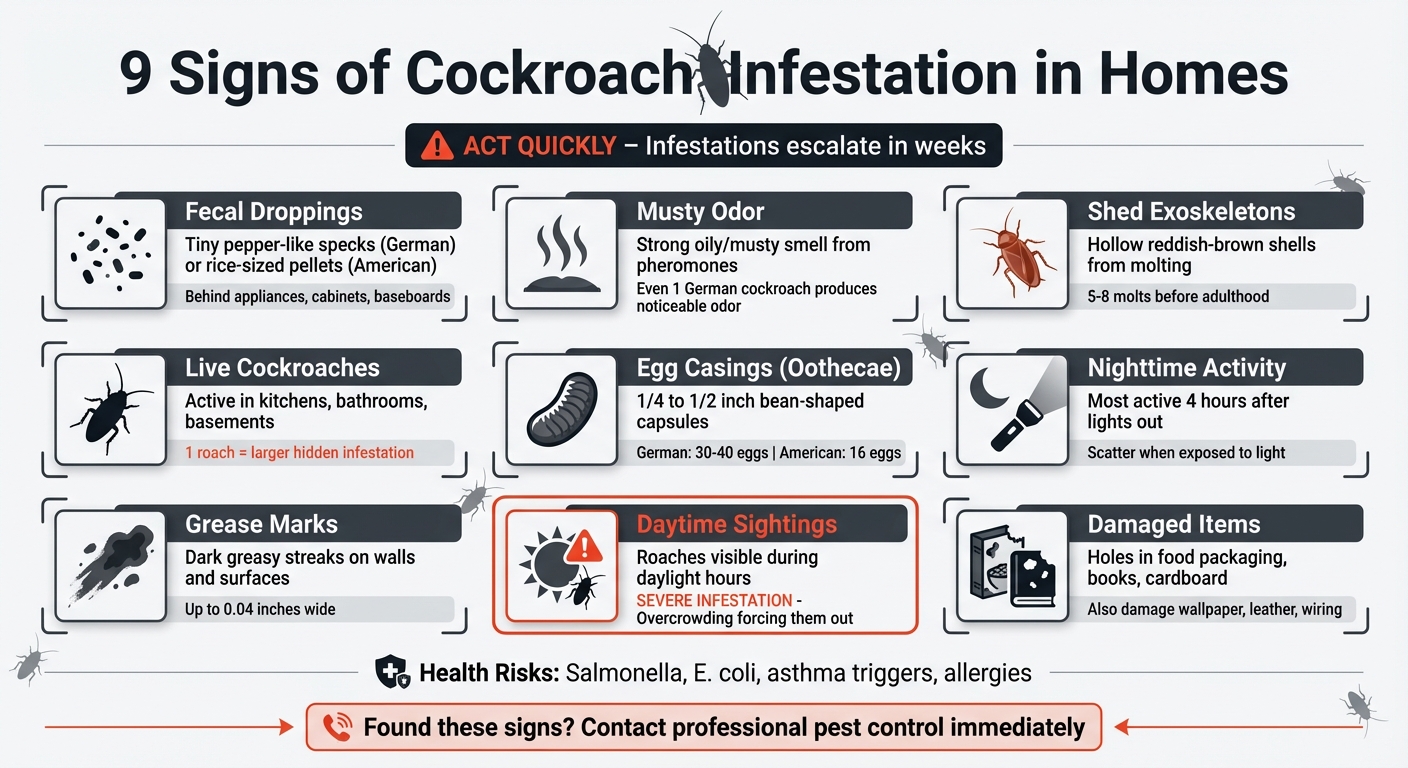
9 Warning Signs of Cockroach Infestation in Your Home
Top Warning Signs You Have Cockroaches In Your Home
1. Fecal Droppings
Before you even spot a live cockroach, their droppings often give them away. German cockroaches leave behind tiny, pepper-like specks, while American cockroaches produce larger, rice-sized pellets with ridges. The amount of droppings can actually tell you a lot about the problem. According to Orkin:
The quantity of visible feces is oftentimes a good indicator of the level or duration of infestation.
Fresh droppings are shiny, sticky, and round, but over time, they dry out, flatten, and can leave dark smear marks in damp areas.
Once you notice droppings, it’s time to investigate. Focus on common hiding spots like behind or underneath refrigerators, stoves, and dishwashers. Check inside kitchen cabinets, pantries, and along baseboards. Don’t forget to look up – roaches often gather on elevated surfaces like the tops of cabinets, shelves, and door frames.
Terminix points out that finding droppings not only confirms roach activity but also shows where they’re finding food and water. This insight gives you a head start in tackling the infestation.
When cleaning up droppings, take precautions to protect yourself. Always wear gloves and a mask since cockroach droppings can carry bacteria like Salmonella and allergens that may trigger asthma. Start by vacuuming the area with a HEPA-filter vacuum to remove dry droppings. Then, thoroughly disinfect the surfaces using soap and water or a disinfectant spray. This step is crucial because roach droppings contain pheromones that can attract even more roaches, worsening the infestation if left unchecked.
2. Musty Odor
One of the first signs of a cockroach infestation is a musty odor – often noticeable before you even spot the insects themselves. This smell comes from pheromones secreted by cockroaches, combined with their droppings and decomposing bodies. Many homeowners describe it as pungent, resembling mildew. In severe cases, this odor can impact the air quality in your home and even alter the taste of food. If you notice this scent, it’s a signal to check for other signs of an infestation.
The strength of the odor often matches the size of the infestation. According to Orkin:
In the event of serious infestation, a strong oily or musty odor may be present.
Even a single German cockroach can produce a noticeable smell, but the odor becomes much more intense as their numbers grow.
While this musty smell is a clear sign of cockroach activity, it can sometimes be mistaken for mold or mildew. To confirm an infestation, look for additional evidence like pepper-like droppings, smear marks, or egg casings.
To get rid of the odor, start by vacuuming up any dead cockroaches and thoroughly cleaning affected areas with disinfectant to remove pheromone trails. Boost ventilation by using fans or opening windows to help clear the air. If the smell lingers despite cleaning, it could indicate a more serious infestation requiring professional help. In such cases, reach out to Sparrow’s Pest Control (https://www.sparrowspestcontrol.com) in Bellingham, WA, for a detailed inspection and a treatment plan that’s safe for both your family and pets.
3. Shed Exoskeletons
In addition to droppings and odors, shed exoskeletons are another telltale sign of a cockroach infestation. As cockroaches mature from nymphs into adults, they go through a molting process called ecdysis, shedding their outer shells several times. These discarded exoskeletons, known as moltings or exuviae, are hollow, dried shells that retain the cockroach’s reddish-brown, oval shape. Spotting these casings is a strong indicator of an active and growing infestation.
Cockroach species typically molt between 5 and 8 times before reaching adulthood. For example, German cockroaches molt around 6 times over a span of about 103 days, while American cockroaches may shed their skins 6 to 14 times over roughly 600 days. The presence of shed skins in various sizes highlights the nymphs’ growth stages, emphasizing the importance of addressing the problem early.
You’ll often find these molted skins in dark, concealed areas where cockroaches hide and nest. Common spots include behind refrigerators and stoves, under sinks, inside basements, and in low cabinets. They may also accumulate near floor drains, behind wallpaper, under rubber mats, or even inside appliance motors. These locations can provide valuable clues about where cockroaches are living and molting.
When handling shed exoskeletons, take precautions, as the proteins in them can cause allergic reactions, such as asthma, sneezing, or skin irritation. Use gloves and a mask while cleaning, and vacuum the skins with a hose attachment for safe removal. Be sure to immediately dispose of the vacuum bag outdoors to prevent allergens from lingering in your home.
After dealing with the exoskeletons, observing live cockroaches can help you assess the severity of the infestation.
4. Live Cockroaches
Seeing even one live cockroach in your home is rarely a one-off event. That single sighting is often a red flag for a larger infestation that needs closer investigation.
Cockroaches tend to show up in places like kitchens, bathrooms, laundry rooms, and basements – basically anywhere they can find food, moisture, and warmth to thrive. They prefer hiding in tight, dark spaces, such as behind refrigerators and stoves, under sinks, inside appliance motors, or in cracks and crevices in walls.
Since cockroaches are nocturnal, they typically venture out for food about four hours after the lights go out. If you turn on a light and see them scurrying away, that’s a clear sign they’re active and avoiding light. Spotting cockroaches during the day is even more concerning. As Ortho explains:
"If you see them during the day, it’s usually because roach overcrowding has forced them out into the open, so chances are you’ve got a pretty large roach infestation".
Daytime sightings usually mean their usual hiding spots are overcrowded, or food has become scarce, forcing them to forage in less-than-ideal conditions.
To confirm their presence, try a late-night inspection with a flashlight. Focus on high-risk areas like behind appliances, under sinks, near plumbing fixtures, and inside pantries. Dead cockroaches are another clue – they often indicate a well-established infestation. If you spot any live cockroaches, it might be time to call in a professional pest control service, such as Sparrow’s Pest Control (https://www.sparrowspestcontrol.com), to evaluate and tackle the problem quickly.
5. Egg Casings
Egg casings are a clear sign that an infestation has reached the breeding stage. These casings, known as oothecae, are protective capsules made of hardened protein that house developing cockroach eggs.
They’re typically 1/4 to 1/2 inch long and resemble tiny, inflated beans. Their color can vary, ranging from reddish and dark brown to black or even tan. Unlike droppings, egg casings are noticeably larger. Once the eggs hatch, the casing remains as a hollow shell.
The number of eggs inside each casing depends on the cockroach species. For example, a German cockroach ootheca can hold 30 to 40 eggs, while an American cockroach casing usually contains around 16 eggs. German cockroach eggs typically hatch within 30 days, whereas American cockroach eggs take about 56 days.
To locate these casings, focus on dark, humid, and undisturbed areas. Common hiding spots include spaces behind refrigerators, under sinks, inside floor drains, behind wallpaper, and in the crevices of large appliances. American cockroaches often glue their casings to cardboard boxes or hard surfaces like cupboards, while brown-banded cockroaches may attach them to higher areas, such as ceilings or upper wall corners. If you see a live cockroach with a capsule protruding from its abdomen, it’s likely a German cockroach carrying its ootheca until the eggs are almost ready to hatch.
If you find an intact casing, dispose of it immediately – flushing it is the safest way to prevent any eggs from hatching. Discovering multiple casings suggests a severe breeding issue that requires professional intervention. For a thorough inspection and safe treatment, reach out to Sparrow’s Pest Control (https://www.sparrowspestcontrol.com).
sbb-itb-be66415
6. Nighttime Activity
Cockroaches are nocturnal creatures, naturally wired to come alive after dark. They use the cover of night to search for food and water while staying out of sight from humans and predators. If you’ve ever flipped on your kitchen light late at night, you might have witnessed them darting across counters or floors.
According to Ortho, cockroaches tend to scatter when exposed to sudden light. They move so quickly that they can disappear into cracks or under appliances before you get a good look. In the stillness of the night, you might even catch faint rustling or scratching sounds as they scurry across floors or rummage inside cabinets for food.
Their stealthy, nocturnal habits mean inspections are most effective when the house is quiet. To check for an infestation, grab a flashlight and inspect dark, damp spots like under sinks, behind refrigerators, or inside cabinets. Unlike overhead lights, a flashlight beam might not startle them as much, giving you a better chance to spot them. Another option is to set sticky traps or glue boards in these areas to monitor activity overnight.
If you’re seeing cockroaches during the day, it could indicate a severe infestation. Overcrowding may be driving them out of their usual hiding places. To cut down on their nighttime scavenging, make sure to eliminate food and water sources before you head to bed.
7. Grease Marks
Cockroaches leave behind dark, greasy smears on surfaces, often caused by the sticky frass they deposit. These streaks are typically thin, barely reaching 0.04 inches in width, and are a telltale sign of their presence.
You’ll often find these marks in areas where walls meet floors, around kitchen counters, and near food sources. These streaks point to high-traffic zones for cockroaches, essentially marking the epicenter of an infestation.
The problem goes beyond just being unsightly. These smears can carry bacteria, pathogens, and allergens that might trigger asthma or skin irritations. Worse, the oily residue can even attract more cockroaches, compounding the issue.
If you spot grease marks, it’s essential to clean them up right away. Use soap, water, and a disinfectant to remove both the residue and any germs. Always wear gloves and a face mask while cleaning. Pay close attention to damp areas, as moisture draws cockroaches. Fix any leaky pipes or faucets to eliminate the damp conditions they thrive in. Thorough cleaning also helps erase the chemical trails cockroaches leave behind, which could otherwise worsen the infestation.
Finding grease marks is a clear indicator of an established infestation, demanding immediate attention. Regular cleaning can make it easier to spot new smears and prevent cockroaches from settling in. Make a habit of wiping down kitchen surfaces and inspecting hidden spots under appliances where grease and food debris tend to collect.
8. Daytime Sightings
Seeing a cockroach scurry across your kitchen floor in the middle of the day isn’t just unsettling – it’s a major warning sign of a serious infestation. Cockroaches are nocturnal creatures that prefer dark, damp hiding spots and typically come out at night to search for food and water. If they’re active during the day, it’s often because overcrowding has pushed them out of their usual hiding places. This kind of behavior is a clear indication that the infestation has grown significantly.
"If you do see them during the day, it’s usually because roach overcrowding has forced them out into the open, so chances are you’ve got a pretty large roach infestation." – Ortho
Even a single roach sighted in daylight could mean there’s a much larger colony hiding out of sight.
If you spot cockroaches during the day, it’s crucial to act quickly. Start by inspecting areas where they’re likely to hide – look behind refrigerators, under sinks, and inside appliance motors. These dark, moist spots are prime real estate for roaches. Fix any moisture problems, like leaky faucets, to eliminate what attracts them in the first place. Because daytime activity points to a severe issue, reaching out to a pest control professional is highly recommended. For those in Bellingham, WA, and nearby areas, Sparrow’s Pest Control (https://www.sparrowspestcontrol.com) provides expert help to assess and address the problem. Acting promptly can stop the infestation from escalating and help ensure your home remains safe and healthy.
9. Damaged Items
Cockroaches are notorious for chewing through a variety of materials to access food and shelter. If you spot holes or gnaw marks on food packaging, cardboard boxes, or paper products, there’s a good chance these pests are the culprits. They have an uncanny ability to detect food inside containers and will chew through cardboard and even some plastics to get to it.
But it doesn’t stop there – cockroaches can also damage non-food items. They’ll target book bindings, wallpaper paste, clothing, and furniture, especially if these items have even trace amounts of food residue. Leather goods, electrical wiring in appliances, and wooden furniture are also at risk. If you notice damage to items like books or leather products, it’s often a sign of a well-established infestation. This behavior typically means the colony is struggling to find traditional food sources and has turned to alternative materials.
To protect your belongings, take proactive measures. Store pantry items and pet food in sealed, durable containers. Regularly check bookshelves, stored files, and areas behind wallpaper for signs of damage. Declutter spaces where cockroaches might hide – stacks of paper and cardboard boxes are prime hiding spots. Don’t forget to inspect inside and behind electrical appliances, as these pests can hide there and even damage wiring.
If the damage is extensive, it’s likely time to call in the professionals. Sparrow’s Pest Control provides detailed inspections and tailored treatment plans in Bellingham, WA, and nearby areas. They can help safeguard your home and belongings from further destruction. For more information, visit Sparrow’s Pest Control.
Conclusion
Identifying the early signs of a cockroach infestation can protect you from potential health risks and property damage. These pests aren’t just unpleasant; they carry harmful pathogens like salmonella, E. coli, and others that can lead to illnesses such as gastroenteritis. On top of that, proteins found in their droppings and shed skins can trigger asthma attacks and allergic reactions, particularly in sensitive individuals. With a single female capable of reproducing rapidly, what starts as a small problem can quickly spiral into a major infestation.
"The longer you wait to treat an infestation, the worse it can get." – Terminix
This quote highlights the importance of acting quickly. Depending on the severity, eliminating an infestation can take anywhere from three weeks to six months.
If you notice any signs of cockroaches in your home, don’t delay. Sparrow’s Pest Control provides detailed inspections and tailored treatment plans for residents in Bellingham, WA, and nearby areas. Plus, their 100% satisfaction guarantee ensures peace of mind.
Early action is the key to preventing infestations from worsening. Protect your family’s health and safeguard your home by addressing the issue promptly. Visit Sparrow’s Pest Control to schedule a free inspection and get expert assistance in eliminating these pests.
FAQs
How can I tell if droppings are from cockroaches or just regular dirt or debris?
Cockroach droppings are small, dark, and cylindrical, often resembling coffee grounds or black pepper. The exact size depends on the species – smaller cockroaches leave tiny specks, while larger ones produce more distinct, cylindrical waste. These droppings are typically found in hiding spots like behind appliances, inside cabinets, or tucked into corners.
Spotting these droppings, along with other clues like a musty smell, shed exoskeletons, or egg cases, strongly suggests a cockroach infestation. Recognizing these signs can help you distinguish cockroach droppings from everyday dirt or dust in your home.
What health problems can a cockroach infestation cause?
Cockroach infestations aren’t just unpleasant – they can seriously impact your health. These pests are known carriers of bacteria, parasites, and allergens. When they invade your home, they contaminate food, utensils, and surfaces with their droppings, shed skin, and body parts. This contamination can lead to food poisoning, infections, and other illnesses.
Beyond that, cockroach debris can trigger allergic reactions and make asthma symptoms worse, particularly in children and those with sensitivities. Their presence also brings a strong, foul odor that can lower indoor air quality and cause respiratory discomfort. Taking swift action to eliminate cockroaches is crucial for safeguarding your health and keeping your home safe.
When should I call a professional for a cockroach infestation?
If you spot signs of a cockroach problem, it’s wise to contact a professional pest control service immediately. Some telltale signs include droppings resembling black pepper or coffee grounds, musty odors, shed skins, egg casings, or even seeing live cockroaches – especially during daylight hours, as they’re typically active at night.
Other clues, like stains, smear marks, or a lingering unpleasant smell, can signal a more severe infestation. Taking swift action is crucial since cockroaches can spread bacteria, worsen allergies, and even trigger asthma. Professional pest control services can tackle the issue thoroughly and help ensure it doesn’t happen again.