
Your yard isn’t just about aesthetics – it’s your first line of defense against pests. The way you design, plant, and maintain your outdoor spaces can either invite pests or keep them out. Here’s a quick breakdown of what works and what doesn’t:
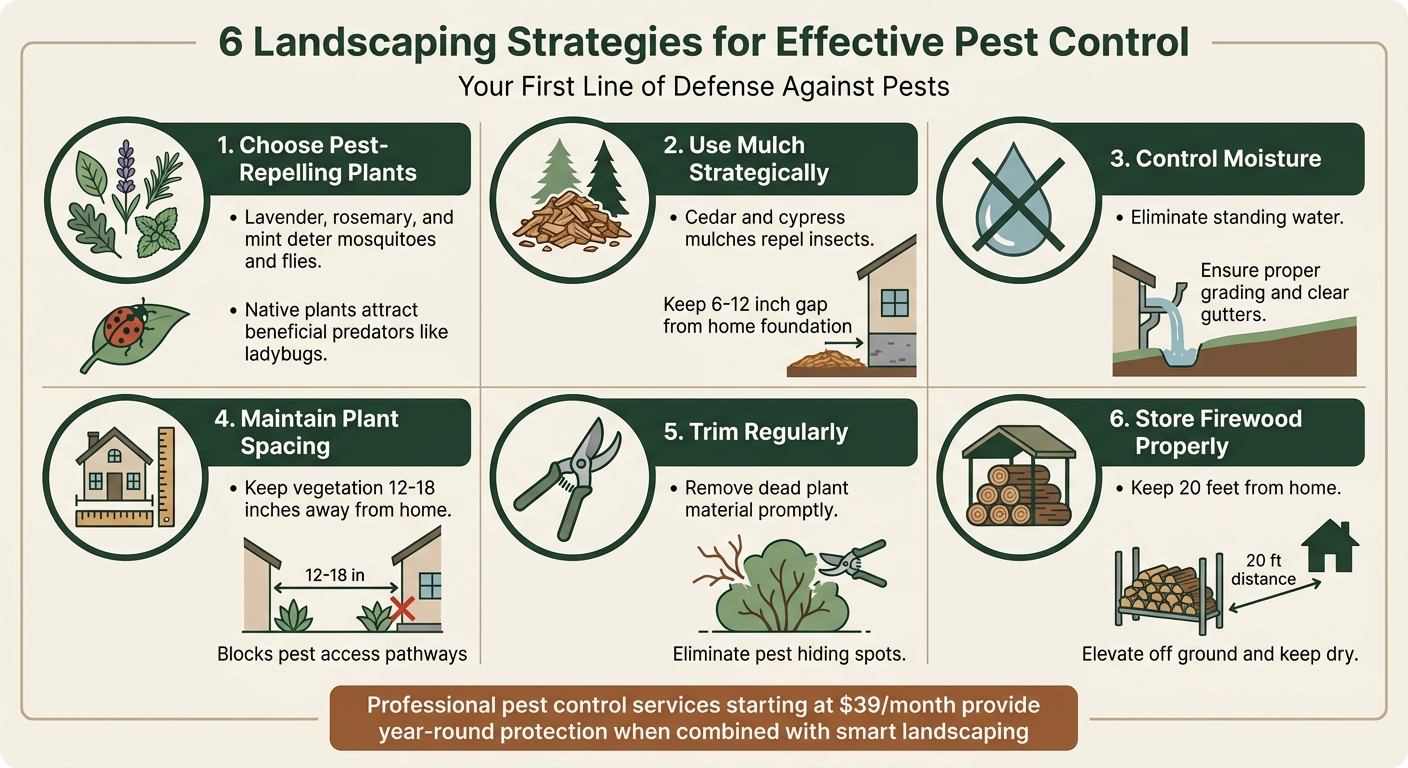
- Choose pest-repelling plants: Herbs like lavender, rosemary, and mint deter mosquitoes and flies. Native plants attract helpful predators like ladybugs.
- Avoid pest-attracting plants: Fruit trees and soft-leafed plants can lure ants, aphids, and rodents if not managed properly.
- Use mulch strategically: Cedar and cypress mulches repel insects but keep a 6–12 inch gap from your home’s foundation to avoid creating pest pathways.
- Control moisture: Standing water and poor drainage attract mosquitoes and termites. Ensure proper grading and clear clogged gutters.
- Trim and space plants: Keep vegetation 12–18 inches away from your home to block pests’ access.
- Store firewood properly: Keep it 20 feet from your home, off the ground, and dry to deter termites and rodents.
Even with these measures, pests can find ways in. Pairing smart landscaping with professional pest control services in Bellingham, like Integrated Pest Management (IPM), provides year-round protection. Plans start as low as $39/month, offering targeted treatments and regular inspections to address hidden vulnerabilities.
Bottom line: Thoughtful landscaping and expert help can save your home from pest problems while keeping your yard beautiful.
6 Landscaping Strategies for Effective Pest Control
Choosing Plants That Deter Pests
Planting Pest-Resistant Varieties
When it comes to keeping pests at bay, your choice of plants can make a big difference. Aromatic herbs like lavender, rosemary, and mint are natural repellents for mosquitoes and flies – perfect for planting near patios or doorways.
For those in the Pacific Northwest, native plants are a smart pick. These plants thrive in the region’s wet winters and dry summers, and they also help attract beneficial predators like ladybugs and parasitic wasps. While these wasps are helpful, other species can be a nuisance; professional wasp control can help manage aggressive nests. These natural helpers feed on pests such as aphids and mites. Weston Miller, a former horticulturist with the Oregon State University Extension Service, puts it this way:
"Native pollinators are accustomed to native plants and are more likely to be attracted to them".
Another effective strategy is companion planting, where certain plants are paired together to enhance pest control. For instance, planting marigolds alongside tomatoes can help reduce nematodes and aphids, while alliums (like garlic and onions) can ward off slugs, grubs, and rabbits. Aimée Damman, Director of Marketing and Communications at Swansons Nursery, highlights the power of herbs in pest management:
"Planting herbs like chamomile or dill near your crops can attract hover flies, parasitic wasps, and ladybugs. These beneficial insects eat garden pests or even lay their larvae into some pests, killing them and preventing future damage".
Just as choosing the right plants is key, it’s also important to steer clear of plants that might invite pests into your garden.
Avoiding Plants That Attract Pests
Some plants can act as a magnet for unwanted pests. For example, fruit trees like apples and peaches often attract ants, fruit flies, and even rodents – especially if fallen fruit is left to rot. Regularly clearing fallen fruit can help cut off this food source.
Plants with soft, moisture-rich leaves – such as tomatoes, peppers, lettuce, and spinach – are frequent targets for aphids, whiteflies, and slugs. Similarly, fragrant ornamental plants like roses and hibiscus can draw pests such as thrips, aphids, and spider mites. Carrie Spoonemore, founder of Seed to Spoon, warns about the risks of aquatic plants:
"Watch out for plants like water lilies that grow in standing water, as they can attract mosquitoes. These aquatic plants can become breeding grounds if the water is stagnant".
If you’re growing aquatic plants, ensure the water is circulating to prevent mosquitoes from settling in. By carefully selecting and managing your plants, you can create a garden that thrives while keeping pests at bay.
sbb-itb-be66415
10 Effective Organic Pest Prevention Techniques for Your Garden
Managing Mulch to Reduce Pest Habitats
Using the right mulch, combined with thoughtful placement, can help keep pests at bay while enhancing your garden’s health.
Selecting the Right Mulch Type
The type of mulch you choose plays a big role in pest control. Cedar mulch is a standout option because it contains a natural compound called thujone, which repels and even kills over 40 insect species, including termites, ants, and cockroaches. As noted by Mulch Pros Landscape Supply:
"Cedar mulch is highly effective at repelling pests due to its natural insecticidal properties, enhancing both pest control and soil health".
Another strong contender is cypress mulch, which has pest-repelling oils and resists decomposition, offering long-term protection. If termites are a concern, melaleuca mulch is particularly effective. Research shows termite survival rates drop to under 15% on melaleuca heartwood, compared to 77% on cypress sapwood.
For those who prefer inorganic options, rubber mulch is worth considering. It doesn’t provide food or moisture for insects, and gravel or stone creates hot, dry conditions that pests like slugs, snails, and spiders can’t tolerate. Strategic use of mulch has been shown to reduce pest populations by as much as 30-50% in some gardens without relying on chemicals. However, keep in mind that aromatic mulches need to be replaced annually to maintain their pest-repelling properties.
Once you’ve chosen the right mulch, proper placement is key to ensuring it works effectively.
Placing Mulch Correctly
Even the best mulch can become a pest magnet if placed incorrectly. One critical rule is to maintain a 6-to-12-inch gap between mulch and your home’s foundation, siding, or wooden structures. Without this buffer, mulch can create what experts call the "bridge effect", giving pests a protected pathway into your home while bypassing treated soil.
The depth of your mulch layer also matters. Keep it between 2 and 3 inches deep; anything thicker than 4 inches can trap too much moisture, creating a haven for termites and ants. As the MulchSmartKC Team explains:
"Mulch doesn’t ’cause’ pests – but it can attract and shelter them".
To discourage moisture-loving pests like fungus gnats and flies, rake or turn your mulch periodically to let it dry out. For added protection, you can lay down landscape fabric or wire mesh beneath your mulch. This not only prevents rodents from burrowing but also helps manage moisture levels.
Plant Placement and Trimming Practices
Where you position and maintain your plants plays a big role in keeping pests at bay. Even the most carefully chosen plants can become a problem if they’re placed in ways that make it easy for pests to reach your home.
Keeping Plants Away from Structures
Tree branches and shrubs that touch your house can act as "pest highways." When vegetation directly contacts your roof, siding, or windows, it provides ants, spiders, and even rodents with a convenient bridge to bypass ground-level defenses.
To minimize this risk, ensure there’s a 12- to 18-inch gap (or ideally up to 2 feet) between any vegetation and your home’s exterior. This spacing not only blocks easy pest access but also improves airflow and sunlight exposure around your foundation. Better airflow helps reduce dampness, which can attract pests like termites and cockroaches. Dr. Faith Oi, Associate Extension Professor at UF/IFAS, notes:
"Trees planted too close may act as a highway for pests".
For smaller shrubs, keep at least a 12- to 18-inch gap, while larger trees should be planted 15–20 feet away to prevent roots or branches from reaching your home. If you’re growing climbing vines, use a trellis positioned at least one foot away from your walls, rather than letting them cling directly to your siding.
Spacing alone isn’t enough – you’ll also need to keep plants trimmed regularly to eliminate pest-friendly hiding spots.
Pruning and Clearing Dead Plant Material
Pruning is key to removing areas where pests might hide or nest. Start by trimming any branches that hang over your roof, as these can give rodents direct access to your attic. For shrubs near your foundation, use a V-shaped pruning method, where the top is wider than the base. This approach reduces shadows and moisture buildup at the bottom, making it less appealing to pests like mosquitoes, termites, and cockroaches.
Dead plant material is another pest magnet. For instance, the natural "skirt" of dead leaves on palm trees creates a perfect nesting spot for rodents, so it’s important to remove it. Likewise, clear away fallen tree limbs, leaf piles, and rotting fruit as soon as possible to avoid providing shelter for common household pests.
Controlling Moisture Through Drainage and Grading
Too much moisture in your yard isn’t just an inconvenience – it can attract unwanted pests. Standing water and soggy soil create the perfect environment for mosquitoes, termites, ants, and even rodents. To keep these pests at bay, managing how water flows across your property is essential. This starts with proper drainage and grading.
Eliminating Standing Water
Standing water should be dealt with immediately. Why? Female mosquitoes can lay eggs in as little water as a bottle cap can hold. If you notice puddles that stick around for more than 24 hours, it’s a clear sign of a drainage problem.
Start by inspecting and cleaning your gutters and downspouts. Clogged gutters can overflow, saturating the soil near your foundation. Extend downspouts 5–10 feet away from your home and redirect A/C condensate to avoid water pooling nearby.
Don’t forget smaller breeding spots. For example, tree holes can collect water – filling them with sand eliminates this issue. Birdbaths should be refreshed every 4–5 days to break the mosquito life cycle, or you can add a pump or fountain to decorative ponds to keep the water moving.
After tackling immediate water issues, focus on long-term solutions like proper grading to keep moisture under control.
Grading Your Yard Properly
Grading your yard ensures water flows away from your home instead of pooling around it. A good rule of thumb is to aim for a 2% slope, which means about a 1/4 inch drop per foot over a distance of 6–10 feet.
To check your yard’s grading, observe how water moves during a rainstorm. If water flows toward your house, you’ve got negative grading. Fix this by adding topsoil to low spots, creating a positive slope that directs water away. Compact the soil in 2–3-inch layers to avoid settling over time. For larger drainage fixes, consider swales (shallow channels that guide water) or berms (raised mounds that redirect runoff).
Improper grading doesn’t just invite pests; it can also damage your home’s foundation. Ignoring drainage issues might lead to foundation repairs costing anywhere from $5,000 to $50,000. On the other hand, professional regrading typically costs between $2,000 and $10,000+, while smaller fixes for areas under 500 square feet usually range from $500 to $1,500.
Storing Yard Debris and Firewood
Yard waste and firewood piles can create damp, inviting spots for pests like rodents, termites, spiders, and ants. These piles may even serve as pathways for pests to reach your home. Managing these materials properly plays a key role in keeping pests at bay.
Disposing of Yard Waste Promptly
Get rid of yard debris as soon as possible. Piles of leaves and grass clippings trap moisture, creating ideal hiding places for pests such as ticks, ants, and spiders. Additionally, fallen fruits, nuts, and seeds can attract rodents and insects. Regularly collecting and disposing of these materials is an effective way to prevent infestations.
"While having an aesthetically pleasing property may be a priority, it’s also important to remember that landscape practices can play a significant role in making your facility vulnerable to pests." – Zia Siddiqi, Ph.D., B.C.E., Director of Quality Systems, Orkin, LLC
Pay special attention to decaying wood from fallen branches, especially from trees like mulberry or willow. Rotting wood is a magnet for termites. Instead of leaving it near your home, dispose of it promptly.
Storing Firewood Correctly
While dealing with yard waste is important, how you store firewood matters just as much.
- Keep firewood at a distance: Stack it at least 20 feet away from your home or other structures to reduce pest access.
- Elevate the pile: Use a metal rack, concrete blocks, or treated pallets to lift the firewood 6 to 12 inches off the ground. This discourages soil-dwelling termites from making their way in.
- Stack for ventilation: Arrange the logs in a crisscross pattern to improve airflow, keeping the wood dry and less appealing to moisture-loving pests.
- Cover wisely: Protect the top third of the pile with a tarp to shield it from rain while allowing moisture to escape.
- Inspect logs before bringing indoors: Knock the firewood to shake off any pests hitching a ride.
Only bring in the amount of firewood you plan to use immediately. And remember – never spray firewood with pesticides. Burning treated wood can release harmful fumes.
Working with Professional Pest Control Services
While maintaining your yard is a great first step, professional pest control can fill in the gaps where DIY efforts fall short. Even with the most diligent landscaping, pests can find ways to invade. Professional pest control services work hand-in-hand with your landscaping efforts, addressing hidden vulnerabilities and applying targeted treatments to fortify your defenses. Together, these measures create a more comprehensive shield against pests.
Integrated Pest Management (IPM) Approaches
One of the key strategies used by pest control professionals is Integrated Pest Management (IPM). This method focuses on understanding pests’ behaviors, life cycles, and how they interact with your yard. Instead of relying on broad chemical sprays, IPM zeroes in on specific problem areas, offering a more precise and environmentally conscious solution.
"Our approach to extermination prioritizes the safety of your family and pets. We use the most advanced, EPA-approved products and Integrated Pest Management (IPM) strategies." – Sparrow’s Pest Control
IPM tackles infestations at their source, whether it’s a nesting site or an entry point pests use to move from your yard into your home. Professionals apply perimeter barriers and granular treatments that strengthen your yard’s natural defenses. These targeted efforts, combined with regular inspections, help fine-tune your pest prevention plan.
Regular Inspections and Custom Plans
Routine inspections by professionals are invaluable for catching pest problems early. These inspections go beyond surface-level issues, identifying the exact type of pest, their nesting areas, and entry points often missed – like tiny openings as small as 1/4 inch that can let rodents into your home.
"Every successful extermination begins with a detailed inspection. A Sparrow’s exterminator will identify the exact pest, locate their nesting sites, and find the entry points they’re using to get into your home. We solve the root cause, not merely the symptoms." – Sparrow’s Pest Control
Sparrow’s Pest Control offers tailored plans to fit different needs and budgets. For example, exterior perimeter treatments start at $39/month, while their comprehensive services, which include wasp prevention, are priced at $59/month. These plans don’t just remove pests – they work alongside your landscaping to maintain strong barriers and eliminate threats like wasp nests. Customers have consistently praised the service, with one homeowner, Chloey Sikes, sharing, "This company helped control carpenter ants effectively at our home where other businesses couldn’t".
Conclusion
By focusing on smart plant choices, proper mulch use, adequate spacing, and moisture control, you can turn your yard into a strong barrier against pests. Opt for pest-resistant plants, keep mulch away from your home’s foundation, maintain a 1–2-foot clearance around the perimeter, ensure proper drainage, and store yard debris far from structures. These steps help remove the essentials pests rely on – food, water, and shelter – forming the first line of defense.
However, even the best natural methods may not address every weak spot. Pests can still find ways to invade, which is why professional pest control services are an important addition. Pairing your landscaping efforts with regular inspections and an Integrated Pest Management (IPM) program offers the most thorough protection. Experts can pinpoint hidden vulnerabilities, evaluate how your yard’s layout affects pest behavior, and deliver targeted treatments that enhance your natural strategies.
"When you combine professional pest control with smart landscaping design for pests, you create a strong defense." – KY-KO Pest Prevention
Sparrow’s Pest Control offers tailored plans to fit your needs, starting at $39/month for perimeter treatments and $59/month for comprehensive services, including wasp prevention. These professional services work hand-in-hand with your landscaping efforts, ensuring year-round protection for both your yard and your home. Together, these approaches provide a reliable, all-season solution to keep pests at bay.
FAQs
Which landscaping changes reduce pests fastest?
To cut down on pests fast, go for pest-repelling plants such as lavender and marigolds. Keep your yard tidy by clearing away fallen fruit, trimming back overgrown shrubs, and removing debris. These simple actions can make your yard far less inviting to pests in no time.
What should I plant if I want fewer bugs but more pollinators?
To bring in pollinators and deter pests, try adding yarrow, milkweed, and dill to your garden. These plants not only attract helpful insects but also work as a natural way to manage pests in your yard.
When should I call Sparrow’s Pest Control instead of DIY?
If you’re struggling with stubborn infestations like termites, bed bugs, or cockroaches, it’s time to call Sparrow’s Pest Control. These pests are notoriously tough to get rid of without professional intervention. It’s also a smart move to seek their help if pests keep coming back despite your landscaping efforts or if you’re spotting signs of activity that seem impossible to handle on your own.
Sparrow’s Pest Control offers detailed inspections, personalized treatment plans, and preventative strategies to tackle the problem effectively and keep your home pest-free.