
Pests can harm your health, damage your home, and cause unnecessary stress. This guide focuses on keeping your home safe, particularly in the Pacific Northwest, where the wet climate attracts pests year-round. Here’s what you’ll learn:
- Common pests: Carpenter ants, rodents, spiders, ticks, and wasps.
- Early signs of infestation: Droppings, gnaw marks, frass, and unusual odors.
- Prevention tips: Seal entry points, store food properly, maintain your yard, and clean regularly.
- Safe methods for families with kids and pets: Use physical barriers, traps, and non-toxic solutions.
- When to call professionals: For serious infestations or high-risk pests like rodents or cockroaches.
Integrated Pest Management (IPM) is a smart, low-chemical approach that focuses on prevention and targeted solutions. Professionals can help when DIY methods aren’t enough, offering safe, tailored treatments.
Stay ahead of pests by combining proactive steps with expert advice. A pest-free home is a safer, healthier place for your family.
Getting Rid of Pests – Nemours: Keeping a Healthy Home

Common Household Pests in the Pacific Northwest
The Pacific Northwest’s mild, wet climate creates an ideal environment for pests to thrive year-round. With its lush forests and abundant vegetation, the region provides pests with easy access to food, water, and shelter, especially in areas where urban spaces meet natural landscapes. As temperatures cool in the fall, many pests move indoors in search of warmth and dry shelter, making it essential to understand which invaders are most likely to appear.
Ants and Carpenter Ants
Carpenter ants are a major concern in the Pacific Northwest, causing more damage to wooden structures than termites. These large black ants (measuring 1/4 to 1/2 inch) don’t consume wood but instead carve out tunnels in damp or decayed wood to build their nests. The region is known for having particularly dense carpenter ant populations.
Signs of carpenter ants include sawdust-like material, known as "frass", near wooden structures, baseboards, or window frames. You may also hear faint rustling sounds inside walls during the evening. Since they are drawn to moisture, issues like leaky plumbing or roof damage can create perfect nesting spots.
Other ant species commonly found in the area include odorous house ants, which emit a rotten coconut smell when crushed; pavement ants, which nest in foundation cracks; and Pharaoh ants, tiny insects (less than 1/16 inch) that prefer warm, humid spaces like wall voids and areas behind baseboards.
Spiders and Boxelder Bugs
While most spiders in the Pacific Northwest are harmless and even helpful in controlling other pests, some species can cause concern. For instance, the Giant House Spider, one of the fastest spiders in the world, can have a leg span of over 3 inches. These spiders often become more visible indoors during the fall mating season but pose no threat to humans.
Two spiders to watch out for are Black Widows and Yellow Sac spiders. Black Widows are easily identified by their glossy black bodies and red hourglass marking. Their venom is neurotoxic and may require medical attention. Yellow Sac spiders, on the other hand, deliver painful bites that can cause burning sensations. Both species prefer quiet, undisturbed areas like basements, storage spaces, and garages.
Boxelder bugs, while harmless to humans and structures, often seek out warmth in attics or behind siding during the fall. However, they can stain fabrics and release unpleasant odors if crushed.
Rodents: Mice and Rats
Rodents are not just a nuisance – they can pose serious health risks. In Washington State, deer mice are known carriers of hantavirus, a rare but potentially deadly respiratory disease. House mice, which can squeeze through openings as small as a dime, and rats, which need only a 1/2-inch gap, are also common invaders.
"In Washington, deer mice are the main carriers of a virus that cause hantavirus in people. Hantavirus is a rare, but potentially fatal respiratory disease." – Washington State Department of Health
Signs of rodent activity include droppings, gnaw marks, shredded materials like insulation, and scratching noises. House mice reproduce quickly, with females producing 5–10 litters per year, leading to rapid infestations.
Rodents can also create fire hazards by chewing through electrical wiring, potentially causing extensive damage to homes.
Wasps, Fleas, and Cockroaches
Yellow jackets are among the most aggressive stinging insects in the Pacific Northwest. These wasps build large colonies in ground cavities or wall voids, with populations reaching thousands by late summer. They can sting multiple times and become highly defensive when their nests are disturbed, posing serious risks for people with allergies.
German cockroaches are the most common indoor roach species. They can be identified by the two dark stripes behind their heads. A single female can produce up to 40 eggs per capsule and lay multiple capsules in her lifetime, leading to rapid infestations. Cockroach droppings and waste are known to trigger asthma and allergic reactions, particularly in children.
Fleas often enter homes on pets, where they can spread diseases and parasites. Signs of a flea problem include pets scratching excessively and spotting small, dark insects jumping on carpets or furniture.
How to Spot Early Signs of Pest Infestations
Identifying a pest problem early can save families from expensive repairs and headaches. Recognizing the subtle signs of common pests is essential, especially when inspecting key areas of your home.
Start by thoroughly checking high-priority spots. Look under and behind appliances, inside cabinets, and around the fireplace for evidence like droppings or nesting materials. Kitchens and pantries are magnets for pests searching for food, while basements, bathrooms, and crawlspaces attract moisture-loving insects like silverfish and earwigs. Don’t forget to inspect attics and wall voids, which are favorite nesting spots for rodents and overwintering areas for pests like boxelder bugs and stink bugs.
Physical evidence of pest activity is a clear indicator of an early infestation. Be on the lookout for rodent droppings near food, gnaw marks on packaging, carpenter ant frass near wooden structures, spider egg sacs in corners or garages, and stains on walls or fabrics caused by boxelder bugs or stink bugs. You might also hear scratching or scurrying sounds within walls, attics, or crawlspaces. Pay attention to unusual odors, such as the musty smell of rodent waste or the distinct scent of crushed boxelder bugs.
As the weather cools in the fall, many pests seek shelter indoors, making this season a critical time for monitoring. Homes in older neighborhoods or near wooded areas are particularly vulnerable during this period. Inspect entry points like windows, doors, utility pipes, and foundation cracks regularly. If you notice signs of rodents, let the area air out for at least 30 minutes before cleaning to minimize the risk of inhaling potentially harmful dust.
Pest Prevention Strategies for Families
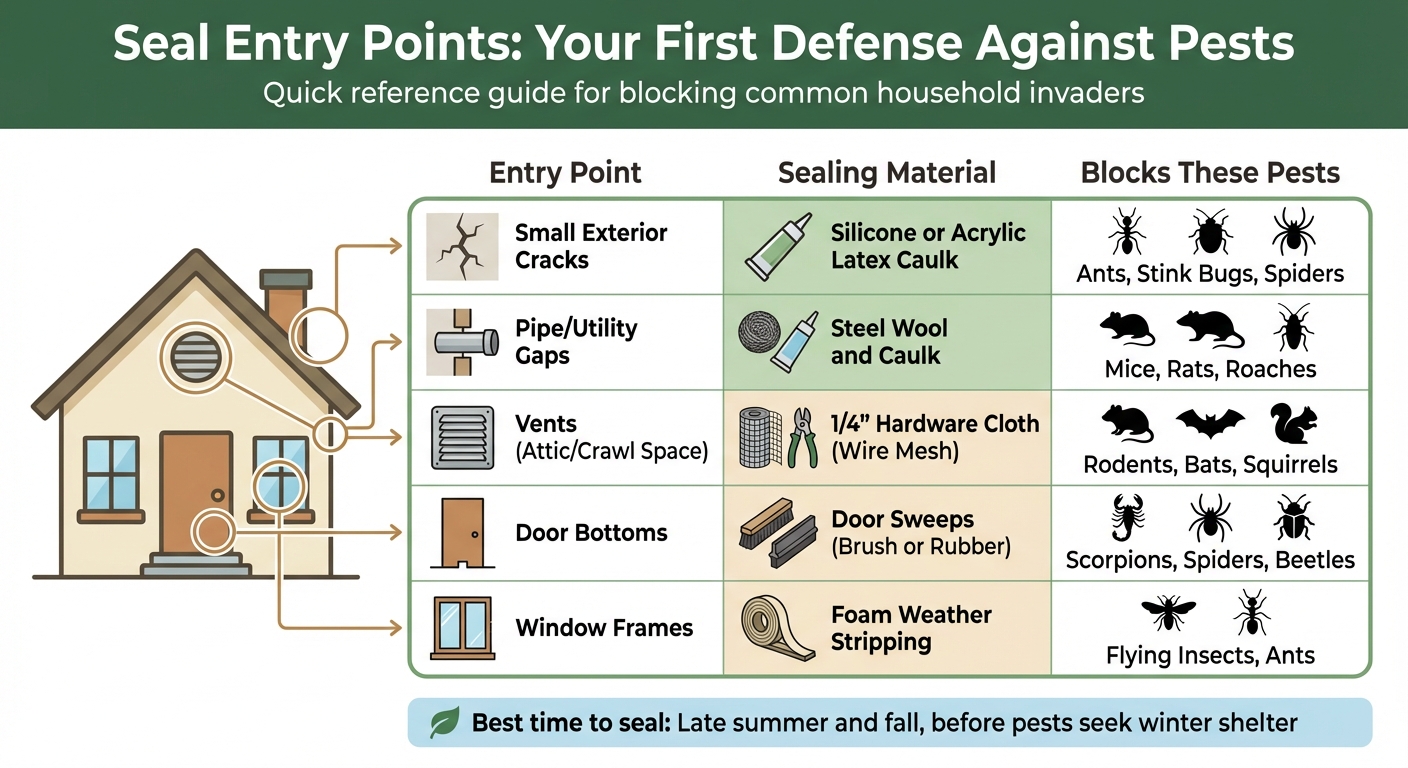
Home Entry Points Sealing Guide for Pest Prevention
Once you notice the early signs of pests, taking proactive steps can make all the difference in keeping your home pest-free. The key lies in making your home less inviting by blocking their access to entry points, food, and shelter. These strategies create a strong, layered approach to protect your living space from unwanted invaders.
Seal Entry Points and Cracks
Creating a physical barrier is your first defense against pests. Start by checking your exterior doors with a simple "light test" – stand inside and see if light comes through under or around the doorframe. If it does, you’ll need to install a door sweep or weather stripping to fix the seal. For windows, use screens with a 20-by-20 mesh or finer to keep even the tiniest insects out.
Pay close attention to areas where pipes, wires, and gas lines enter your home. Seal these gaps with steel wool (which rodents can’t chew through) and caulk. Larger openings, like attic vents or crawl space entrances, should be covered with 1/4-inch hardware cloth to keep out rodents and other small animals. Don’t forget to address foundation cracks and rotting wood – termites alone cause an estimated $5 billion in property damage annually in the U.S..
Here’s a quick reference table for common entry points, sealing materials, and the pests they block:
| Entry Point | Recommended Sealing Material | Target Pests |
|---|---|---|
| Small Exterior Cracks | Silicone or Acrylic Latex Caulk | Ants, Stink Bugs, Spiders |
| Pipe/Utility Gaps | Steel Wool and Caulk | Mice, Rats, Roaches |
| Vents (Attic/Crawl Space) | 1/4" Hardware Cloth (Wire Mesh) | Rodents, Bats, Squirrels |
| Door Bottoms | Door Sweeps (Brush or Rubber) | Scorpions, Spiders, Beetles |
| Window Frames | Foam Weather Stripping | Flying Insects, Ants |
Late summer and fall are especially important times to focus on pest-proofing since many pests seek warm shelter for the winter. For garage doors, use rubber seals instead of vinyl, as vinyl tends to become brittle in cold weather and won’t hold up as well.
Keep Your Home Clean and Store Food Properly
Securing the outside is only half the battle – inside, it’s all about removing attractants. Pests are drawn to food, so proper storage is essential. Use sealed plastic or glass containers for all food items, and follow the U.S. EPA’s advice:
"Remove sources of food, water and shelter. Store food in sealed plastic or glass containers. Garbage containing food scraps should be placed in tightly covered trash cans. Remove garbage regularly from your home".
Clean up promptly after meals, including pet feeding areas, and vacuum often to get rid of crumbs and residues. Don’t forget to clean under kitchen appliances, where grease and food debris can accumulate. Use trash cans with tight-fitting or self-closing lids, and take out the garbage daily. Outdoor bins should be steam-cleaned regularly to eliminate odors that attract pests. Fix any leaks and eliminate standing water, as moisture is a magnet for pests.
Declutter your home by getting rid of stacks of newspapers, magazines, and cardboard boxes, which can serve as hiding and breeding spots. When bringing in packages, groceries, or secondhand furniture, inspect them thoroughly for any hidden pests.
Yard Maintenance and Debris Removal
Your yard can either invite pests or keep them at bay. Start by removing debris from around your home’s foundation to eliminate hiding spots. Trim shrubs and tree branches that touch your home, as they can act as bridges for pests. Clear out window wells and gutters regularly to prevent moisture buildup and nesting.
If you store firewood, keep it at least 20 feet from your house and elevate it at least five inches off the ground to deter rodents and wood-destroying insects. Composting? Avoid adding meat, fish, bones, oils, or fatty foods, which attract scavengers. Instead, bury food waste in the center of the pile and turn it every one to two weeks to discourage pests. Line compost bins with hardware cloth to stop rodents from burrowing in.
To naturally manage pests, encourage beneficial predators in your yard. Plant native shrubs and wildflowers to attract helpful insects like parasitic wasps and flower flies. Consider installing bat houses or setting up water sources to draw birds and bats, both of which help control insect populations. It’s worth noting that more than 95% of insects are harmless or even beneficial to humans and the environment.
sbb-itb-be66415
Safe DIY Prevention Methods for Homes with Children and Pets
When it comes to pest control in homes with kids and pets, steering clear of chemical sprays is essential. Instead, Integrated Pest Management (IPM) focuses on removing pests’ access to food, water, and shelter, cutting down the need for harmful chemicals.
For a safer approach, consider physical removal methods. Vacuum up crumbs and pests, and use an extendable cobweb brush to clear spider webs and egg sacs. As Pepper Moran explains:
"When pest control is done right, sprays and chemical products of any kind are used minimally, if at all, and always in tandem with other control measures".
You can also take simple steps like reducing outdoor lighting, which helps keep insects away. Avoid overwatering houseplants to prevent fungus gnats, and use the high-heat setting on your dryer to eliminate pests from clothing and bedding. If these measures aren’t enough, targeted traps can be a good next step.
If you opt for traps or baits, the US EPA advises they can be effective and pose minimal risk if used correctly. Always place them in spots like cracks or behind appliances, where kids and pets can’t reach them. Never try mixing DIY pesticide recipes from household items – these mixtures are untested for safety and could pose risks. Before applying any pest control measures, make sure to remove toys, pet bedding, and food dishes from the area.
Be cautious with natural remedies, too. Products like diatomaceous earth or essential oils may seem harmless but can irritate children and pets. The best way to ensure safety is to start with physical barriers, proper sanitation, and mechanical removal – they’re effective and eliminate the risk of exposure altogether.
When to Call Professional Pest Prevention Services
It’s time to call in the experts if you’re dealing with high-risk pests like rats, mice, cockroaches, mosquitoes carrying West Nile virus, ticks linked to Lyme disease, or deer mice that may carry hantavirus. Professional help is also essential when do-it-yourself methods make the problem worse instead of solving it.
One reason to rely on professionals is that pests can develop resistance to pesticides. As Miriam Rotkin-Ellman, Senior Scientist at the NRDC, explains:
"Bugs often grow resistant to pesticides. Spray them and they’ll just bounce back stronger."
Using pesticides incorrectly can also backfire. For instance, improper treatment of ants can cause their colonies to split, leading to a bigger infestation. Professionals, on the other hand, are trained to understand pest biology and can target pests at every stage of their life cycle, from eggs to larvae to adults.
Children under six are especially vulnerable to pesticide exposure, making up 50% of pesticide poisoning cases in the U.S. due to their higher sensitivity and greater exposure risks. When infestations persist despite basic efforts, it’s time to turn to professionals who use Integrated Pest Management (IPM) techniques.
Benefits of Integrated Pest Management (IPM)
IPM offers a smarter, more thorough approach to pest control compared to routine pesticide spraying. Instead of relying on chemicals, IPM focuses on prevention by cutting off pests’ access to food, water, and shelter. The EPA describes it as:
"IPM is a Smart, Sensible and Sustainable approach to pest control."
The process starts with identifying the specific pest and determining "action thresholds" – the point at which intervention is necessary. Professionals then use advanced methods like heat treatments and targeted baiting systems, tools that most homeowners don’t have access to. Pesticides are only used as a last resort when other methods fail.
IPM isn’t just effective – it’s cost-efficient. Studies show it can reduce pest removal costs by 33% and cut pest complaints by 90%. And as the EPA points out:
"Costs are generally lower over time because the underlying cause of the pest problem has been addressed".
Additionally, IPM often involves weatherizing homes, which not only keeps pests out but also improves energy efficiency and reduces moisture problems.
Sparrow’s Pest Control Service Plans
Sparrow’s Pest Control embraces IPM principles with service plans tailored to homes up to 2,500 square feet. These plans are designed to be family-friendly and effective, offering a range of options to suit different needs:
| Plan Name | Price | Features |
|---|---|---|
| Basic | $39/month | Exterior perimeter spray, treatment for common nuisance insects, quarterly service, free re-treats, interior treatments, seasonal treatments |
| Essential | $45/month | Everything in the Basic plan, plus rodent bait stations, de-webbing, wasp prevention spray, extended perimeter spray, and seasonal treatments for carpenter ants and box elder bugs |
| Premium | $59/month | Everything in the Essential plan, plus active wasp nest removal, flea and tick treatments, roach protection, and rodent exclusions |
Each plan includes thorough inspections, customized treatments, and follow-up prevention steps. Plus, all methods are EPA-approved, safe for families and pets, and come with a 100% satisfaction guarantee.
Conclusion
Protecting your family from pests requires a mix of preventive steps and timely professional intervention. A strong defense starts with sealing up entry points, keeping your home clean, storing food in airtight containers, and maintaining your yard. These steps work together to create a solid barrier against unwanted pests.
While DIY methods can help with early prevention, they often fall short when it comes to dealing with serious infestations that pose health risks. As the National Cooperative Extension highlights:
"By investing the time and attention in pest proofing your home, you may prevent many time consuming and expensive problems."
When pests become a persistent issue, professional services are essential. Companies like Sparrow’s Pest Control offer inspections and customized, family-safe treatments to tackle infestations effectively. Their approach, which follows Integrated Pest Management principles, focuses on addressing the root cause of the problem.
FAQs
What are the best non-toxic pest control methods for families with kids and pets?
The safest pest control methods for families focus on keeping pests out and using natural, chemical-free solutions. Start by sealing any cracks or gaps around windows, doors, and walls with caulk or steel wool to block their entry. Store all food in airtight containers, fix leaks to cut off water sources, and clear out clutter to eliminate potential hiding places for pests.
Using physical barriers like screens, door sweeps, and drain covers is another effective way to keep insects and rodents at bay. For managing pests like mice or roaches, non-toxic traps and bait stations can be a great option. Make it a habit to inspect your home regularly, keep it clean and dry, and try natural deterrents like essential oils or diatomaceous earth to maintain a pest-free environment. These approaches are not only safe for children and pets but also help create a healthier living space.
What are the early signs of a pest infestation in my home?
To catch the early signs of a pest problem, pay attention to small but revealing details. Droppings, often resembling tiny pellets or dark specks, can indicate the presence of rodents or cockroaches. These are typically found in places like cabinets, pantries, or along baseboards. Gnaw marks on furniture, wires, or walls might point to rodent activity, while shredded materials such as paper or fabric could suggest they’re building nests. Strange sounds – like scratching or scurrying in walls, attics, or behind appliances – are another red flag.
Keep an eye out for small piles of soil or sand-like particles, which may hint at ants tunneling, or shed skins and egg casings, which are common with certain pests. Spotting these clues early allows you to tackle the issue before it becomes a full-blown infestation. Regular checks and quick action are essential for keeping your home free of pests.
When is it time to call a professional pest control service?
When pests start to feel like more than just a minor inconvenience – or worse, when they threaten your health, safety, or property – it’s time to call in the pros. Infestations of rodents, termites, or bed bugs are prime examples where expert help is often essential. These pests aren’t just annoying; they can spread diseases or cause serious damage to your home. And if you’re dealing with aggressive or venomous pests like wasps or spiders, leaving it to the professionals ensures the situation is handled safely.
Not sure what kind of pest you’re dealing with or how to get rid of them? That’s another sign it’s time to reach out to a pest control service. They can conduct detailed inspections, figure out how pests are getting in, and provide strategies to keep them out for good. If your DIY efforts aren’t cutting it or the pests keep coming back, professional pest control offers a safer, more effective, and long-lasting solution for your home and peace of mind.