
If you’re worried about keeping pests away without putting your kids or pets at risk, you’re not alone. Many chemical pesticides can harm children and animals, but natural alternatives can work just as effectively – and they’re easy to make at home. Using everyday ingredients like vinegar, coconut oil, and essential oils, these DIY solutions are safer, cost-effective, and eco-friendly. Here’s a quick rundown of five simple recipes:
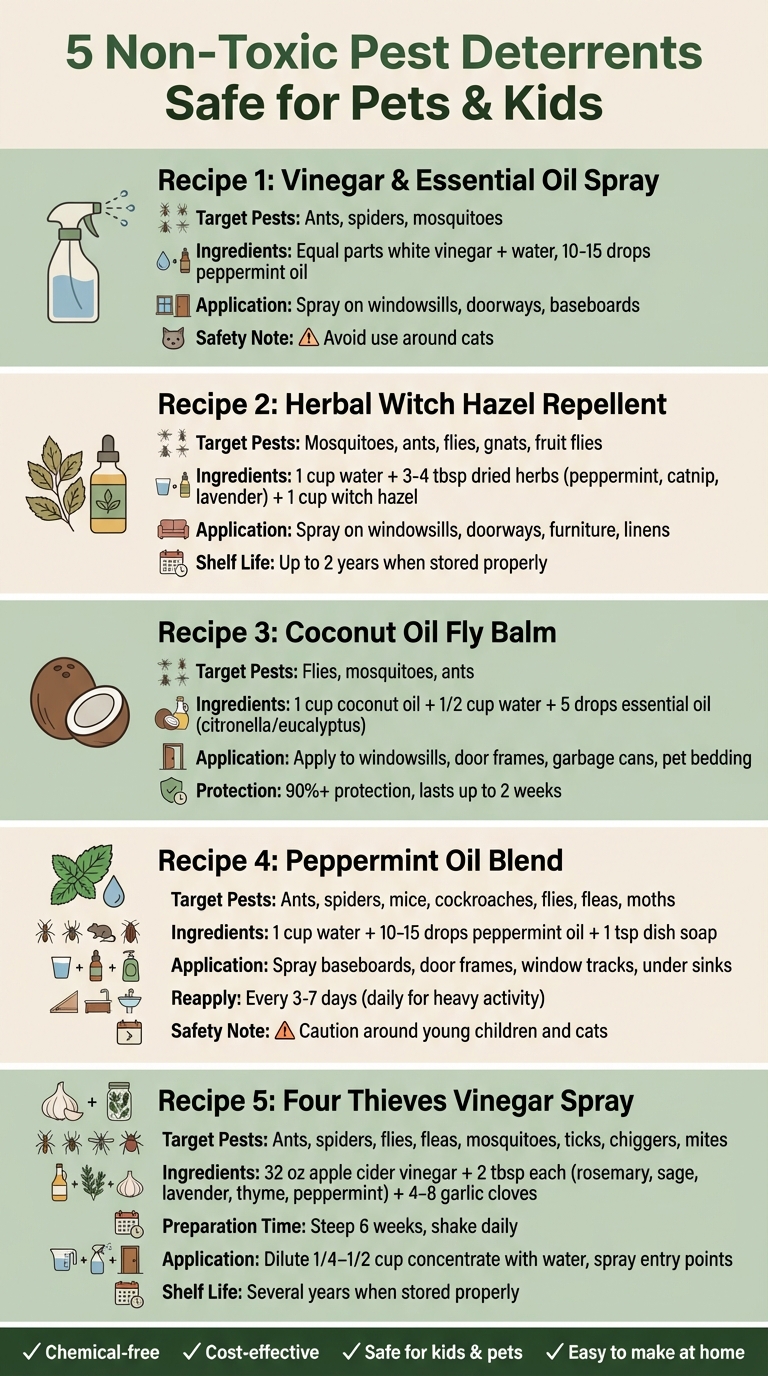
- Vinegar and Essential Oil Spray: Combines vinegar, water, and peppermint oil to disrupt pest scent trails. Avoid using around cats.
- Herbal Witch Hazel Repellent: Uses herbs and witch hazel to repel mosquitoes, ants, and flies. Safe for most surfaces.
- Coconut Oil Fly Balm: A mix of coconut oil and essential oils to deter flies and mosquitoes. Safe for pets and long-lasting.
- Peppermint Oil Blend: A strong peppermint spray that repels ants, spiders, and mice. Use with caution around young children and cats.
- Four Thieves Vinegar Spray: A centuries-old herbal vinegar recipe to keep pests like fleas and mites away.
These pet-safe pest control methods are affordable and chemical-free. If pests persist, professional services specializing in low-toxicity solutions may be necessary.
5 Non-Toxic DIY Pest Deterrents Safe for Pets and Kids
DIY-Natural Bug & Tick Spray -Safe for Kids, Pets & Adults -Beat Mosquitoes & Black Flies Naturally!
sbb-itb-be66415
1. Vinegar and Essential Oil Spray
This simple, two-ingredient spray can help keep ants, spiders, and mosquitoes at bay by disrupting their scent trails. To make it, combine equal parts white vinegar and water in a spray bottle, then add 10–15 drops of peppermint essential oil. The acetic acid in vinegar interferes with ant pheromone trails, while the strong scent of peppermint acts as a natural barrier that many insects steer clear of.
Apply the spray along windowsills, doorways, and baseboards – common entry points for pests. Shake the bottle well before each use. Let the sprayed areas dry completely before allowing children or pets back into the space.
A word of caution for cat owners: Peppermint and other essential oils, such as tea tree, can be harmful to cats. Avoid using this spray in areas frequented by cats. For dogs, you can lightly mist their collars, but be careful to avoid their face and eyes.
"When sprayed on fur, skin or clothing, vinegar will deter most any pest from landing and biting." – Jackie Wilt, Registered Nurse and Certified Equine Massage Therapist
Keep the essential oil concentration below 15%. Store the spray in a dark glass bottle, away from heat or sunlight, to maintain the oil’s effectiveness. Avoid using this spray on marble or stone surfaces, as the vinegar’s acidity can damage them over time.
Up next, learn about another safe and effective recipe for indoor pest control.
2. Herbal Witch Hazel Repellent
Witch hazel contains plant-based compounds that interfere with insect receptors, making it harder for pests to find their targets. This gentle and versatile formula helps repel mosquitoes, ants, flies, gnats, and even fruit flies – some of the most common household annoyances.
To make this repellent, start by boiling 1 cup of water. Add 3–4 tablespoons of dried herbs like peppermint, catnip, and lavender (or opt for 2 tablespoons each of fresh chopped mint, basil, and lavender). Let the herb-infused water cool while covered, then strain it. Mix the strained liquid with 1 cup of witch hazel in a spray bottle, and give it a good shake.
Spray this mixture on windowsills, doorways, furniture, or linens to create a barrier that keeps both crawling and flying insects at bay. For longevity, store the repellent in a dark-colored bottle or keep it in a cool, dark place. When stored properly, it can remain effective for up to two years.
Safety tips to keep in mind: Avoid adding lemon eucalyptus oil to this mix if it will be used around children under 3 years old. Pet owners should also steer clear of concentrated citronella or similar oils. Robin Sweetser, a gardener with The Old Farmer’s Almanac, cautions:
"Certain essential oils, such as citronella, can be harmful to pets, especially when concentrated; consult a veterinarian before using these or natural insect repellents on or near your fur friend".
Before applying, always test on fabrics or skin to check for potential staining or allergic reactions.
Next, discover a coconut oil–based solution for managing indoor flies.
3. Coconut Oil Fly Balm
Coconut oil is a natural way to keep flies, mosquitoes, and ants at bay, thanks to lauric acid. This compound, making up 53% of coconut oil, creates a scent that pests find unpleasant, suffocates them, and disrupts their cells. Research shows coconut fatty acids can repel biting flies for up to two weeks and provide over 90% protection against stable flies.
To create your own fly balm, mix the following:
- 1 cup of coconut oil
- 1/2 cup of water
- 5 drops of insect-repelling essential oil (like citronella or eucalyptus)
Heat the ingredients gently while stirring until smooth, then let the mixture cool. You can store it as a thick balm or transfer it to a spray bottle for easier use.
This balm works well on windowsills, door frames, garbage cans, and near open windows – anywhere flies tend to gather. You can also apply a small amount to your pet’s fur or bedding since coconut oil is safe for animals. For more active infestations or professional pest control, try placing a shallow dish with melted coconut oil and apple cider vinegar to trap flies.
What makes this recipe even better is its safety. It’s GRAS-certified, free from chemical pesticides, and safe for homes with kids and pets. Plus, its versatility is a bonus: the balm stays semi-solid at room temperature but turns into a clear liquid when warmed.
Stored in a cool, dark place, this homemade repellent can last up to two years. Unlike most essential oils, which lose effectiveness after a few hours, coconut fatty acids maintain their repellent power for up to 96 hours in real-world conditions.
4. Peppermint Oil Blend
Peppermint oil messes with pests’ sensory systems, making it hard for them to navigate or communicate. Thanks to its high levels of menthol and menthone, it produces a strong aroma that disrupts ant pheromone trails and irritates mice. Julie Miller, Editorial Lead at Dr. Killigan’s, explains:
"Peppermint oil does not confuse the insect – it confuses the signals the insect depends on."
This blend works well against common indoor pests like ants, spiders, mice, cockroaches, flies, fleas, and moths. While its primary role is as a repellent, direct contact with concentrated peppermint oil can interfere with insect functions and even increase mortality in pests such as bed bugs.
DIY Peppermint Spray Recipe
Mix the following ingredients in a spray bottle:
- 1 cup of water
- 10–15 drops of peppermint oil
- 1 teaspoon of mild dish soap (to help blend the oil and water)
Shake gently before each use and spray areas where pests are likely to enter, such as baseboards, door frames, window tracks, or under sinks.
For enclosed spaces like pantries or closets, you can place cotton balls soaked in undiluted peppermint oil. Replace these every 2–4 weeks for continued effectiveness. If you’re using the spray, reapply every 3–7 days for prevention – or daily if you notice heavy pest activity.
Important Safety Tips
While this blend is safe for most surfaces, avoid applying it directly to pet fur or a child’s face. Concentrated menthol can cause respiratory issues in young children, and cats are especially sensitive to essential oils. Always let treated areas dry completely before allowing pets or children back into the space.
Next, learn how vinegar can be another powerful, non-toxic option for keeping pests at bay.
5. Four Thieves Vinegar Spray
Dating back to the plague of 1664–1665, Four Thieves Vinegar was believed to protect against insect-borne diseases. The Farmers’ Almanac explains:
"Scientists believe the concoction worked against the plague because it repelled insects, including fleas, which spread that disease."
Today, this herb-and-garlic infusion is still a powerful tool for keeping common indoor pests at bay. The blend’s volatile oils are known to repel ants, spiders, flies, fleas, mosquitoes, ticks, chiggers, and mites. According to Deep Roots at Home, its strong scent makes it a reliable insect deterrent. Here’s how to make and use this family-friendly spray.
How to Make the Concentrate
Start by combining 32 ounces of organic apple cider vinegar with 2 tablespoons each of dried rosemary, sage, lavender, thyme, and peppermint. Add 4–8 crushed garlic cloves to the mix and place everything in a glass jar. Use a plastic lid or plastic wrap to avoid corrosion from the vinegar. Store the jar in a cool, dark spot for six weeks, shaking it daily to ensure the mixture reaches its full strength.
How to Use the Spray Indoors
After steeping, strain the mixture and dilute 1/4–1/2 cup of the concentrate with water in an 8-ounce spray bottle. Apply it around baseboards, door frames, windowsills, and other potential entry points for pests. It can also double as a natural surface disinfectant in areas like kitchens and bathrooms. Katie Wells, Founder of Wellness Mama, notes:
"This vinegar makes an effective natural disinfectant spray for use in house cleaning. But be warned… it’s not a subtle scent!"
While its smell is strong, the spray is safe for kids and pets – just keep it away from their eyes. Stored correctly, the concentrated tincture can remain effective for several years. This method not only helps with pest control but also prioritizes safety for your family and pets.
Conclusion
These five recipes offer a practical and safer alternative to chemical pesticides, making them ideal for homes with children and pets. By using everyday items like vinegar, essential oils, and herbs, you can create effective pest solutions without exposing your family to harmful residues. Most of these recipes take just minutes to prepare and even help protect beneficial insects, such as bees and ladybugs. Plus, you have full control over the ingredients, allowing you to avoid allergens or irritants that could affect your household.
If these natural methods don’t show results within 2–3 weeks or if the infestation worsens, it’s time to consider professional help. When DIY solutions fall short, expert services can provide the support you need.
For more persistent infestations, Sparrow’s Pest Control in Bellingham, WA, offers family- and pet-friendly pest management. Their Integrated Pest Management (IPM) approach prioritizes non-chemical methods, like sealing entry points and trapping. When chemicals are necessary, they use EPA-approved products with low toxicity and follow strict safety protocols. With plans starting at $39 per month for homes up to 2,500 square feet, they provide thorough protection, backed by a 100% satisfaction guarantee.
Whether you begin with these simple homemade remedies or turn to professional services for more severe issues, you can keep your home pest-free without compromising your family’s well-being. Start with these recipes, and remember, expert help is just a call away if needed.
FAQs
Which DIY deterrent works best for my specific pest?
When it comes to DIY pest deterrents, the best option depends on the specific pest you’re dealing with. For ants, a simple vinegar spray or diatomaceous earth can do the trick – both are safe and effective. If mosquitoes are the issue, essential oils like citronella can help keep them at bay. For rodents, peppermint oil or even planting mint around your home can act as natural deterrents. While vinegar sprays and diatomaceous earth are quite versatile, choosing the right solution will depend on the pest you’re targeting.
Are these sprays safe to use if I have cats or toddlers?
Yes, these sprays are usually safe for both cats and toddlers when they contain natural ingredients such as citrus oils, chrysanthemums, or food-grade diatomaceous earth. However, it’s important to carefully follow the usage instructions and consult a veterinarian or pediatrician if you have any concerns about specific ingredients or possible sensitivities.
When should I call Sparrow’s Pest Control instead of DIY?
When dealing with severe infestations, recurring pest problems, or hard-to-handle pests like rodents, wasps, or large ant colonies, it’s time to call Sparrow’s Pest Control. While DIY methods might handle small issues, professional services ensure both safety and thorough results. Sparrow’s Pest Control offers customized treatments, detailed inspections, and prevention plans to safeguard your home and loved ones. They’re the go-to solution for tackling tough or persistent pest challenges.